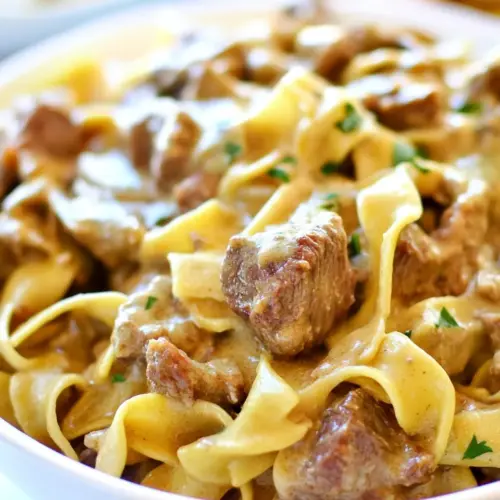
Slow Cooker Beef and Noodles
Slow Cooker Beef and Noodles is a creamy, comforting, easy weeknight dinner that delivers tender beef and silky egg noodles in a savory mushroom gravy. The slow cooker transforms stew beef into fall apart tender bites while the seasoning packets build deep, familiar flavors. Perfect for busy nights when you want a hearty family meal that tastes like homemade.
Equipment
- Non-Stick Skillet
- 6 quart slow cooker
- Spoon
Ingredients
- 2 pounds stew beef Brown and sear to develop deep flavor and lock in juices before slow cooking; stew beef provides the hearty, meaty base for the dish. Cut into even pieces so it becomes tender and shreddable during the long, low-temperature cook time. Pair with other savory components to create a rich, satisfying main protein.
- 11 oz packet ranch seasoning Season generously to impart tangy, herby notes throughout the slow-cooked sauce; ranch seasoning adds a familiar, savory blend of herbs and buttermilk-like flavor. Stir into the liquid early so its powdered mix dissolves and distributes evenly. Use as a shortcut to build layered seasoning without measuring multiple individual spices.
- 10.87 oz envelope brown gravy mix Whisk into the cooking liquid to thicken and add a glossy, savory gravy texture that clings to noodles and beef. Brown gravy mix contributes concentrated beefy umami and helps create a cohesive sauce as it hydrates and simmers. Add early so starches activate and the sauce reaches the desired consistency by serving time.
- 110.5 oz can cream of mushroom soup Blend in for creamy, comforting body and mushroom-forward richness that mellows and binds the sauce; cream of mushroom soup supplies both liquid and thickener in one. Stir well so it incorporates smoothly with broths and gravy mix to produce a velvety base. Adjust seasoning after adding to balance salt and mushroom intensity.
- 3 cups chicken broth low-sodium Pour in to provide a controlled liquid base and subtle savory backbone while allowing salt levels to remain moderate; low-sodium chicken broth keeps flavors balanced without overpowering. Use measured amounts to ensure noodles cook properly and the sauce achieves the right thickness. Supplement with additional broth if needed during slow cooking.
- 4 cloves garlic minced Mince finely to release pungent, aromatic flavor that brightens and complements the rich beefy sauce; garlic adds savory depth and a warm, slightly sweet finish when cooked. Add early so the gentle heat of the slow cooker mellows raw sharpness and infuses the whole dish. Adjust quantity to taste for a subtle or bolder garlic presence.
- 1 teaspoon onion powder Sprinkle to introduce gentle, savory onion undertones without adding texture; onion powder disperses evenly into sauces and enhances overall savory balance. Use sparingly to avoid overpowering milder ingredients and to maintain a smooth sauce consistency. Combine with other seasonings for rounded depth.
- 6 pepperoncini peppers optional Add whole or sliced to contribute a tangy, mildly spicy brine note that cuts through richness and brightens the finished dish; pepperoncini peppers also provide optional acidic complexity. Place them in the slow cooker so their flavor infuses the sauce slowly, and remove seeds if less heat is desired. Use as a customizable element for those who enjoy a slight bite.
- 1 pound egg noodles uncooked Stir in during the final cooking stage to absorb sauce and provide tender, comforting body; uncooked egg noodles create the classic carb component that brings the casserole-like integrity to the dish. Add at the end of the slow cook and simmer until al dente to prevent mushiness. Serve immediately so noodles retain ideal texture.
Instructions
- Place a non-stick skillet over medium-high heat and add 1 tablespoon of oil.: The warm oil should shimmer and spread across the pan, giving you that initial sizzle which signals it is hot enough. You will hear a crisp hiss as anything that touches the surface begins to caramelize, and that sound translates into deeper flavor later. Doing this matters because searing forms browned bits that become flavor currency in the slow cooker. A common error is heating the pan too little which causes sticking rather than searing, so give it time to heat until a droplet of water dances briefly on the surface.
- Season the beef with salt and pepper and brown it on the stove for a few minutes, just until nicely seared.: As the beef hits the skillet you should hear a steady sizzle and see darkened crust forming at the edges, these visual cues tell you that the Maillard reaction is happening. The scent will shift from raw meat to savory, almost nutty notes, which builds complexity for the gravy. Browning is important because it locks in flavor and creates those fond bits you will transfer to the slow cooker. Avoid crowding the pan, which cools the surface and causes steaming; brown in batches if necessary for best results.
- Transfer the stew beef and pan juices to a 6-quart slow cooker.: When you scrape the skillet to release the browned bits along with the rendered juices into the slow cooker, you are passing along concentrated flavor. You should notice a sticky, browned residue on the pan that smells roasted and savory, that is what you want in the cooker. This step ensures those caramelized flavors infuse the sauce during the long cook. A typical slip up is leaving the fond in the skillet, which robs the final dish of depth, so deglaze with a splash of broth if you need to coax it free.
- Sprinkle the ranch packet and gravy packet on top. Next, add the garlic and onion powder.: The dry seasonings will bloom as they mingle with the warm pan juices and broth, releasing their aromas into the pot. You will catch herbaceous notes from the ranch seasoning and a savory, roasted scent from the brown gravy mix . Adding the minced garlic and onion powder at this stage helps layer those aromatic flavors into the base of the sauce. Be mindful of salt content in these packets, tasting later will prevent over seasoning.
- Add the can of cream of mushroom soup, the peppers if using, and the chicken broth, and stir to combine.: As you stir, the glossy creaminess of the cream of mushroom soup will meld with the broth and seasonings into a cohesive sauce, and a faint mushroom perfume will rise. If you include the pepperoncini peppers , they add a tangy pop that cuts the richness and introduces a mellow heat. Combining now ensures the flavors marry during the long cook, giving a balanced sauce rather than layered, disconnected tastes. Stir thoroughly so no concentrated pockets of seasoning remain, otherwise a single spoonful might taste overly intense.
- Cover and cook on low for 6 to 8 hours OR 4 to 6 hours on high.: As the slow cooker comes to temperature you will see gentle movement in the sauce and maybe small bubbles at the edges after some hours, this low, steady heat is what breaks down the connective tissues in the beef . The texture transforms from firm to yielding, releasing collagen that thickens the sauce naturally. Cooking low gives the most tender results and better flavor development; using high is okay when pressed for time, but can make the meat slightly less silky. A frequent oversight is lifting the lid often, which slows cooking and wastes heat, so resist peeking unless necessary.
- An hour before the end of the cooking time, add the egg noodles and stir, making sure to cover the egg noodles in the sauce. Cover and continue to cook for the remaining hour.: The sound here changes to a gentle bubbling as the sauce simmers, and once the egg noodles meet the sauce they start to swell and soften, soaking up savory juices. Stirring ensures the noodles are submerged and cook evenly, absorbing flavor and thickening the sauce as they plump. This timing prevents them from becoming mushy; adding them too early is the most common mistake and will yield overly soft noodles that lose their shape, so follow the one hour guideline for best texture.
- Garnish with parsley and serve.: In this finishing hour you will notice the sauce glossy and slightly reduced, and the aroma will be concentrated, rich, and homey. The noodles should be tender but still hold their bite, and the meat should fall apart easily when nudged with a fork. This final low simmer allows flavors to integrate fully and the sauce to thicken to a pleasing consistency. If the sauce thickens too much, a splash of reserved broth can loosen it; conversely, if too thin, let it cook uncovered briefly to reduce.
- Garnish with parsley and serve.: Bright green flecks of parsley bring a fresh lift and a visual contrast to the warm brown tones of the dish, while the final aroma includes a hint of herb that lightens each bite. Serving straight from the slow cooker keeps the meal warm and family style, encouraging conversation and second helpings. Avoid over garnishing which can mask the dish; a small sprinkling is enough to add color and brightness.
Notes
- Swap the seasoning balance Add more or less of the ranch seasoning to make the sauce herbier or more neutral, adjusting to taste while watching salt levels.
- Adjust heat with pepperoncini Include the pepperoncini peppers for a tangy kick, or omit them entirely for a milder profile that children will prefer.
- Broth control Use a bit less chicken broth for a thicker finish, or add a splash more if you want a looser, soupier consistency for ladling.
- Make it extra creamy Stir in a touch more of the cream of mushroom soup at the end for added silkiness, but do so sparingly to avoid overpowering the beef flavor.
- Batch and freeze This recipe freezes well before adding the egg noodles; portion the beef and sauce for quick reheating and cook fresh noodles when you serve.