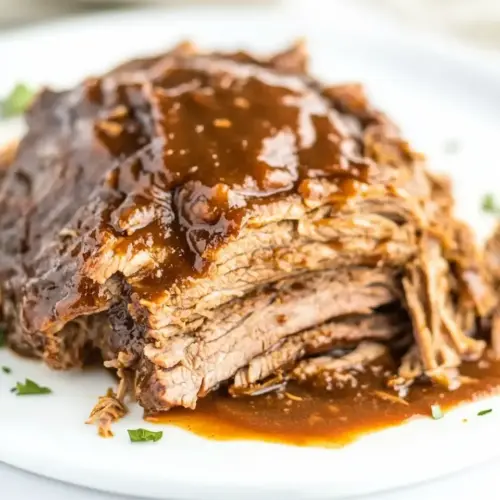
Slow Cooker BBQ Brisket
Slow Cooker BBQ Brisket delivers tender, smoky slices with a sweet and spicy rub and a rich, tangy sauce. The long, gentle braise yields melt in your mouth texture and deep flavors ideal for an easy weeknight dinner or a relaxed weekend feast. It’s an effortless crowd pleaser that makes hosting simple and rewarding, giving you a delicious reason to cook low and slow.
Equipment
- Skillet
- 6 quart slow cooker
- Inverted loaf pan
- 9x13-inch Baking Dish
- Mixing Bowl
Ingredients
- 1/2 cup (110 g) dark brown sugar Provide deep, molasses-forward sweetness and help form a caramelized crust on the brisket during slow cooking; balance smoky and spicy flavors while tenderizing the surface for better bark development.
- 2 tablespoons minced chipotle chiles in adobo sauce Add smoky heat and a tangy, slightly fruity adobo flavor that permeates the sauce and rub; contribute moderate moisture and a concentrated chile aroma to complement the barbecue profile.
- 1 tablespoon ground cumin Offer warm, earthy spice with citrusy undertones that enhance the overall savory character; act as a background note that ties smoky, sweet, and acidic components together.
- 1 tablespoon paprika Contribute bright, smoky color and mild heat while reinforcing the barbecue profile; help build a savory outer seasoning and deepen the visual appeal of the brisket.
- 1 teaspoon salt Enhance and balance all flavors by amplifying sweetness and acidity while moderating bitterness; help bring out the natural beef flavor when applied in the rub and during cooking.
- 2 teaspoons black pepper Provide a sharp, pungent counterpoint to the sweet and smoky elements while adding a subtle heat; help season the meat evenly and improve overall flavor perception.
- 4 to 5-pound brisket roast, fat trimmed to 1/4-inch thick and scored lightly Serve as the main protein component whose connective tissue breaks down slowly to become fork-tender; act as the focal point for absorbing the rub, sauce, and slow cooker aromatics.
- 3 tablespoons vegetable oil Facilitate searing and flavor development by creating a hot, nonstick surface for browning the brisket before slow cooking; help release fat-soluble aromatics from spices and onions.
- 1 yellow onion, finely chopped Supply savory sweetness and aromatic depth as a base for the sauce and braising liquid; release natural sugars and moisture that meld with spices during slow cooking.
- 2 tablespoons tomato paste Introduce concentrated tomato richness and umami that thickens the sauce and intensifies color; help bind other sauce components and contribute to a glossy finish.
- 1 tablespoon chili powder Add a warm, smoky chili note with mild earthy heat that complements the chipotle and cumin; deepen the overall complexity of the rub and braising liquid.
- 1 tablespoon minced chipotle chiles in adobo sauce Provide an extra layer of smoky, spicy adobo flavor to reinforce the chipotle character in both the rub and sauce; contribute moisture and a tangy, slightly acidic element.
- 2 garlic cloves, minced Deliver pungent aromatic depth and savory bite that brightens and balances the sweeter elements; help activate Maillard reactions when searing and add complexity to the sauce.
- 1/2 cup (125 ml) water Supply necessary braising liquid to keep the brisket moist and enable slow, even cooking; dilute and meld concentrated sauce components while creating steam for tenderizing.
- 1/4 cup (60 g) ketchup Give sweet-tangy tomato flavor and body to the sauce while contributing natural sugars for caramelization; help thicken the braising liquid and enhance umami.
- 1 tablespoon cider vinegar Provide bright acidity that cuts through fat and sweetness, balancing richness and sharpening flavors; help tenderize meat fibers slightly during the long cook.
- 1/4 teaspoon (0.25 teaspoon) liquid smoke Contribute a concentrated smoky aroma comparable to wood smoke, enhancing barbecue character without actual smoking; a few drops can add perceptible smoke depth to the sauce.
- Salt and pepper, to taste Allow final seasoning adjustments to achieve balanced flavor after cooking; enable diners to correct saltiness and pepper heat to personal taste before serving.
Instructions
- Prepare the Rub and Brisket: In a medium bowl, stir together the dark brown sugar, chipotle chiles, cumin, paprika, salt, and pepper. Rub the sugar mixture all over brisket. Cover with plastic wrap and let sit at room temperature for 1 hour or refrigerate for up to 24 hours.: Close your eyes briefly and breathe in the warm, sweet aroma that lifts from a bowl when dark brown sugar meets earthy cumin and paprika ; this scent signals the flavor backbone you are about to build. As you mix, the texture should shift from grainy sugar to a cohesive rub that clings to a fingertip, and that adhesion is what helps form a caramelized crust during the sear and initial slow cook. A common mistake here is not scoring the fat enough, which prevents the rub from penetrating; gentle scores allow seasoning to reach the meat. If you rubbed the mixture onto the meat and leave it at room temperature, you will notice the surface tackiness increase as the salt and sugar draw out some moisture, intensifying flavor. If refrigerated, let the rub come up a bit in temperature before searing so the exterior is not cold, which can impede a good crust. Keep plastic wrap handy to cover the seasoned brisket , and remember resting or refrigerating for the suggested time lets the flavors settle into the meat.
- Prepare the Sauce: Heat the oil in large skillet over medium-high heat until shimmering. Cook the onion until softened, about 5 minutes. Add the tomato paste and cook until beginning to brown, about 1 minute. Stir in the chili powder, chipotle chiles, and garlic and cook until fragrant, about 30 seconds.: When the oil shimmers in the skillet, you should hear a quiet sizzle as the onion hits the pan; that sound means you will start to coax sweetness and complexity out of the vegetables. As the onion softens to translucent and slightly golden, the aroma moves from sharp to savory sweet, a key transformation for a deep sauce. Add the tomato paste and notice it darken and caramelize after about a minute, which deepens umami and color. Stir in chili powder , chipotle chiles , and minced garlic for about 30 seconds until fragrant, and that quick bloom releases essential oils of the spices into the fat. A pitfall is overheating so the garlic burns and turns bitter, so keep the heat moderated and stir continuously when adding the garlic . Transfer this fragrant mixture to the slow cooker center to preserve the fond in the pan or scrape it in so no flavor is wasted; that browned fond is a flavor jackpot.
- Pile the onion mixture in the middle of a 6-quart slow cooker and top with an inverted loaf pan (you can use a metal loaf pan or stack two disposable aluminum loaf pans). Pour the water around the loaf pan. Place the brisket, fat-side-up, on top of the loaf pan. Cover, and cook until a fork inserted into the brisket can be removed with no resistance, 7 to 8 hours on high or 10 to 12 hours on low.: You will see the sautéed mixture form a soft bed that will act as a gentle rack when you place the inverted loaf pan on top; pouring the water around the loaf pan creates a shallow moat that encourages even, moist heat circulation. Place the seasoned brisket , fat-side-up, on the loaf pan so the rendered fat bastes the meat rather than pooling beneath it. As the cooker warms, you will start to catch little bursts of steam and a concentrated aroma of sweet, smoked spices; that is the braise doing its work. The most common misstep is using too small a cooker or overcrowding, which can cause uneven cooking and longer times; ensure the brisket fits comfortably. Cooking until a fork slides in with no resistance is the sensory cue for doneness, and if your brisket finishes early, keep it on warm, covered, to rest gently without drying out.
- Transfer the brisket to a 9×13-inch baking dish, cover with foil, and let rest for 30 minutes. Remove the loaf pan from slow cooker and pour the onion mixture and accumulated juices into a large bowl and skim the fat. You should have about 2 cups defatted juices; if you have less, add water to make 2 cups.: Resting allows the juices to redistribute, so when you slice the beef they will remain inside the fibers rather than running out. You will notice the surface loses some heat and firms slightly, which makes thin slicing easier and yields neat slices that hold sauce well. Remove the loaf pan and pour the accumulated juices and onion mixture into a bowl; the liquid should glisten and contain rendered fat on top that you will skim. If you have less than the expected volume, add water to reach the target amount, because sauce balance matters for finishing. Avoid slicing too early, which can cause the meat to shred messily and lose those precious juices.
- Transfer the brisket to a cutting board, slice thinly across grain, and return to the baking dish. Pour 1 cup of reserved defatted juices over the sliced brisket. Whisk the ketchup, vinegar, and liquid smoke into the remaining juices, and season with salt and pepper to taste. Serve, passing the sauce at the table.: The tactile cue here is a very tender texture that still holds shape as you lift the slice; cutting across the grain shortens muscle fibers and ensures each bite feels tender rather than stringy. Arrange the slices back in the dish and pour one cup of the defatted juices over them so the meat reunites with its cooking liquid and reabsorbs moisture as it rests. Whisk the remaining juices with ketchup , cider vinegar , and a whisper of liquid smoke until glossy and cohesive; taste and season with salt and pepper to balance sweet and acid. A frequent error is slicing with a dull knife or along the grain, which creates chewy bites, so use a sharp slicing knife and check the grain direction carefully. Serve with the sauce passed at the table so everyone can decide how saucy they prefer their portion.
Notes
- Boost the smoke: Increase the amount of chipotle chiles in adobo sauce in the sauce if you want more smoky heat, but add gradually to avoid overpowering the meat.
- Sweetness level: Adjust the dark brown sugar in the rub up or down to suit your palate; reducing it slightly makes the sauce more savory while increasing it yields a more caramelized crust.
- Acid lift: Add an extra splash of cider vinegar to the finished sauce for a brighter finish that cuts through the richness, add in small increments and taste as you go.
- Make it saucier: Reserve more of the defatted braising juices and whisk in additional ketchup to create a looser, pouring style sauce ideal for sandwiches.
- Meal prep friendly: Cook the brisket a day ahead and refrigerate covered; chilling firms it and intensifies flavor, then reheat gently and slice before serving for easier hosting.