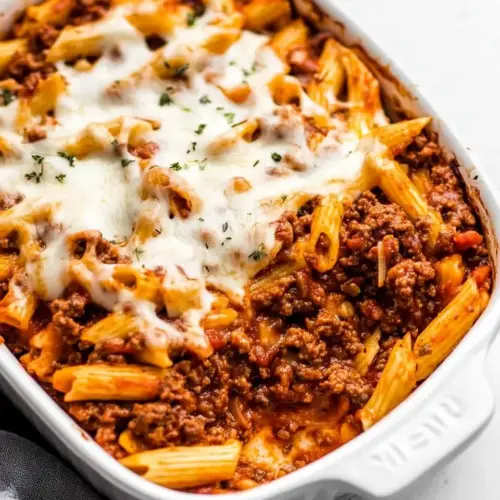
Sloppy Joe Casserole
Sloppy Joe Casserole blends saucy, sweet tomato meat with tender penne pasta and gooey Colby jack cheese for an easy weeknight dinner. Creamy melted cheese and slightly sweet, savory flavors make this casserole comforting and crowd pleasing. It reheats well and scales up for gatherings, making it a practical choice when you want a hearty, reliable meal that everyone will enjoy.
Equipment
- Skillet
- Casserole Dish
- Oven
- Colander
Ingredients
- 1 tablespoon olive oil Heat and enhance the pan by adding olive oil to sauté vegetables and brown meat, providing a flavorful cooking medium. Contribute a smooth mouthfeel and help transfer fat-soluble flavors throughout the casserole. Support even cooking of onion and garlic while preventing sticking to the pan.
- 1/2 onion, chopped Provide aromatic sweetness and texture by chopping and sautéing onion until translucent, which builds the base flavor for the dish. Add natural sugars that caramelize slightly to balance the tangy ketchup and savory beef. Release moisture that helps deglaze the pan and incorporate flavors.
- 1 pound ground beef Brown and add savory richness by cooking ground beef until fully done and slightly caramelized, forming the hearty protein base of the casserole. Render fat that contributes flavor and helps marry the sauce to the pasta. Break into bite-sized pieces to ensure even distribution through the dish.
- 3 cloves garlic, minced Infuse pungent, savory depth by mincing garlic and cooking briefly with the onion and beef to release aromatic oils. Add a warm, slightly spicy undertone that complements the ketchup and spices. Prevent burning by adding during the final moments of sautéing.
- 2 cups ketchup Provide tangy sweetness and body by using ketchup as the primary saucing element that coats the beef and pasta. Balance acidic and sweet flavors to create the classic sloppy joe profile within the casserole. Help bind the sauce components together for even coating.
- 1/4 cup brown sugar Enhance caramelized sweetness and complexity by stirring in brown sugar to offset tomato acidity and deepen the sauce flavor. Add molasses notes that pair well with Worcestershire and spices. Help create a glossy, slightly sticky texture in the finished casserole.
- 2 teaspoon chili powder Add smoky heat and southwestern warmth by incorporating chili powder to season the beef mixture. Provide layered flavor that complements paprika and balances the sweetness from ketchup and brown sugar. Control spiciness level to suit preference.
- 1 teaspoon paprika Introduce mild smokiness and color by stirring in paprika for subtle depth and visual appeal. Support other spices without overpowering, contributing a gentle warmth to the sauce. Enhance the overall seasoning profile of the casserole.
- 2 tablespoons Worcestershire sauce Contribute umami complexity and savory tang by adding Worcestershire sauce to deepen the sauce flavor. Bridge the sweet and acidic elements while enhancing meaty notes in the ground beef. Help round out the overall taste of the casserole.
- salt and pepper to taste Season and balance flavors by adding salt and pepper to taste, adjusting the overall savory profile of the dish. Elevate other ingredients and ensure the final casserole is well-seasoned. Allow for personal preference in saltiness and heat.
- 8 ounces penne pasta, cooked and drained Provide bulk and tender bite by cooking and draining penne pasta, which acts as the starchy base that soaks up the sloppy joe sauce. Offer textural contrast to the meaty sauce and cheese, creating a hearty casserole foundation. Ensure pasta is cooked al dente to avoid becoming mushy after baking.
- 2 cups Colby jack cheese, shredded Add creamy, melty richness by shredding Colby jack cheese and layering or mixing it into the casserole for a gooey topping and binding element. Create a golden, bubbly crust when baked that enhances mouthfeel and flavor. Combine with the sauced pasta and beef for cohesive texture.
Instructions
- Preheat oven to 375 degrees Fahrenheit and prepare a 2-quart casserole dish by spraying it with cooking spray.: As the oven warms you will feel the kitchen take on a faint, warm hum, which signals the final bake environment is ready. Preheating ensures the cheese melts and browns within the stated time, rather than just warming through. Greasing the dish prevents sticking and helps those golden cheese edges release cleanly. A common mistake is skipping preheat, which leads to uneven melting and longer bake times.
- In a medium-sized skillet add the olive oil and onion over medium-high heat. Sauté until almost tender and add the ground beef and cook and crumble until no longer pink.: You should hear a gentle sizzle when the olive oil hits the pan and smell the onion begin to sweeten as it softens, a sign that sugars are caramelizing. Cook until almost tender, which allows the onion to integrate into the sauce without collapsing. If the heat is too high the onion can brown too fast and taste bitter, so lower the flame if it starts to darken too quickly.
- Add the garlic, ketchup, brown sugar, chili powder, paprika, Worcestershire sauce, salt, and pepper. Let simmer for 2-3 minutes.: When you add the ground beef the sound in the pan should change to a more vigorous sizzle, and brown bits will form on the skillet surface. Break the meat into pieces so it browns evenly, building savory fond that enriches the sauce. Cook until no pink remains, then drain excess fat if heavy, otherwise the sauce can be greasy. Avoid stirring constantly, which prevents proper browning.
- Add the cooked drained pasta into the sloppy joe mixture. Stir to combine.: The moment these ingredients meet the hot meat the kitchen will fill with layered aromas sweet from brown sugar and tangy from ketchup . Stir to combine and bring the mixture to a gentle simmer, so flavors meld without scorching. Simmering concentrates the sauce, so keep the heat low enough to avoid burning. A typical slip is simmering too vigorously, which can reduce the sauce too quickly.
- Pour half of the sloppy joe mixture into the prepared pan. Top with 1 cup of shredded cheese. Add the rest of the sloppy joe mixture to the pan then sprinkle the remaining 1 cup of cheese on top.: As the sauce simmers you will notice it thicken and cling to the back of a spoon, which is the right visual cue to move on. This short simmer helps the spices bloom and the sauces integrate with the meat. Keep an eye on the pan and stir occasionally to prevent sticking. If you leave it unattended the sugars can stick and char.
- Bake the casserole for 15-20 minutes until warmed through and the cheese is melted. Enjoy warm!: The penne pasta should be warm and slightly firm, and when folded in it will soak up sauce without disintegrating. You will hear a gentle mixing sound and see the sauce coat each piece, which indicates good distribution. Overmixed or overcooked pasta will turn mushy, so handle gently while combining.
- Stir to combine: After folding, the casserole should look cohesive, with sauce evenly coating pasta and meat. This is the point where you should taste and adjust seasoning, since absorption by the pasta can mute flavors. If it tastes flat, add a pinch of salt or a touch more Worcestershire sauce . A mistake here is skipping tasting, which can leave the final casserole under seasoned.
- Pour half of the sloppy joe mixture into the prepared pan: As you transfer the mixture you will see steam rise and small bubbles of sauce, signaling retained heat. Spreading a layer creates structure in the casserole and helps the cheese layer embed rather than sink. Avoid packing it too tightly, because trapped steam needs room to escape during baking.
- Top with 1 cup of shredded cheese: Scatter the Colby jack cheese evenly so it forms a consistent melting layer. The cheese will immediately begin to soften from the residual heat, creating pockets of creaminess. If you pile it unevenly some spots will brown faster than others; aim for an even blanket for consistent texture.
- Add the rest of the sloppy joe mixture to the pan then sprinkle the remaining 1 cup of cheese on top: Adding the second layer and finishing with cheese creates a molten top that seals in moisture and gives that appealing browned crust. The assembled pan should look balanced, not overflowing, which ensures even baking. If you overfill, cheese may bubble over, creating cleanup work.
- Bake the casserole for 15 to 20 minutes until warmed through and the cheese is melted: During baking the aroma will intensify and the top will transform from pale to golden, with tiny browned spots appearing along the edges. This visual cue means the cheese has melted and developed flavor through gentle browning. If the top browns too quickly before the center is warm, tent loosely with foil to prevent overbrowning while the inside finishes warming. Cooling briefly before serving helps the casserole set so portions hold together.
- Enjoy warm: When you scoop into the casserole you should notice the sauce clinging to the pasta and stringy ribbons of melted Colby jack cheese stretching slightly, a joyful sign of success. Serve right away for the best contrast of textures. Letting it sit too long will cause the cheese to firm up and the pasta to absorb more sauce, changing the mouthfeel.
Notes
- Prep mise en place: Chop the onion and mince the garlic before heating the pan, so you can add them at the proper times and avoid overcooking or burning.
- Don’t overcook the pasta: Aim for just shy of al dente to prevent a mushy final casserole, because the pasta will absorb sauce and finish in the oven.
- Control the simmer: Keep the sauce at a gentle simmer to allow flavors to meld, avoid high heat which can scorch the sugars in the ketchup and brown sugar.
- Evenly distribute cheese: Scatter Colby jack cheese across layers to ensure creamy pockets and a consistent browned top rather than a single cheesy patch.
- Adjust seasoning at the end: After combining with pasta taste the mixture, and correct salt and pepper because the pasta dulls flavors.
- Let it rest briefly: Allow the casserole to sit for about 5 minutes after baking to set, which makes serving neater and textures more coherent.