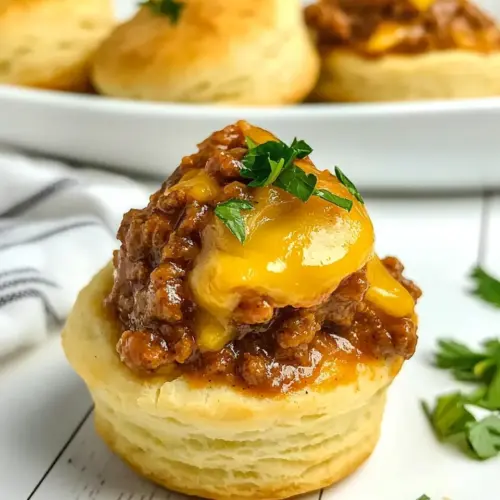
Sloppy Joe Biscuit Cups
Sloppy Joe Biscuit Cups are a crispy and saucy handheld treat with savory browned beef and melty cheddar tucked into tender biscuit shells. This easy weeknight dinner offers warm, comforting flavors and playful presentation, making it ideal for family meals or casual gatherings. Make them for a crowd or prep ahead for quick reheating, they vanish fast and are simple to love.
Equipment
- 12-inch Non-Stick Skillet
- Meat Masher Tool
- Rolling Pin
- Muffin Pan
- Rotary Cheese Grater
Ingredients
- 1 lb lean ground beef Brown thoroughly and crumble to provide the savory, meaty base and rich texture for the filling; drain excess fat to prevent soggy biscuit cups and ensure even cooking.
- 1/2 cup ketchup Bind and sweeten the mixture while contributing tomato flavor and moisture; cook down slightly with the beef so the sauce adheres to the biscuits without making them watery.
- 4 tsp sugar Sweeten and balance acidity to round out the sauce flavors; dissolve with the ketchup and spices to create the familiar sloppy joe profile.
- 4 tsp yellow mustard Brighten and add classic tangy mustard flavor that cuts through the richness; stir into the sauce so small amounts distribute evenly throughout the filling.
- 4 tsp white vinegar Introduce a sharp acidic note that lifts the overall flavor and balances sweetness; mix with other liquids so the filling maintains a lively taste.
- 4 tsp Worcestershire sauce Add a deep umami and slightly savory complexity that enhances the meaty flavor; incorporate sparingly to avoid overwhelming the other condiments.
- 1 tbsp dried minced onion flakes Provide concentrated onion flavor and subtle texture without added moisture; sprinkle into the sauce to offer savory aromatics throughout the filling.
- 2 (6-oz) cans refrigerated biscuits, (10 biscuits total) Form the edible cup that holds the beef mixture and bakes into a golden, tender shell; press each biscuit into muffin cups and bake until sturdy enough for filling.
- 1/2 cup shredded cheddar cheese Add a melty, creamy finish and cheesy flavor that complements the savory beef; sprinkle over or into the filled biscuit cups before baking for a gratin-like topping.
Instructions
- Preheat oven to 350ºF. Spray a regular muffin pan with nonstick cooking spray.: Warmth in the oven creates the environment for even baking and a golden finish, and preheating ensures the biscuit cups begin cooking immediately when placed inside. You will notice the oven hum and the air soften as it reaches temperature, which matters because cold batter, dough, or pans can change bake times. A frequent error is not preheating, which results in underbaked biscuit bottoms. If your oven runs hot, use an oven thermometer, and ensure the muffin pan is centered for balanced heat.
- In a large skillet, cook lean ground beef over medium-high heat. Drain excess grease. Add ketchup, sugar, yellow mustard, vinegar, Worcestershire sauce, and onions to the skillet. Stir well. Cook over low heat for 10 minutes, or until the sauce has thickened. Season with salt and black pepper.: As the ground beef hits the hot skillet, it releases a robust sizzle and a toasty aroma that signals proper browning, which builds savory flavor. Draining grease helps prevent a heavy mouthfeel and allows the sauce to cling to the meat. When you add the ketchup and seasonings, the skillet will hiss lightly, and the sauce will begin to reduce, concentrating flavors into a glossy, clingy texture. Low heat lets the sugars and acids marry slowly, producing a balanced sweet tang. Watch the pan as it simmers; if it reduces too fast, lower the heat to avoid burning. A common slip is skipping the reduction, which leaves a watery filling that will make the biscuit soggy. Taste and adjust salt and pepper at the end so the seasoning is bright, not flat.
- Open a can of refrigerated biscuits. Separate biscuit dough into 10 biscuits. Using a rolling pin, roll each biscuit into a large circle. Firmly press dough in the bottom and up the side of each muffin cup.: When you work the biscuit dough, you will feel its soft, pliable texture and see how it stretches to the pan edges, creating cups that will hold the filling. Rolling gives you control over thickness, so aim for even, thin circles that will bake through rather than stay raw in the center. Pressing firmly ensures a sealed base, preventing leaks during baking. If the dough resists, let it rest briefly to relax the gluten. A typical mistake is leaving the dough too thick, which yields doughy centers; roll gently and evenly for uniform results.
- Spoon the meat mixture into the biscuit cups. Top each biscuit with grated cheese.: As you spoon the warm filling, you will notice the scent of the simmered sauce rise, and the cups will begin to feel like little savory nests. Fill them to just below the rim to avoid overflow while baking. The shredded cheddar cheese melts and creates a creamy cap that browns lightly, adding a pleasant contrast in texture. If you overstuff, the filling can bubble over and create sticky edges, so leave a little headroom. For even melting, distribute cheese evenly and avoid clumping excess in one spot.
- Bake in a preheated oven for 17 to 20 minutes, until the biscuits are golden brown. Sprinkle with dried parsley.: In the oven, you will see the biscuit edges puff and turn a warm golden color, while the cheese softens and edges brown slightly. The smell will be savory and comforting, with toasted notes from the biscuit crust. Baking time matters because it ensures the biscuit base cooks through while the filling stays juicy. Pull them when they are evenly golden and the centers register hot. A common oversight is removing them too soon, leaving the bottoms underdone. Let them rest briefly after baking so the filling sets, then sprinkle with dried parsley for a visual finish.
Notes
- Choose the right biscuit size, I prefer smaller canned biscuits for ten neat cups because they bake through evenly without extending bake time significantly, and larger biscuits will alter yield and texture.
- Brown the meat well, take time to let the ground beef get a deep caramelized color for richer flavor, avoid stirring constantly so it can develop those brown bits.
- Reduce the sauce gently, simmer on low until glossy and slightly thickened so it clings to the meat, preventing a watery filling that can soak the biscuit base.
- Press dough firmly, make sure the biscuit cups are snug against the muffin pan to hold shape during baking, if you leave gaps the filling can leak through.
- Top with cheese late, adding the cheddar cheese right before baking helps it melt perfectly without burning at the edges, producing a creamy finish.
- Make ahead option, assemble the cups and refrigerate until ready to bake for an easy reheat on busy days, just add a couple extra minutes to the bake time from chilled.