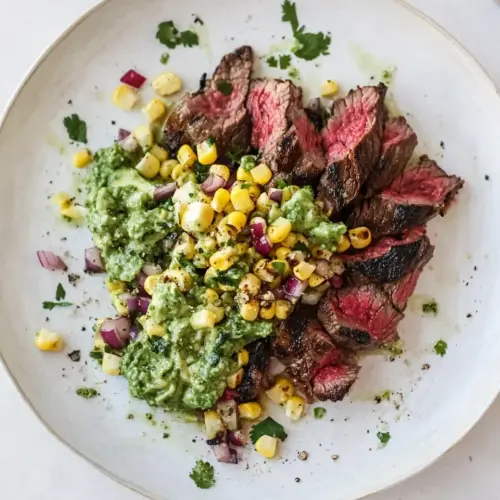
Skirt Steak with Avocado Pesto and Grilled Corn Relish
Skirt Steak with Avocado Pesto and Grilled Corn Relish is a smoky, creamy, easy weeknight dinner that balances tender skirt steak with a silky avocado pesto and bright, charred corn relish. Perfect for summer grilling, this recipe delivers bold texture and fresh herbs in every bite, making it an excellent choice for casual gatherings and quick impressive meals.
Equipment
- Broiler Pan or Baking Sheet
- Food Processor
- Skillet
- Mixing Bowl
Ingredients
- 1 (2 pound) piece of skirt steak (about 2-inches in thickness) Sear to develop a deep browned crust and intense beefy flavor; cook to desired doneness then rest to retain juices and allow carryover cooking.
- 1/4 cup olive oil Dress and marinate to add richness and help transfer seasoning; emulsify with other liquids for a glossy finish and mouthfeel.
- 2 tablespoons brown sugar Caramelize during a quick glaze or rub to introduce sweet, complex notes that balance savory and smoky components in the dish.
- 4 garlic cloves, minced Infuse savory pungency and aromatic depth when minced finely; distribute evenly to brighten and lift other flavors throughout the recipe.
- 1/2 teaspoons salt Enhance overall seasoning by drawing out flavors and aiding protein binding; use measured amounts to avoid oversalting.
- 1/2 teaspoon pepper Season to sharpen savory tones and control the balance of the dish; grind freshly for brighter, cleaner pepper flavor.
- 4 cups fresh basil Provide a fresh herbaceous backbone with bright, sweet, and slightly peppery notes; blend smoothly into sauces or pestos for color and aroma.
- 1 avocado Contribute creamy texture, subtle buttery flavor, and richness; blend into a pesto to add body and smoothness.
- 1/2 cup asiago cheese Add salty, tangy, and nutty complexity; grate finely and fold into sauces to lift umami and provide savory depth.
- 1/4 cup toasted pine nuts Offer a toasty, resinous crunch and buttery note; pulse or toast to enhance aroma before incorporating into pestos.
- 3 garlic cloves Layer additional garlicky sharpness when combined with other aromatics; can be crushed or pureed to intensify savory impact.
- 1/2 to 3/4 cup olive oil Bind and emulsify ingredients while contributing healthy fat; adjust volume to reach desired pesto consistency.
- 1/4 teaspoons salt Brighten and enhance other flavors while controlling seasoning levels; use sparingly and taste as you go.
- 1/4 teaspoon pepper Provide a clean heat accent that complements black pepper; add cautiously to maintain balance in the overall spice profile.
- 1/4 teaspoon crushed red pepper flakes Introduce a warm, lively kick to the dish; sprinkle into salsas or relishes to give subtle heat without overwhelming other ingredients.
- 3 ears sweet corn, cut from the cob Contribute sweet, juicy kernels and smoky charred notes when grilled; provide texture and natural sweetness to the relish.
- 1/2 red bell pepper, diced Add crisp, sweet, and slightly vegetal crunch with color contrast; dice uniformly to distribute texture in the relish.
- 1 shallot, diced Deliver subtle oniony sweetness and delicate pungency; sauté or mix raw for a milder, refined aromatic contribution.
- 1/4 cup chopped fresh cilantro Contribute fresh, citrusy, and slightly peppery herbal brightness; chop to scatter flavor and tie components together.
- 1 lime, juiced Impart bright acidity and lift; squeeze to balance richness and help meld flavors in both sauces and relishes.
- 1/2 teaspoons salt Reinforce seasoning and balance by enhancing taste perception; measure carefully to prevent oversalting.
- 1/2 teaspoon pepper Provide additional savory depth and mild heat; freshly ground for optimal aroma and used to finish the relish or steak.
Instructions
- In a bowl, whisk together the olive oil, brown sugar, garlic, salt and pepper. Place the steak in a baking dish or ziplock bag and pour the mixture over top. Place it in the fridge and let it marinate for at least 30 minutes or even overnight.: The scent of brown sugar and garlic melding with olive oil is an immediate sign the marinade is working, offering a sweet savory aroma that clings to the meat. While the steak soaks, flavors penetrate the surface, tenderizing slightly and building a caramelized crust when seared. A common mistake is over marinating beyond overnight which can begin to alter texture, so aim for 30 minutes to 12 hours. If you notice a sticky surface and strong sweet smell, you re on target. Ensure the container is sealed so other fridge smells don t interfere.
- I like to remove the steak about 30 minutes before I cook it.: Bringing the skirt steak closer to room temperature reduces cooking time and promotes even browning; you ll notice the meat lose its chill and take on a slightly softer look. This step matters because cold meat can seize and resist forming a proper crust, leading to uneven doneness. Don t skip this if you want a consistent interior; a common error is placing cold meat straight onto high heat which can undercook the center. If the surface feels cool but not icy, you re ready. Wipe off excess marinade if it pools, to avoid flare ups if grilling.
- You can grill, broil or pan sear it to your liking. I tend to broil or grill it as I find that easiest. Preheat the broiler in your oven and move the oven rack as close as possible. Place the steak on a broiler pan or baking sheet and broil on each side for about 5 minutes. This usually results in a medium doneness in my oven – but since the edges are thinner, they tend to be more well done.: When broiling, listen for a steady sizzle and watch for deep golden char forming at the surface, that is your cue to flip. The edges of skirt steak often cook faster due to thinner sections, so expect varied browning and aim to flip early if one side seems to advance too quickly. A common oversight is overcooking thinking the center will continue to warm; instead, take it off slightly earlier and let carryover heat finish it. If juices run clear and the surface is well browned, the steak is likely approaching medium.
- Allow the steak to rest for 10 minutes before slicing it thinly against the grain. Serve with spoonfuls of the pesto and the corn relish on top!: Resting is when the meat becomes juicier as juices redistribute, detectable as a softer, yielding texture when you press gently. Slicing against the grain shortens muscle fibers, giving tenderness in every bite. A mistake is slicing immediately which causes juices to escape and leaves the steak dryer. Look for fibers running one way and cut perpendicular to them into thin ribbons for the best mouthfeel. Plate with the pesto and relish nearby so each bite can be balanced with creamy and bright notes.
- To make the pesto, combine the basil, avocado, cheese, pine nuts and garlic in a food processor. Pulse until small crumbs remain, and then with the processor running, stream in the olive oil. Start with the 1/2 cup and add the extra if needed to reach the desired consistency. Add the salt, pepper and pepper flakes and blend again. Taste and season additionally if needed.: The aroma of fresh basil and toasted pine nuts is immediate and vivid during processing, and you ll see the mixture transform from rough to glossy as the olive oil incorporates. The avocado makes the texture silky, so add oil slowly to control liquidity. If the pesto is grainy, continue pulsing to fully emulsify; if it s too thin, reduce oil or add more cheese. Overprocessing can heat the herbs and dull their color, so pulse in short bursts to preserve bright green visuals.
- As a note, to toast the pine nuts, I add mine to a skillet and heat over low heat. I shake and stir until the are golden and fragrant, about 5 minutes.: Toasting releases warm, nutty aromas and you ll see the pine nuts shift from pale to honeyed brown; that visual cue is key. Keep the heat low and move them often because they can tip from perfect to burnt in seconds. A frequent error is using high heat which chars the surface and creates bitterness. When you detect a toasty scent and small color change, remove them immediately to a cool plate to stop cooking.
- Stir all ingredients together in a bowl until combined. You can make this a bit ahead of time if needed! It stays great in the fridge for a day or two.: For the relish, the melding of fresh corn , diced bell pepper, shallot and chopped cilantro brightens over a short rest as flavors knit together. Refrigeration softens sharp raw edges and lets the lime juice integrate, but prolonged storage beyond two days can mute the fresh notes. Avoid over-salting before tasting since the flavors intensify as they sit. When serving, spoon the relish chilled or at room temperature to maintain texture contrast with warm steak.
Notes
- Swap cheese type: Try a different hard cheese if you want a sharper tang; adjust salt after adding to taste and maintain balance with the avocado.
- Adjust pesto texture: Use less olive oil for a thicker spoonable pesto, or add the full amount for a looser drizzle that s easier to spread across slices.
- Control heat: Reduce crushed red pepper flakes for a milder finish, or increase slightly if you prefer a more pronounced warmth that cuts through the richness.
- Advance prep: Make the relish a day ahead to deepen flavors, but keep it covered in the fridge to preserve crispness of the bell pepper and corn.
- Resting time tweak: If you re short on time, rest for at least five minutes, but note that a longer ten minute rest yields juicier results.