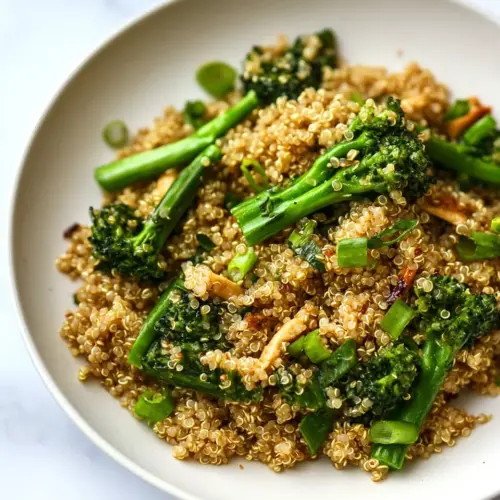
Skinny Quinoa Stir Fry
Skinny Quinoa Stir Fry is a light, nutty, and savory bowl that combines fluffy quinoa with crisp bok choy and tender broccolini. This easy weeknight dinner is fast to make, full of texture, and finished with toasty sesame seeds for crunch, making it a healthy, crowd friendly choice you'll want to repeat.
Equipment
- Large Skillet
- Spatula
- Cutting Board
- Chef knife
Ingredients
- 1 tablespoon extra virgin olive oil Heat gently to provide a healthy cooking fat and a mild fruity base that helps sauté aromatics without overpowering other flavors; use at medium heat to avoid smoking and preserve nutrients.
- 2 teaspoons sesame seed oil Drizzle sparingly to add a nutty, toasted aroma and authentic Asian flavor; combine with other oils to deepen the stir-fry’s sesame character without becoming greasy.
- 2 garlic cloves minced Mince finely to release pungent, savory compounds that build the stir-fry’s aromatic foundation; add early in cooking to infuse the oil and vegetables with bright garlicky depth.
- 4 bok choy stalks leaves removed, sliced into 1/2-inch pieces Slice into bite-sized pieces to offer tender-crisp green vegetable texture and a mild, slightly peppery flavor; add toward the end of cooking to preserve leaves’ color and freshness.
- 6 broccolini or 1 cup broccoli florets Trim and separate as small florets or use whole stalks to contribute a firm, crunchy texture and subtly bitter-sweet vegetal notes; blanching briefly or stir-frying quickly preserves color and nutrients.
- 2 tablespoons soy sauce low-sodium, more to taste (optional, tamari) Season judiciously to introduce savory, umami-rich saltiness that ties the grains and vegetables together; choose low-sodium varieties to control salt while enhancing overall balance.
- 4 cups white quinoa cooked and chilled (cook according to package directions) Cook and chill fully to supply a fluffy, protein-rich grain base that soaks up sauces and adds bulk without heaviness; chilling helps grains stay separate for a light fried-quinoa texture.
- 1/4 cup toasted sesame seeds Toast until golden to deliver a crunchy, warm, nutty finish that adds textural contrast and visual appeal; sprinkle at the end to maintain crispness and maximum flavor.
Instructions
- In a large skillet add the oils, turn to medium-low heat, and sauté garlic until fragrant, about one minute.: The moment the minced garlic hits the warm oil you should catch a soft, toasty aroma, a signal the pan is at the right temperature. Listen for a gentle sizzle rather than a violent pop, and watch the garlic shift from pale to slightly golden along the edges. This brief bloom unlocks the aromatic base that flavors every bite, creating an inviting scent that fills the kitchen. If the oil starts to smoke or the garlic darkens quickly you are too hot, which will impart bitterness, so reduce the heat and stir immediately. One common mistake is walking away and letting the garlic burn, so stay close and keep the garlic moving in the pan.
- Add the bok choy and broccolini, cover, and continue cooking for approximately 5 minutes, until the veggies are slightly tender.: Once the vegetables meet the pan you should hear a steady, lively sizzle that softens as moisture escapes. The stalks of the bok choy will take a touch longer to yield than the leaves, so slicing them uniform helps them finish evenly. Covering traps steam and helps the vegetables become tender while preserving bright green color. After about five minutes the stems should be easily pierced with a fork and the florets should be vivid and slightly yielding. Avoid overcooking which causes limp texture and muted flavor; if you notice excessive steam and no bite left, remove the lid immediately and flash sauté to stop the carryover cooking.
- Remove the veggies and set aside.: Lifting the cooked vegetables out of the skillet prevents them from continuing to steam and losing their snap. At this point they should feel firm tender to the bite and still have a fresh pop of green. Placing them on a tray or plate in a single layer helps heat escape quickly, preserving texture. One useful habit is to tent them lightly with foil if you need to keep them warm without softening further. A typical slip up is leaving them piled in the pan where residual heat will make them overly soft, so give them space to rest.
- Add the soy sauce and cooked quinoa. Stir and cook until quinoa is heated through. Turn off the heat, place broccolini on top of quinoa, and sprinkle the mixture with toasted sesame seeds. Cover and let rest 5 minutes. Serve immediately.: When you add the low sodium soy sauce and the chilled cooked quinoa , listen for a softer, steady sound as the grains hit the hot surface. The chilled quinoa will warm through without breaking down, and the soy sauce will begin to coat the grains with a glossy sheen. Toss gently to combine, so each grain picks up savory flavor without becoming mushy. The key is to heat just until steaming, so the texture stays light and separate. A common issue here is overcrowding the pan which can steam the grains rather than crisp them slightly, so use a wide skillet and stir with a gentle hand.
- Stir and cook until quinoa is heated through: As the quinoa warms, notice the faint nutty perfume that rises and the glossy look of the grains as they become infused with sauce. Stirring helps distribute heat and ensures even seasoning, but keep movements deliberate to avoid smashing the grains. When you see wisps of steam and the pan feels evenly warm to the touch, the quinoa is ready. If it seems dry, add a teaspoon of oil or a splash of water to loosen the texture, but avoid heavy liquids which will make it soggy.
- Turn off the heat place broccolini on top of quinoa and sprinkle the mixture with toasted sesame seeds cover and let rest 5 minutes Serve immediately: After you turn off the flame, arrange the reserved vegetables gently on top, letting the residual heat continue to meld flavors without overcooking. The toasted sesame seeds sprinkled across the surface give a delightful crunch against the soft grains and tender greens. Covering for five minutes allows steam to settle, flavors to marry, and the quinoa to take on a unified texture. When you uncover you should see a little condensation and a fragrant steam cloud, and the dish will be warm and well blended. Serve right away to preserve the contrast of textures. A mistake I often warn against is waiting too long to serve, which causes the seeds to lose their crunch and the vegetables to soften beyond preference.
Notes
- Boost the crunch: Add a handful of toasted sesame seeds and serve immediately to preserve crisp texture, which makes each bite more interesting.
- Greens swap: If you prefer a different leafy green, try the same method with similar cooking times, remembering to separate stems and leaves when needed to ensure even doneness.
- Soy control: Use low sodium soy sauce and add it in stages so you can stop at the precise saltiness you prefer, tasting between additions for balance.
- Warm quinoa: If you forgot to chill the quinoa, spread it on a tray to cool quickly so it won’t steam and clump when added to the skillet.
- Sesame aroma: Stir half the sesame oil into the pan and drizzle a touch more at the end to heighten the toasted notes without overwhelming the other flavors.