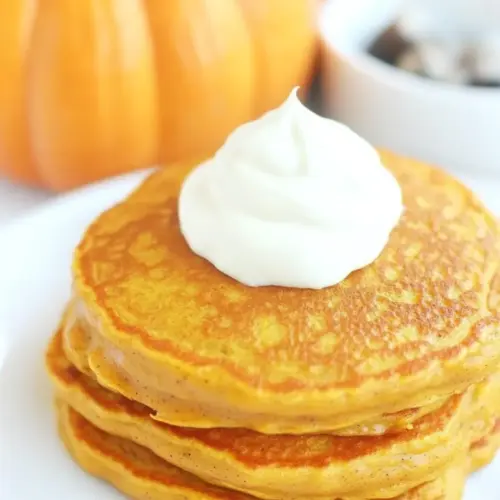
Skinny Pumpkin Pancakes
Skinny Pumpkin Pancakes are tender, lightly spiced, and easy to make for cozy mornings. This creamy yet low fat stack blends pumpkin and warm spices into a fluffy batter, perfect for an easy weeknight breakfast or relaxed weekend brunch. The balanced texture and pantry friendly ingredients make it a smart seasonal choice that still feels indulgent, and you will want to make it again and again.
Equipment
- Large Mixing Bowl
- Medium mixing bowl
- Whisk
- Griddle or skillet
- Measuring Cup
Ingredients
- 1 cup white whole wheat flour Provide a hearty, nutty base to the batter and contributes whole-grain fiber for a denser, more nutritious pancake texture that browns well during cooking.
- 1 cup white all-purpose flour can use 2 cups all-purpose if white whole wheat isn't available Offer a light, tender crumb and neutral structure to the batter; can replace whole wheat for a softer pancake while maintaining overall volume and consistency.
- 1 tablespoon baking powder Lighten the batter by producing lift and airy texture when reacting with moisture and heat, ensuring pancakes rise and become fluffy during cooking.
- 1/2 teaspoon ground ginger Impart a warm, pungent spice note that complements pumpkin and cinnamon while adding subtle warmth; helps balance sweetness and enhances aroma in the batter.
- 1/2 teaspoon ground nutmeg Contribute a sweet, woody warmth that pairs with cinnamon and ginger to deepen the pumpkin flavor profile and adds aromatic complexity to each bite.
- 1/2 teaspoon salt Enhance overall flavor balance by rounding out sweetness and spice; also assists in highlighting other flavors and regulating fermentation or rising reactions.
- 1 teaspoon ground cinnamon Provide classic sweet-spicy warmth that defines pumpkin-spice character, enhancing aroma and layering flavor complexity throughout the pancake batter.
- 2 tablespoons brown sugar Add a touch of caramel-like sweetness and moisture retention to the batter, helping to tenderize the crumb while subtly deepening the overall flavor.
- 2 egg whites, slightly beaten Provide lean protein and emulsification while reducing fat content; beaten whites help incorporate air for lighter, fluffier pancakes without yolk richness.
- 1 1/2 cups skim milk Contribute hydration to the dry ingredients while keeping the batter low in fat; skim milk adds protein and structure without adding extra calories.
- 2 tablespoons canola oil Supply a small amount of healthy fat to help emulsify wet and dry ingredients, prevent sticking during cooking, and contribute to tender texture.
- 1/2 cup canned pumpkin Deliver concentrated pumpkin flavor, moisture, and a velvety texture while contributing beta-carotene and natural sugars that enhance overall taste.
Instructions
- In a large mixing bowl, whisk the flours, baking powder, ginger, nutmeg, salt, cinnamon, and brown sugar.: You will smell the warm spices as you whisk them with the dry flours, a comforting autumn aroma that signals a balanced spice blend. The action of whisking evenly distributes the 1 cup white whole wheat flour , 1 cup white all purpose flour can use 2 cups all purpose if white whole wheat isn't available , and 1 tablespoon baking powder so pockets of leavening do not form, which keeps the pancakes from rising unevenly. Visually, the mixture should look uniform, with small flecks from the spices. If you skip thorough whisking, you might get dense or unevenly risen pancakes, so take a little time here. One common mistake is adding wet ingredients to unblended dry mix, which can create streaks of flour or clumps of baking powder, so whisk until well combined.
- In a separate medium-sized mixing bowl, whisk together the egg whites, milk, oil, and pumpkin.: As you combine the 2 egg whites, slightly beaten , 1 1/2 cups skim milk , 2 tablespoons canola oil , and 1/2 cup canned pumpkin , you will notice the batter take on a smooth, slightly glossy sheen and a warm orange tone. The pumpkin gives a denser, silky mouthfeel that helps the pancakes stay moist, while the milk and oil thin the pumpkin for a pourable batter. Whisking ensures the egg whites are dispersed, avoiding white streaks that could cook unevenly. A common error is overbeating the egg whites to a foam, which can change texture; whisk just until homogenous.
- Add the pumpkin mixture to the flour mixture and mix until just combined. If the batter seems too thick, add a little milk to thin it out to the desired consistency.: After folding the wet into the dry, you will see the batter become cohesive and slightly lumpy, that is desirable because overmixing develops gluten and yields tough pancakes. The smell will deepen, with spices and pumpkin melding into a unified scent. If the batter looks very stiff, add milk a tablespoon at a time until it flows slowly from a spoon. The right consistency creates pancakes that spread a bit on the griddle but hold shape; too thin and they will be flat, too thick and they will be heavy. A frequent mistake is overmixing to eliminate every lump, which results in dense pancakes, so stop as soon as ingredients are combined.
- Heat a griddle or skillet on medium heat and spray with cooking spray. Pour the batter onto the heated griddle or skillet using a 1/4 cup measuring cup.: When the griddle is at the right temperature you will hear a gentle sizzle as batter hits the surface, and small bubbles will form around the edges. Preheating ensures even browning and a tender interior, the hot surface creating a quick set to the outside while the inside cooks through. Use a 1/4 cup measure for consistent pancake size so they cook uniformly. If the griddle is too cool the pancakes will pale and dry out, too hot and they will burn before the center is cooked, so adjust heat accordingly. Avoid pressing down on the pancakes, which squeezes out moisture and makes them tough.
- Flip the pancake when bubbles appear at the top. Serve with buttermilk syrup and enjoy!: The top of the pancake will show many small bubbles that begin to pop, and the edges will look set, sometimes with a slight lift, signaling it is time to flip. After flipping, listen for a brief sizzle and watch for a golden brown underside, which indicates proper caramelization from the sugars and spices. Serving immediately preserves warmth and the tender interior. A common pitfall is flipping too early, resulting in raw centers, or waiting too long, which leads to overbrowned pancakes. Serve right away for best texture and flavor.
Notes
- Whisk dry mix first. Combining the flours, baking powder, and spices thoroughly prevents lumps of baking powder and ensures even flavor throughout the batter, which helps each pancake rise and brown uniformly.
- Mix wet ingredients gently. Whisk the egg whites, milk, oil, and pumpkin until smooth but avoid vigorous whipping, because overworked egg whites can change the pancake texture and make them chewy.
- Adjust consistency with milk. If the batter is too thick to pour easily, add milk a tablespoon at a time until it reaches a slow pour, which helps create pancakes that are tender inside and golden outside.
- Preheat and test your griddle. Heat the skillet to medium and test with a small dollop of batter to ensure it takes about one to two minutes per side to achieve golden color, adjusting heat as needed to prevent burning.
- Keep pancakes warm. If making a large batch, hold finished pancakes in a warm oven set to low so they stay soft and ready to serve together without becoming soggy.