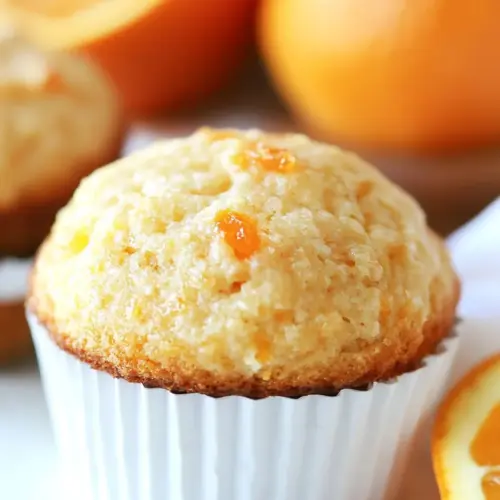
Skinny Orange Muffins
Skinny Orange Muffins are light and citrusy with a tender crumb and bright orange flavor. These easy, quick muffins use Greek yogurt and a modest amount of granulated sugar to stay moist yet not heavy, making them perfect for an easy weeknight breakfast or a cheerful brunch. Make them for a simple, flavorful treat that still feels mindful.
Equipment
- Muffin Tin
- Mixing Bowls
- Whisk
- Spatula
- Measuring Cups
Ingredients
- 1 2/3 cup flour can use AP or half AP and half wheat Provide structure and bulk to the muffins by forming the dry matrix that traps air during baking; can use all-purpose flour or a half-and-half blend with whole wheat for nuttier flavor and added fiber, and measure accurately to maintain proper crumb.
- 2/3 cup granulated sugar Add sweetness and tenderize the crumb by dissolving into the batter to help brown the exterior and balance citrus notes; creaming with wet ingredients ensures even distribution and consistent texture.
- 2 teaspoons baking powder Leaven the batter by releasing carbon dioxide when combined with moisture and heat, giving muffins lift and a light crumb; ensure it is fresh for optimal rise and avoid overmixing to preserve airy pockets.
- 1/2 teaspoons salt Enhance flavor and control gluten development by tightening the dough slightly while balancing sweetness; also helps highlight the citrus and maintain proper seasoning levels in the final muffin.
- 1/3 cup coconut oil melted if solid, or canola or vegetable oil Contribute fat for moistness, richness, and tender crumb while providing a subtle flavor; use melted coconut oil for a hint of coconut or neutral canola/vegetable oil to let orange notes shine, and mix with wet ingredients until incorporated.
- 2/3 cup Greek yogurt plain Provide moisture, tang, and protein that improves texture and gives a slightly tender, cake-like crumb; plain Greek yogurt also interacts with baking powder to aid lift and adds richness without excess fat.
- 1/3 cup milk Adjust batter consistency and add milky flavor while thinning the mixture for proper muffin rise; use the specified amount to balance wet-to-dry ratio and ensure even baking.
- 1 egg Bind ingredients and add structure through coagulation of proteins during baking, contributing to tenderness and moisture retention; whisk briefly with liquids to distribute evenly without overbeating.
- 1 tablespoon orange zest Deliver concentrated citrus aroma and bright, fresh flavor to the batter by releasing essential oils from the peel; finely grate only the colored part to avoid bitterness and measure zest for consistent intensity.
- 2 tablespoons fresh orange juice Introduce fresh citrus juice for bright acidity, flavor, and slight tenderizing effect that balances sweetness; add to wet ingredients to disperse flavor evenly throughout the muffins.
- 1 cup powdered sugar Create a glossy, sweet finishing glaze or dusting that adds surface sweetness and a smooth texture when mixed with liquid; sift powdered sugar to remove lumps for a silky, even coating.
- 1 tablespoon orange zest Provide additional citrus aroma and enhance the glaze or batter with a final boost of bright orange flavor; finely grate zest and fold in or sprinkle to intensify the orange profile without adding extra acidity.
Instructions
- Preheat oven to 350°F.: Warmth is the first signal that baking has begun, and when the oven reaches 350°F , a consistent environment is created for predictable rise and even browning. You will notice a faint hum as the heating element cycles and a dry, warm smell in the air that tells you the oven is ready. This temperature encourages a golden top without overbrowning the edges. A common mistake is not preheating long enough, which can cause uneven rise and a dense center. To check, place the rack in the center and give the oven at least 10 minutes to stabilize.
- Line muffin tin with baking cups or spray with nonstick cooking spray.: Preparing the pan prevents sticking and helps the muffins release cleanly, leaving attractive bottoms and sides. When liners are used, the tops pop free more easily, and cleanup is simpler. If you spray the pan, aim for even coverage without pooling, which can create uneven browning. One problem people run into is under greasing metal tins, which can lead to torn muffins when you try to remove them. Using paper liners also gives a slightly softer edge compared with unlined tins.
- Combine flour, sugar, baking powder and salt in a small bowl. Set aside.: Mixing the dry flour , granulated sugar , baking powder , and salt ahead ensures even distribution of leavening and flavor. As you whisk, watch small clumps break apart and a faint fragrant dust rise from the flour . This step helps prevent pockets of baking powder that could create uneven texture. Over whisking is not necessary, but skimping can leave lumps. If your flour is lumpy, sift it first so the batter combines smoothly later.
- Whisk together coconut oil, Greek yogurt, milk, egg and one tablespoon of orange zest together in a medium bowl.: The wet bowl should look creamy and slightly glossy, with ribbons of melted coconut oil dispersed through the tangy Greek yogurt . The aroma of fresh orange zest will lift as you whisk, giving a fragrant citrus perfume. Proper emulsification helps incorporate air and gives a lighter crumb, so whisk until homogeneous but not frothy. If the oil is too hot when added it can cook the egg , so ensure it has cooled slightly. A frequent misstep is adding cold oil to chilled yogurt, which can cause small lumps; bring ingredients to similar temperatures for best results.
- Stir in flour mixture just until moistened.: At this stage you should see a loosely formed batter dotted with streaks of dry flour , which disappear after gentle folding. The batter should be thick but scoopable, with a few small lumps that will relax during baking. This gentle mixing preserves tenderness by avoiding overdevelopment of gluten in the flour . If you overmix, the muffins become chewy rather than tender. Use a spatula and fold with patience, stopping as soon as dry streaks vanish.
- Divide batter evenly among muffin cups.: Scoop the batter so each cup is filled about two thirds full, which allows room for the muffins to crown without spilling. I like to use an ice cream scoop for consistent portions so muffins bake evenly. You will notice the batter is thick and holds its shape, and the tops smooth slightly in the tin. Uneven portioning causes some muffins to finish earlier than others, so aim for uniformity. If some cups are overfilled, cover the pan loosely with foil to prevent overbrowning as they finish baking.
- Bake for 16-20 minutes or until just golden brown. Cool in pan for several minutes before removing.: While baking you will detect the citrus aroma intensify and the tops will take on a delicate golden hue. The sound is subtle, but you may hear a faint crackle as the tops set. A toothpick inserted should come out with a few moist crumbs, not raw batter. Cooling in the pan for a few minutes allows the crumb to stabilize so muffins release cleanly; removing them too soon can cause them to stick or collapse. A common issue is overbaking, which yields dry interiors, so begin checking at the earlier time.
- Combine orange juice, powdered sugar, and orange zest in small bowl. Mix until smooth.: The glaze should be glossy and pourable, with micro bubbles that settle quickly as you whisk. Powdered sugar dissolves into the orange juice , and the added orange zest gives texture and an extra aromatic lift. If the glaze is too thin, add a bit more powdered sugar ; if too thick, a few drops of juice will loosen it. A glaze that is too runny will soak into the muffin and lose shine, so adjust slowly. For a perfectly smooth finish, sift the powdered sugar before mixing.
- Drizzle over muffins a few minutes after removing from pan.: The warm tops will take the glaze beautifully, creating a thin, shiny coating that sets as it cools. When I drizzle, I watch the glaze trail in ribbons and settle into little valleys, catching in the orange zest flecks. The contrast between the slightly crisp glaze and the tender crumb is lovely. If you glaze while muffins are too hot they may absorb too much glaze, and if too cold the glaze will not adhere well. Let them rest just long enough so the glaze clings and then set on a rack to finish cooling.
Notes
- Calorie note: The recipe note indicates about 216 calories with the optional glaze, which is helpful if you track portions.
- Flour substitution: You can use half whole wheat and half all purpose flour as suggested in the ingredient line for a nuttier flavor without losing too much tenderness.
- Oil options: If coconut oil is solid, melt and cool slightly before adding to avoid cooking the egg when combined.
- Yogurt tips: Smooth your plain Greek yogurt with a whisk so it blends seamlessly into the wet mixture for even texture.
- Glazing timing: Wait a few minutes after removing muffins from the tin so the glaze adheres to the warm top rather than seeping into the crumb.
- Storing: Keep muffins in an airtight container at room temperature up to two days, or freeze for longer storage; thaw gently to retain moisture.