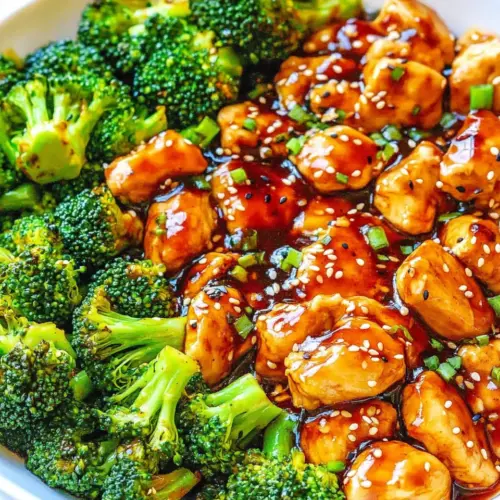
Skinny 15 Minute Sesame Chicken and Broccoli
Skinny 15 Minute Sesame Chicken and Broccoli is a quick, crispy and slightly sweet weeknight dinner with a glossy sesame ginger sauce. Tender chicken and bright broccoli come together with honey, hoisin, and a touch of chili for balanced flavor. Perfect for an easy weeknight dinner when you want restaurant style results without the fuss, this recipe is fast, flavorful, and reliable.
Equipment
- Large Skillet
- Medium Saucepan
- Mixing Bowl
- Whisk
Ingredients
- 1 tablespoon olive oil Heat-friendly oil used to sauté aromatics and brown chicken quickly; provides a neutral base and helps prevent sticking while adding subtle richness to the stir-fry.
- 1 tablespoon sesame oil Flavorful oil added for its toasted aroma; enhances the dish with a nutty depth and boosts sesame notes when finishing the sauce and seasoning the chicken.
- 1.25 pounds boneless skinless chicken breast, diced into bite-sized pieces Lean protein cut into bite-sized pieces for rapid, even cooking; absorbs the sauce flavors and provides hearty substance to make the meal satisfying and low in fat.
- 1 1/2 teaspoons cornstarch Starch thickener used to create a glossy, clingy sauce; combines with water to form a slurry that helps the sauce coat chicken and broccoli evenly.
- 1 1/2 teaspoons cold water Cold water used to dissolve the cornstarch and form a smooth slurry; ensures lump-free thickening when added to hot sauce and prevents clumping.
- 1/4 cup light brown sugar, packed Sweetener providing caramel-like depth and balance to salty soy flavors; helps create a sticky glaze and enhances browning on the chicken.
- 1/4 cup low-sodium soy sauce Umami-rich salty liquid that forms the savory backbone of the sauce; balances sweeteners and contributes a familiar soy-forward profile to the dish.
- 2 tablespoons honey Natural sweetener that adds floral sweetness and viscosity; helps glaze the chicken and complements the saltiness and spice of the sauce.
- 2 tablespoons hoisin sauce Savory-sweet condiment used to deepen flavor complexity; provides molasses-like richness and thickens the sauce for a more rounded, restaurant-style finish.
- 1 to 2 tablespoons chili garlic sauce, or to taste Spicy paste added to taste for heat and garlicky kick; elevates the sauce with chili complexity while allowing control over spiciness level.
- 2 teaspoons ground ginger Warm spice used to impart a bright, slightly peppery ginger flavor; helps cut through sweetness and adds aromatic warmth to the sauce.
- 5 cups broccoli florets Crunchy vegetable component that provides color, texture, and nutrition; quickly steamed or stir-fried so it remains crisp-tender and pairs well with the saucy chicken.
- salt and pepper, optional and to taste Optional seasoning to adjust final flavor; adds personal preference of saltiness and peppery heat at the end of cooking to taste.
- sesame seeds, for garnishing Tiny seeds used as a finishing garnish for visual appeal and mild nuttiness; sprinkle over the completed dish to add texture and enhance sesame flavor.
Instructions
- To a large skillet, add the oils, chicken, and cook over medium-high heat for about 5 minutes, or until chicken is nearly cooked through; stir and flip intermittently to ensure even cooking.: The moment the olive oil and sesame oil meet the hot pan you should hear an anticipatory sizzle, a clean sound that tells you the surface is ready to give the chicken a proper sear. As the diced pieces hit the pan they will start to brown on the edges, releasing a nutty, toasty smell from the sesame oil and meaty aromas from the chicken . Move the pieces gently so they all have contact with the pan and form golden edges, flipping intermittently to develop color on multiple sides. This browning creates the Maillard flavor that deepens the sauce later, so resist the urge to stir constantly, which prevents caramelization. If the pan smokes, reduce the heat slightly, and if you notice the chicken steaming rather than browning you likely overcrowded the pan; remove some pieces to a plate and finish them separately to preserve texture.
- While chicken cooks, to a small bowl, add the cornstarch, water, and stir to dissolve; set slurry aside.: The cold water dissolving the cornstarch should look silky and slightly opaque, and it will smell neutral, not starchy. Making this slurry ahead is important because adding raw cornstarch will clump when it hits hot liquid, creating lumpy sauce. Use a fork or small whisk to ensure there are no visible lumps, and keep it nearby so you can add it as soon as the sauce is boiling. A common slip up is to add too much cornstarch, which can make the sauce gummy, so measure carefully and use the exact amounts called for.
- To a separate medium saucepan, add the brown sugar, soy sauce, honey, hoisin sauce, chili garlic sauce, ginger, stir to combine, and bring to a boil over medium heat. Allow mixture to bubble gently for 1 minute.: When these sweet and savory components begin to mingle in the pan you will see the sugars dissolve and the liquid darken slightly, giving off a sweet caramel aroma mixed with umami from the soy sauce and hoisin sauce . The bubbles should be gentle and even, not a frantic rolling boil, because controlled heat lets the flavors meld without scorching the sugars. Stirring constantly until it just starts to bubble prevents hot spots and ensures the honey integrates. If the sauce starts to smoke or darken too quickly lower the heat immediately to avoid a burnt, bitter edge.
- After the mixture is boiling, add the cornstarch slurry, whisk to combine, and allow the sauce to boil and thicken for 2 to 3 minutes; whisking nearly constantly.: Once the slurry hits the hot sauce it will transform it, turning thin liquid into a glossy, clingy glaze. You should immediately notice the texture change and hear a slightly thicker simmer, while the aroma deepens and becomes more cohesive. Whisk to disperse the starch uniformly so there are no streaks or lumps, and watch the sauce viscosity carefully, because it will continue to thicken as it cools. Overthickening is easy to fix by stirring in a tablespoon or two of warm water, but under thickening means the sauce will not adhere well to the chicken and broccoli .
- Push the chicken to one side of the skillet, add the broccoli to the other side, evenly pour the sauce over the chicken and broccoli, and gently stir to combine and coat evenly.: When you push the browned chicken aside and introduce the vibrant broccoli , the visual contrast is immediate, and you will hear the broccoli hiss as it touches the hot pan. Pouring the sauce evenly ensures each piece gets a glossy coating, and the act of gently folding helps the sauce cling without smashing the florets. At this stage you want to balance agitation with gentleness, because too vigorous stirring can break the broccoli into mush while too little will leave pockets uncoated. A common mistake is pouring cold sauce over the pan and not stirring enough, which can cause uneven coating and cold spots in the finished dish.
- Cover skillet and cook for about 5 minutes, or until broccoli is as crisp-tender as desired.: Covering traps steam and finishes the broccoli while letting the sauce penetrate the chicken . You will hear a gentle softening, like a light simmer behind the lid, and the scent of ginger and sesame will intensify. Peek once or twice to test a floret for doneness; it should be bright green and yield to a fork with slight resistance, not limp. Overcooking will make the texture limp and the color dull, so remove the lid as soon as you reach your preferred crispness. If you find the broccoli is still too firm after the allotted time, add a splash of water and cover for an extra minute, rather than extending the entire cook time which risks overcooking the chicken .
- Optionally add salt and pepper, evenly sprinkle with the sesame seeds, and serve immediately.: At the finish the dish will smell layered with sweet caramel, toasted sesame, and bright ginger. Taste the whole pan before seasoning with extra salt because the soy sauce and hoisin already contribute sodium. A small grind of black pepper will add a gentle heat contrast, and a generous sprinkle of sesame seeds gives texture and a final toasty fragrance. Serve while hot so the sauce remains glossy, and avoid letting it sit long in the skillet or the sauce will thicken and become tacky rather than silky.
Notes
- Prep everything first Keep the cornstarch slurry, sauce components, and diced chicken ready before you heat the pan so you can move quickly when the cooking starts.
- Dry the chicken Pat the chicken pieces dry before searing to maximize browning and minimize steaming.
- Measure the sweeteners Taste as you go and start with the lower end of sweetness if you are unsure, you can always add more honey or brown sugar later.
- Control the heat Maintain medium high for browning, and lower slightly when boiling the sauce to avoid burning the sugars.
- Keep an eye on broccoli Test a floret at the two minute mark under the lid to prevent over softening; you want bright color and a little snap.
- Serve immediately This dish is best hot from the pan, as the sauce is at its silkiest and the textures are at their peak.