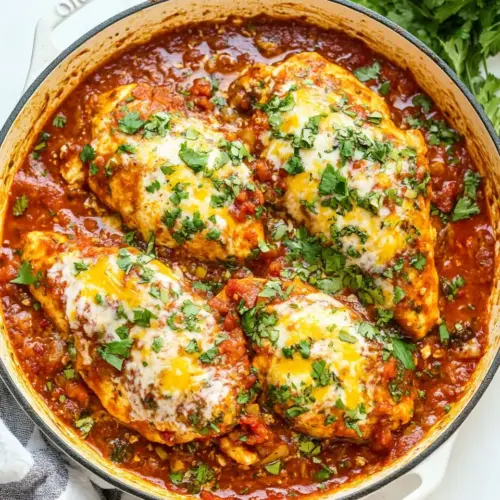
Skillet Salsa Chicken
Skillet Salsa Chicken is a quick, saucy, and crowd pleasing meal with seared chicken, bright salsa, and melted cheese. This easy weeknight dinner delivers crispy edges and a tangy, savory sauce that comes together in minutes, perfect for busy nights when you want something comforting and flavorful. Make it tonight for a fast, satisfying reason to celebrate a simple meal.
Equipment
- Oven-safe skillet
- Spatula
- Measuring Spoons
- Instant read thermometer
Ingredients
- 2 large boneless skinless chicken breasts Pound or slice thinly to ensure even cooking and quicker searing; serves as the primary protein and main body of the dish, providing texture and substance for the salsa to complement.
- 1/2 teaspoon garlic powder Season lightly to add a mellow garlic aroma and deepen savory notes; helps build background flavor that enhances the chicken without overpowering the salsa.
- 1/2 teaspoon chili powder Sprinkle to introduce gentle warmth and smoky complexity; works with other spices to give the chicken a subtle southwestern character that pairs well with tomato-based sauces.
- Salt & pepper to taste Season sparingly to balance flavors and enhance natural tastes; helps bring out the chicken's savory profile and can be adjusted to personal preference for saltiness and heat.
- Flour for dredging Coat lightly to create a thin crust when dredged, helping the chicken brown evenly and slightly thicken pan juices; contributes a crisp surface that contrasts the saucy topping.
- 1 tablespoon butter Melt to baste and aid in browning during searing; adds a subtle richness and helps carry flavors while preventing sticking in the skillet.
- 1 tablespoon olive oil Heat to provide a high smoke point fat for searing; combines with butter for a balanced flavor and helps achieve a golden exterior on the chicken.
- 1/4 cup chicken broth Deglaze the pan to lift browned bits and build a flavorful base for the sauce; adds moisture and concentrates savory notes before adding salsa.
- 1 (14.5 ounce) jar salsa your favorite kind Spoon over the cooked chicken to create the primary sauce component, contributing acidity, sweetness, and spice; forms the signature flavor profile and keeps the dish moist.
- 1 cup shredded Mexican cheese blend Sprinkle over the finished skillet to add melty, gooey richness and a creamy, tangy finish; helps bind the salsa to the chicken and adds visual appeal.
- Fresh cilantro, chopped to taste (optional) Garnish as desired to add a fresh, bright herbal note and a pop of color; enhances aroma and lightens the overall flavor when sprinkled before serving.
Instructions
- Preheat the oven to 400 F and move the rack to the middle position.: When the oven reaches temperature you will notice a steady hum and warmth filling the space, which ensures even finishing heat for the skillet. This mid oven placement lets the top heat penetrate the cheese without burning it, and preheating avoids extended oven times that dry the chicken . A common mistake is skipping preheat, which causes uneven cooking and soggy cheese. If your oven runs hot, watch closely the first time to avoid overbrowning.
- Cut the chicken in half lengthwise so you have 4 thinner cutlets. Sprinkle the chicken pieces with the garlic powder, chili powder, and salt & pepper, then coat them in flour.: You will feel the difference as you slice through, creating thinner pieces that take less time to cook and brown more evenly. The dry rub of powder and salt seasons the meat through and the light flour helps form a crisp exterior and helps the sauce cling later. If you do not pat the chicken dry first, the flour will clump and prevent proper browning. Avoid oversalting, especially when your salsa has salt already.
- Add the butter and oil to an oven-safe skillet over medium-high heat. Once the pan is hot, sear the chicken for 3-4 minutes/side until lightly golden. Take the chicken out of the pan and set it aside.: As the fats shimmer you will smell a toasty richness, and when the chicken hits the pan it should sizzle audibly. That sizzle signals effective Maillard reaction that creates complex flavors and a golden crust. When flipping you should see a golden color, not a pale surface, which means you waited long enough to let the crust form. A common issue is crowding the pan, which drops the temperature and causes steaming instead of searing; work in batches if necessary.
- Add the chicken broth to the pan and scrape up any browned bits. Stir in the salsa.: Deglazing lifts concentrated flavor from the pan, producing an aromatic liquid that will blend with the salsa into a cohesive sauce. You will notice small dark bits dissolve and the aroma deepen as the pan releases those caramelized notes. Stirring helps incorporate those flavors evenly. A pitfall is adding too much liquid, which can thin the sauce; use just enough to loosen the fond and marry it to the salsa.
- Add the chicken back into the pan and let the sauce start to bubble. Spoon some of the salsa over the chicken and sprinkle the cheese over top.: As the sauce begins to bubble gently, it will cling to the chicken and warm through the pieces. Spoon the sauce so each piece gets a glossy coating, then scatter the cheese to form a melty blanket that will brown attractively. The bubbling tells you moisture is evaporating and flavors are concentrating, which is crucial for a balanced finish. A mistake is adding cold cheese too early in a very cool pan; it will simply sit rather than melt. Make sure the sauce is warm before adding cheese.
- Place the skillet in the oven and let it cook for 5-7 minutes (chicken will cook through completely and the cheese will melt). Optional: broil it for a couple minutes (watch it carefully).: broil it for a couple minutes watch it carefully. : In the oven the heat finishes cooking the chicken through while the cheese becomes velvety and slightly golden. You will see the edges of the cheese bubble and perhaps brown, and the sauce will settle into a glossy finish. Use an instant read thermometer if uncertain, aiming for 165 F at the thickest part. Avoid leaving it unattended under the broiler since cheese can go from golden to burnt in moments.
- Serve with fresh chopped cilantro if desired. Season with extra salt & pepper as needed.: The final garnish brightens the dish and adds a fresh contrast to the warmed salsa and cheese. I like to sprinkle cilantro right before serving so the herb retains its color and aroma. Taste a small bite to adjust salt and pepper, because salsa saltiness can vary. Overlooking this final seasoning is common, which can leave the dish tasting flat; a quick taste test remedies that.
Notes
- Choose the right skillet: An oven safe cast iron or stainless steel pan distributes heat evenly and helps develop a deep sear on the chicken. If you do not have one, transfer contents to a baking dish before finishing in the oven.
- Control moisture: Pat chicken dry to prevent the flour from clumping and to promote browning. Excess moisture leads to steaming instead of a crisp surface.
- Adjust spice level: Select mild or hot salsa depending on the heat you enjoy, and balance with extra cheese or a touch more chicken broth if the salsa feels intense.
- Watch broiling closely: If you broil for color, it takes only a minute or two to go from golden to burnt, so stand nearby and keep the oven door slightly ajar when your broiler allows it.
- Use a thermometer: An instant read thermometer removes doubt about doneness, ensuring the chicken hits 165 F without overcooking.
- Fresh herbs last minute: Add the cilantro after the dish comes out of the oven to preserve its bright flavor and color, which enhances the finished plate.