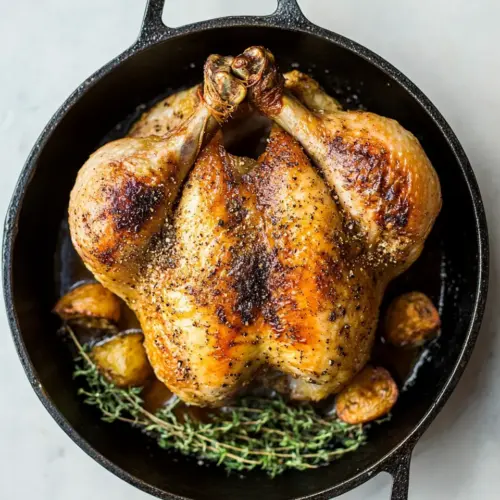
Skillet Roasted Chicken
Skillet Roasted Chicken offers crispy golden skin and tender, juicy meat with minimal fuss. This easy weeknight dinner uses simple ingredients like salt, pepper, and olive oil to create a savory, comforting meal that smells like home. Perfect for a fall roast or casual gathering, it’s a dependable method that yields impressive results and is worth trying for reliably delicious poultry.
Equipment
- Cast-Iron Skillet
- Rimmed Baking Sheet
- Meat Thermometer
Ingredients
- 1 small whole chicken (mine was 3 lbs.) Roast whole to provide the centerpiece protein and deliver moist meat with crispy skin when cooked properly; truss or tuck legs for even cooking and pat dry to promote browning.
- Salt & pepper Season generously to enhance overall flavor balance and bring out natural savory notes; apply before and after oiling for deeper seasoning penetration and adjust to taste.
- 2 tablespoons olive oil divided Coat sparingly to facilitate browning and help carry seasonings onto the skin; reserve half for pan use to prevent sticking and baste during roasting for extra crispness.
- Rub/seasoning optional Customize liberally to complement the chicken and add layered flavors; choose herbs, spices, or blends and apply under and over the skin for maximum infusion.
Instructions
- If possible, salt the chicken at least an hour ahead of time (or even overnight - leave it in the fridge). Pat the chicken dry with paper towel and generously season the inside and outside with salt. Do this at least 15 minutes in advance if you can't do it ahead of time.: The air dried, salted skin will feel slightly tacky and the flesh firms as the salt draws moisture to the surface then reabsorbs it, which helps with seasoning depth and a juicier interior. You may notice a faint mineral scent as the salt works, which is normal and a good sign. A common mistake is skipping this step entirely when you have the time, which can result in a less seasoned center, so if you can plan ahead it's worth it.
- Preheat oven to 425 F and move the rack to the middle of the oven. Place your cast iron skillet in the oven so it warms up (I do this as soon as I start preheating the oven).: When you press the skin and it gives a dry, matte finish that's ideal for browning, the surface will crisp more readily in the oven. Salt the cavity too so each slice has balanced flavor. Avoid leaving damp surfaces, because moisture on the skin will steam instead of crisp.
- Pat the chicken dry again. Coat it in 1 tablespoon of the olive oil. Add some pepper and seasoning/rub if you're using one.: Allowing a brief resting period after seasoning permits the salt to start affecting the meat; you will notice a slight tightening of the skin and a more even distribution of salt. This short wait also reduces oven shock when the bird goes in. A trap to avoid is rushing straight from seasoning to roasting without drying, which undermines crisping.
- Once the oven is hot, take the skillet out and add the remaining olive oil. Move it around the inside of the pan so it's coated.: A fully preheated oven yields that immediate sizzle when the skillet enters, which promotes color and renders fat quickly. Positioning the rack in the middle ensures balanced airflow and heat around the pan. If you skip preheating or use a lower temperature, the skin will not brown properly and cooking time will increase unpredictably.
- Place the chicken in the middle of the skillet, breast side up. Return the skillet to the oven and roast for 45 minutes for a 3-lb. bird (see blog post for timing guidelines for other size chickens). I strongly suggest placing the skillet on a large baking sheet to catch some of the splatter (I did not do this and had to clean my oven).: A hot skillet creates instant contact heat that jumpstarts the Maillard reaction on the skin, giving you even browning. When you remove it, the pan should be shimmering with residual heat; handle carefully as it will be extremely hot. A frequent error is placing a cold pan in the oven, which delays browning and can make the skin rubbery.
- If the skin hasn't browned enough, broil it for a few minutes (watch it carefully so it doesn't burn).: After any resting or refrigeration the skin may collect additional moisture; drying it a second time is noticeable because the surface will look dull and feel dry to the touch, which is what you want for crisping. This step prevents steaming and promotes even color development. Do not skip this just to save a minute, as it often leads to softer skin.
- Let the chicken rest for 10-15 minutes before carving.: The oil will soak into the skin just enough to help it brown and carry any seasoning, and you should see a faint sheen when it is evenly applied. The sound you want later in the oven is a low steady sizzle, indicating good contact. Too much oil can pool and cause spattering, so use the measured amount.
- Add some pepper and seasoning or rub if you're using one: Freshly ground peppercorns will release a bright aroma as the bird heats, and a light rub can offer warmth or herbaceous notes. When applied thinly you will sense the seasoning layer without overpowering the natural meat. Be cautious with heavy sugar based rubs because they can char under the high oven temperature.
- Once the oven is hot take the skillet out and add the remaining olive oil: The oil should shimmer and thin out immediately on the hot metal, releasing a warm scent. This step lubricates the pan and reduces sticking while enhancing the initial sear. A common oversight is adding oil to a lukewarm skillet which does not produce the quick sizzle needed for browning.
- Move it around the inside of the pan so it's coated: Tilt and swirl so the oil covers the cooking surface; you should see a thin, glossy film. This even coating ensures the chicken will sear uniformly where it contacts the skillet. Not coating thoroughly can result in uneven color and hotspots where the skin sticks.
- Place the chicken in the middle of the skillet breast side up: Set the bird so its weight is centered and the breast faces upward, which helps the dark and light meat cook consistently. As it roasts you will hear a gentle sizzle and see juices bubbling at the pan edges; that visual cue means the fat is rendering properly. Avoid crowding the pan or tilting the bird, which can cause uneven roasting.
- Return the skillet to the oven and roast for 45 minutes for a 3 lb bird: During roasting, the aroma will deepen and the skin will progress from pale to golden then to a rich brown, and you may hear a higher pitched pop as juices hit the hot pan. This steady high heat ensures the skin crisps while the interior reaches safe temperature. A typical mistake is opening the oven frequently to check, which lowers the heat and extends cooking time.
- I strongly suggest placing the skillet on a large baking sheet to catch some of the splatter I did not do this and had to clean my oven: The baking sheet will catch drips and make cleanup far easier, and visually you will see rendered fat collecting there, a sign the bird is cooking properly. It also protects your oven from smoking if fat spits. Skipping this can mean a messy oven and potential smoke during broiling.
- If the skin hasn't browned enough broil it for a few minutes watch it carefully so it doesn't burn: Broiling adds intense top heat that crisps and colors the skin quickly, and you should only need a short burst, watching continuously to prevent char. The smell will turn more toasted and the edges may darken within minutes. Common mistake, leaving it unattended, often leads to burned spots instead of an even finish.
- Let the chicken rest for 10 to 15 minutes before carving: Resting allows juices to redistribute, you will notice the meat firms slightly and becomes easier to carve without losing moisture. Cutting too soon causes juices to run out, resulting in drier slices. Resist the urge to slice immediately if you want juicy results.
Notes
- Thermometer is your friend Use an instant read thermometer and aim to remove the bird a few degrees below final target since carryover heat will finish cooking while resting.
- Dry skin for crisping Pat the skin thoroughly and consider air drying in the fridge for an hour or overnight to achieve the crispiest skin possible.
- Hot pan technique Preheat your cast iron so that the moment the chicken hits the skillet you hear an audible sizzle, which promotes browning and texture.
- Oil placement matters Add some oil to the chicken and some to the skillet so both surfaces encourage even browning and prevent sticking.
- Use a rimmed tray beneath Protect your oven from splatters by setting the skillet on a rimmed baking sheet during roasting.
- Finish under broiler if needed If color is lacking, a short burst under the broiler will add an attractive golden finish but watch it continuously.