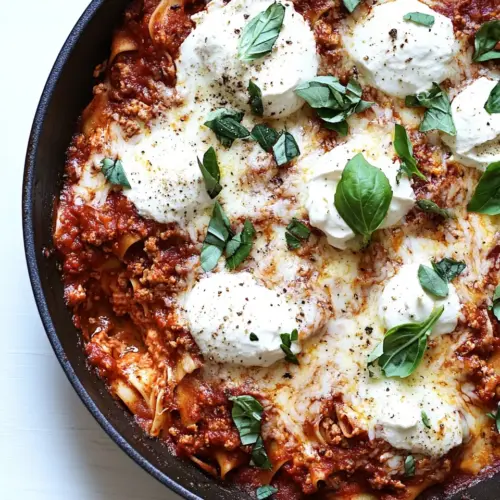
Skillet Lasagna
Skillet Lasagna is a creamy, savory, easy weeknight dinner that layers broken noodles, rich tomato sauce, and savory ground beef in one pan. With bubbling cheese and tender pasta, this quick skillet meal delivers all the comfort of traditional lasagna without the fuss, making it perfect for family nights and busy schedules. Try it for a fast, satisfying dinner that reheats beautifully.
Equipment
- Medium skillet
- Spatula
- Lid
Ingredients
- 1 tablespoon olive oil Heat gently in a skillet to provide a cooking medium and develop flavor for sautéing aromatics and meat, contributing a fruity, slightly peppery base note that enhances the overall dish.
- 1/2 medium onion, chopped Add early to be softened and sweetened, releasing moisture and aromatic compounds that build the savory foundation for the sauce and meld with the meat.
- 1 1/2 pounds ground beef Brown thoroughly to create Maillard flavors and provide rich, savory protein and fat that form the hearty core of the lasagna filling and sauce.
- 1 teaspoons Stone House Seasoning Season the meat while cooking to add balanced savory, herbaceous, and umami notes that deepen overall flavor; use to adjust salt and spice levels to taste.
- 1 1/2 teaspoons chopped fresh oregano (divided), or 1/2 teaspoon dried oregano Fold into the sauce or sprinkle during cooking to contribute a bright, Mediterranean herb character; when fresh, adds aromatic complexity, and when dried, provides concentrated oregano flavor.
- pinch red pepper flakes, optional Sprinkle sparingly to introduce heat and a subtle lingering warmth that lifts and balances rich tomato and cheese flavors when desired.
- 4 cups tomato sauce Simmer with the browned meat and aromatics to create the primary liquid, provide acidity and tomato richness, and bind the pasta and cheeses into a cohesive sauce.
- 8 lasagna noodles, broken into 2-inch pieces Break into pieces and cook directly in the sauce to absorb flavors while providing the pasta structure and comforting texture expected from a lasagna-style skillet dish.
- 3/4 cup grated Parmesan cheese Grate over layers to deliver salty, nutty, umami richness that enhances savory depth and helps create a finished, slightly crisped cheesy topping when heated.
- 1/2 cup ricotta cheese, divided Dollop and layer to add creamy, mild tang and soft texture contrast that balances the robust sauce and enriches the mouthfeel of the assembled skillet lasagna.
Instructions
- Drizzle olive oil into a medium skillet set over medium heat. Add chopped onion and cook until translucent, about 3 minutes. Add the ground beef and cook until browned throughout, about 5 more minutes. Discard any excess drippings.: The moment the olive oil hits the warm skillet it should shimmer and move easily, which tells you the pan is at the right temperature. You will smell a faint fruity note from the oil as it warms. This step ensures the onion saut茅s evenly and prevents the ground beef from sticking, producing even browning. A common mistake is overheating the oil until it smokes, which can impart bitterness; keep the heat moderate. If your skillet seems too hot, remove it from heat briefly to cool and then continue, because gentle heat helps coax sweetness from the onion .
- Stir in the Stone House Seasoning, 1 teaspoon of the fresh oregano, red pepper flakes (if using), tomato sauce, and the broken noodle pieces. Bring to a boil and then reduce the heat to medium-low. Simmer, cover and cook until the noodles are tender, about 20 minutes.: As the onion saut茅s you will hear a steady, soft sizzle and see the pieces turn glossy and then translucent, releasing a sweet, savory aroma. This step builds the aromatic base for the sauce, and cooking until translucency rather than browning keeps the flavor clean. Overcooking to deep brown will change the flavor profile to caramelized and sweeter, which may not suit the intended balance. Stir occasionally to prevent any pieces from catching on the pan, ensuring even softening and a gentle fragrance that signals readiness.
- Remove from the heat and top with Parmesan cheese, ricotta and remaining fresh oregano.: When you add the ground beef it will hit the hot pan with a pronounced sizzle, releasing savory juices and meaty aromas. Use a spatula to break the meat into crumbles so it browns evenly. Browning develops complex flavors through the Maillard reaction, which is essential for depth in the final dish. A common error is crowding the pan, which steams the meat instead of browning it, so keep the pan size appropriate or brown in batches if needed. Once most of the pink is gone and you see browned edges, the beef is ready.
- Discard any excess drippings: After browning the ground beef , pour off or carefully spoon away excess fat until you have a moderate sheen left, which prevents the finished dish from becoming greasy. The residual fat still carries flavor, but too much will weigh down the sauce and alter the intended texture. A typical slip is removing too much fat, leaving the pan dry, which can make the sauce stick; aim to leave just a thin coating. You should still sense meaty aroma without a slick mouthfeel.
- Stir in the Stone House Seasoning, 1 teaspoon of the fresh oregano, red pepper flakes, tomato sauce, and the broken noodle pieces: As you add the seasonings and tomato sauce , the pan will release a fragrant herbal perfume and the sauce will begin to steam. Folding in the broken lasagna noodles now allows them to hydrate directly in the sauce, absorbing flavor as they cook. This integration is crucial for cohesive texture. One pitfall is adding noodles to a sauce that is too cool, which can prevent even cooking; the liquid should be hot and gently moving. Stir carefully to coat the noodles without mashing them, ensuring even distribution of seasoning and pasta.
- Bring to a boil and then reduce the heat to medium-low: Watch for a lively simmer where bubbles rise consistently but are not violently splattering, and then lower to a gentler simmer so the noodles can soften without the sauce evaporating excessively. The sound will shift to a softer bubbling and you will see steam rising steadily. This temperature control keeps the noodles from sticking and the sauce from scorching. A mistake here is leaving it at a rolling boil, which can break down the noodles and thicken the sauce too much. Adjust heat to maintain a consistent gentle simmer.
- Simmer, cover and cook until the noodles are tender, about 20 minutes: While covered, the steam helps the broken lasagna noodles soften through and the flavors meld, producing a saucy, almost risotto like texture. When you lift the lid you should see the sauce bubbling slowly around the pasta and smell a melded tomato herb aroma. If the sauce is still too thin near the end, cook uncovered briefly to reduce; if the noodles are under, add a splash of water and continue covered. Avoid stirring aggressively during this period, which can break the noodle pieces into mush.
- Remove from the heat and top with Parmesan cheese, ricotta and remaining fresh oregano: As soon as the skillet comes off the heat, sprinkle the Parmesan cheese and dot with the remaining ricotta cheese . The residual heat will slightly soften and meld the cheeses, creating creamy pockets and a salty finish. You should notice a glossy sheen where the cheese meets the hot sauce and a fragrant lift from the fresh oregano . A common slip is waiting too long to add cheese, which prevents it from softening into the sauce properly; add them while the skillet is still warm but not actively boiling.
Notes
- Swap seasoning for a milder profile If you prefer a gentler herb profile, reduce the Stone House Seasoning by half and omit the red pepper flakes, which will let the sweet notes of the tomato sauce and onion come forward.
- Boost cheesiness for a creamier finish Stir an extra two tablespoons of ricotta cheese into the hot skillet off heat so the texture becomes silkier and each bite feels more indulgent.
- Make it spicier Increase the pinch of red pepper flakes to a quarter teaspoon and add a sprinkle of the Stone House Seasoning at the end, giving the dish a brighter, spicier kick without changing cooking time.
- Adjust noodle texture For slightly firmer noodle pieces, reduce simmer time by two to three minutes and let the dish rest covered for five minutes, which allows carryover cooking to finish them without going mushy.
- Finish under a broiler for a crisp top If you like a browned surface, transfer the skillet briefly under a hot broiler for one to two minutes after adding the cheeses, watching closely to avoid burning, which creates a contrasting crust.