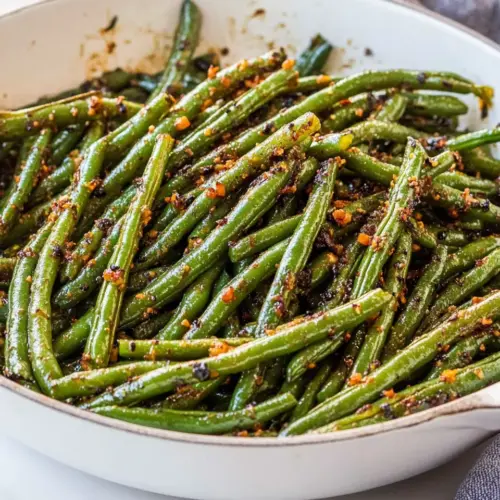
Skillet Green Beans
Skillet Green Beans are a quick, vibrant side with crisp tender green beans, garlicky butter, and bright lemon finish. This easy weeknight side is savory, slightly charred, and perfect alongside roasted proteins. The simple ingredient list and fast cook time make it an ideal choice for busy dinners, yet elegant enough for special occasions so you will want to make it again and again.
Equipment
- 12-inch Cast Iron Skillet
Ingredients
- 1 pound fresh green beans Trimmed and tender, provides the primary vegetable base and main texture for the dish; cooks quickly in a skillet to retain a bright color and slight crunch. Adds freshness and a wholesome, slightly grassy flavor that pairs well with butter and garlic.
- 2 tablespoons butter Melted to create a rich, silky cooking fat that helps brown and flavor the beans while carrying aromatics. Contributes a smooth mouthfeel and a subtle creamy note that balances the brightness of lemon juice.
- 4 cloves garlic (minced) Minced finely to release sharp, aromatic oils that infuse the butter and beans with pungent, savory depth. Adds a garlicky backbone that becomes mellow and sweet as it sautés, enhancing overall flavor complexity.
- 2 teaspoons Italian seasoning Balanced herby blend used to season the beans with Mediterranean-inspired notes such as oregano, basil, and thyme; sprinkles into the skillet to build layered flavor. Helps unify the other seasonings and supports both the garlic and lemon components.
- 1/4 teaspoon red pepper flakes (optional) Slightly spicy option to introduce heat and a chewy texture contrast when used sparingly; can be omitted for a milder finished dish. Adds a subtle warming note that brightens the savory profile without overwhelming other flavors.
- 1/4 teaspoons salt (or to taste) Measured to bring out natural flavors and control taste; seasons the beans during cooking to enhance overall savoriness. Should be adjusted to personal preference, especially when using low-sodium broth.
- 1/4 teaspoon pepper (or to taste) Ground to add gentle pungency and a hint of bite that rounds out the seasoning mix; used sparingly to avoid overpowering the bright and herby notes. Provides aromatic lift and depth when freshly ground.
- 1/4 cup chicken broth (low sodium or no sodium added) Poured in to deglaze the pan and create a light sauce that helps the seasonings cling to the beans while adding savory moisture. Low- or no-sodium options let you better control overall saltiness while imparting subtle umami.
- 2 tablespoons lemon juice (freshly squeezed) Squeezed fresh to introduce bright acidity that cuts through the richness of butter and lifts the flavors of the beans and garlic. Fresh lemon juice adds zesty, clean notes and balances the dish’s savory elements.
- 1 tablespoon chopped parsley Chopped finely to finish the dish with a burst of fresh herbaceous color and mild grassy flavor; sprinkled over at the end to preserve its vibrancy. Enhances presentation and contributes a light, fragrant contrast to cooked components.
Instructions
- Heat the skillet over medium heat and melt the butter. Once melted, add the garlic and let it saute for about 30 seconds, or until it becomes aromatic.: You will hear a gentle hiss as the butter liquefies, and the skillet should shimmer slightly, indicating it is ready. This stage builds a warm, nutty base that will season the aromatics, and it helps the garlic release its essential oils. If the butter smokes right away, the pan is too hot, reduce the heat to avoid burning. Avoid adding the garlic until the butter is melted and just bubbling so it does not char immediately.
- Stir in the green beans, Italian seasoning, red pepper flakes, salt, pepper and broth. Cover the skillet and cook for 10 – 12 minutes; stirring occasionally.: You will smell a toasty, garlicky fragrance within seconds as the minced garlic warms. Listen for a soft popping sound, and watch for tiny translucent edges on the garlic pieces. This brief sauté extracts flavor without browning; if the garlic turns brown, it will taste bitter, so keep it moving in the pan. Stir constantly during this short phase to prevent hot spots.
- Uncover the skillet, turn heat down to medium-low and continue to cook for another 2 to 3 minutes, just until the green beans start to char a bit. Finally, stir in the lemon juice, garnish with parsley and serve warm!: As the green beans hit the pan, you should hear a lively sizzle that tells you the skillet is at the right temperature. Toss them so each bean is coated in butter and seasoning, then add the chicken broth which will create steam and begin the gentle braising process. If your beans look crowded and steam rather than sear, raise the heat slightly or cook in batches to preserve texture. Too much liquid can make them soggy, so resist adding extra at this point.
- Cover the skillet and cook for 10 to 12 minutes; stirring occasionally: With the lid on, the steam will penetrate the beans, softening them while preserving vibrant color. Peek once or twice to stir and redistribute the pan juices so no beans stick and burn. The aroma will deepen as the seasoning infuses; you want beans that are tender when pierced but still have a slight resistance. If after the time they are still too firm, continue cooking in one minute increments to avoid overcooking.
- Uncover the skillet, turn heat down to medium low and continue to cook for another 2 to 3 minutes, just until the green beans start to char a bit: Removing the lid allows moisture to escape so the beans can develop small charred spots for texture and smoky flavor. Watch for tiny browned edges and a gentle sizzling, and stir occasionally so charring is even. If you see large blackened areas, reduce the heat; the goal is a few caramelized patches, not burning. This brief open cooking concentrates flavor and gives a pleasant contrast between tender interior and crisp exterior.
- Finally, stir in the lemon juice, garnish with parsley and serve warm: When you add the lemon juice , notice how the brightness lifts the pan sauce and makes aromas pop. The final stir should create a glossy coating on the beans, and fresh parsley brings a clean, herbaceous finish. Taste before serving and adjust salt and pepper as needed. Serving too late can cool the sauce and mute flavors, so plate while warm for the best balance.
Notes
- Swap the fat: Use olive oil for a dairy free option and to introduce a fruity note; it browns differently than butter, so watch the heat to avoid smoking.
- Adjust the heat: Increase the red pepper flakes for a spicier kick, or omit them entirely for a milder side that kids will enjoy.
- Make it vegetarian: Replace chicken broth with vegetable broth for a fully plant based version without losing the depth of the pan sauce.
- Use frozen beans: If you only have frozen green beans, add a few extra minutes to the covered cooking time and be sure to drain any excess water before uncovering.
- Herb variations: Swap the Italian seasoning for fresh thyme or rosemary for a different aromatic profile; add herbs toward the end to keep them bright.
- Lemon finishing: For an extra layer of citrus aroma, grate a little lemon zest over the beans just before serving in addition to the lemon juice.
- Batch scaling: Double the ingredients when serving a crowd, but use a very large skillet or cook in batches to avoid steaming instead of searing.