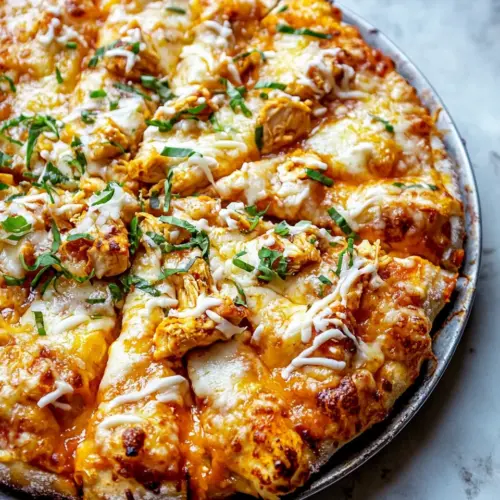
Skillet Crispy Cheese Buffalo Chicken Pizza
Skillet Crispy Cheese Buffalo Chicken Pizza brings a crispy, skillet seared crust topped with gooey, browned cheeses and spicy buffalo tossed chicken. This easy weeknight dinner combines creamy ranch dressing and optional blue cheese for balance, delivering a crunchy, cheesy, and spicy experience that is quick to assemble and perfect for sharing.
Equipment
- Cast-Iron Skillet
- Oven
- Mixing Bowl
Ingredients
- 1 pound pizza dough, at room temperature Bring to room temperature and stretch gently to form the pizza base, providing the chewy crust needed to hold toppings and crisp in a skillet.
- 1 cup cooked shredded chicken Shred finely and toss with sauce so the meat distributes evenly; supplies protein and texture while soaking up buffalo flavor for every bite.
- 1/2 cup buffalo sauce (homemade sauce in notes) Coat the shredded chicken and drizzle over the dough to deliver spicy tang and moisture, acting as the primary flavor driver for the pizza.
- 1/2 cup fresh cilantro, basil, or parsley, chopped Chop finely and scatter over the finished pizza to add bright, herbal freshness that balances the richness and heat from the buffalo sauce.
- 2 cloves garlic, grated Grate and mix into sauces or sprinkle lightly to infuse aromatic depth and a subtle savory bite that complements the cheeses and chicken.
- chili flakes Sprinkle sparingly to add concentrated heat and visual interest; provides optional smoky heat and enhances the overall spiciness of the pizza.
- 1/3 cup ranch dressing (homemade sauce in notes) Drizzle in ribbons or dollops to lend cool, creamy tang that mellows buffalo heat and creates a creamy contrast to the cheeses.
- 1/4 cup crumbled blue cheese (optional) Crumble and distribute as an optional pungent, salty accent that offers a sharp, creamy counterpoint to the spicy buffalo flavors.
- 1 cup shredded whole milk provolone Shred and layer generously to create a melty, slightly elastic cheese layer that contributes creaminess and excellent stretchiness when baked.
- 1 cup shredded cheddar cheese Shred and scatter for sharp, savory flavor and golden browning; adds pronounced cheesiness and complements the other melting cheeses.
- 1/2 cup shredded whole milk mozzarella cheese Shred and distribute to create gooey melt and mild milky richness that helps bind the toppings together and contributes to overall creaminess.
- 1/4 cup chopped scallions Chop and sprinkle after baking to add a mild oniony crunch and fresh green color that brightens each slice with subtle bite.
Instructions
- Position the oven rack in the upper 1/3 portion of your oven. Preheat the oven to 500° F. for at least 30 minutes before baking, preferably 1-2 hours ahead. Place the pizza dough in a lightly oiled 10-12 inch cast iron skillet. Gently press the dough until it covers most of the skillet. Cover and let sit for 30 minutes or up to 2 hours. In a bowl, combine the fresh herbs, grated garlic, and a pinch of chili flakes. To assemble, grab the dough and top with provolone and blue cheese. Drizzle with the ranch and then some of the buffalo sauce. Layer on the chicken and more buffalo sauce. Sprinkle the garlicky herbs over the chicken, then add the cheddar and mozzarella cheese. Slide into the preheated oven and bake for 15 minutes; rotate the pan, and bake another 3-5 minutes or until the crust is golden and the cheese has melted and is crispy. Top the pizza with scallions, additional buffalo sauce and/or ranch. ENJOY!: As the oven preheats, you will notice how positioning affects browning, with the upper third encouraging quicker top browning and cheese blistering. The heat radiates from above and below, so placing the rack a bit higher helps the cheese develop those appealing browned spots while the bottom continues to crisp against the hot skillet. You should smell a warm, toasty note as the oven approaches temperature, and you may hear faint ticking as the elements cycle. Why it matters, the elevated rack promotes mozzarella and cheddar browning without overcooking the crust. Common mistake, don't place the rack too low or the top will remain pale while the bottom burns.
- Preheat the oven to 500° F for at least 30 minutes before baking, preferably 1 to 2 hours ahead: A very hot oven and a thoroughly heated cast iron skillet create the dramatic sear the crust needs. When the skillet is screaming hot, the dough hitting the surface will sizzle audibly and release a toasty aroma almost immediately. That initial sizzle is a cue that the pan is hot enough to start forming a golden, crisp base. If you rush this step, the dough will sit in the pan and slowly heat through, leading to a denser, less crisp crust. Avoid common error, do not skip the long preheat; even small ovens benefit from patience here.
- Place the pizza dough in a lightly oiled 10 to 12 inch cast iron skillet: When the dough meets the oiled skillet you should feel it slide and settle, and the oil creates a protective layer that encourages browning rather than sticking. Press gently with your fingertips so the dough spreads evenly across the skillet, feeling for thin spots that might tear. This tactile moment tells you how relaxed the dough is; if it snaps back, give it more rest. A frequent issue is using too much flour while pressing, which can make the bottom dry; oil is a better ally here.
- Gently press the dough until it covers most of the skillet: A gentle, consistent pressure will coax the dough outward without tearing it, creating an even bed for toppings. You will notice the dough stretching and the surface smoothing under your palms, and a light rim forming at the edge. The goal is an even thickness so the skillet can crisp the bottom while the center cooks through. Overstretching leads to thin weak spots that can break once topped. A small hole can be patched by pinching a bit of dough from the edge and pressing it over.
- Cover and let sit for 30 minutes or up to 2 hours: Resting the dough in the skillet lets it relax and develop subtle air pockets, which become little pockets of chewiness after baking. During this time you may smell a faint yeasty scent as the dough proofs, and it will gently puff. The rest period also makes the dough easier to top and reduces spring back when you add cheeses. Beware of leaving it too long at warm room temperature, which can over proof and weaken structure, making the crust collapse in spots when baked.
- In a bowl, combine the fresh herbs, grated garlic, and a pinch of chili flakes: Mixing these aromatics creates a fragrant topping layer that brightens every bite. When you grate the garlic , volatile oils are released and the aroma becomes immediate and piercing, while the herbs add green, lively notes. The chili flakes provide a background warmth that ties to the buffalo sauce. This herb mixture prevents the pizza from tasting monotonous and adds visual flecks across the surface. One trap is letting the garlic sit too long mixed with salt, which can draw out moisture and become bitter; prepare it close to assembly.
- To assemble, grab the dough and top with provolone and blue cheese: As you layer cheeses, you will see them soften and begin to meld into a glossy blanket that will brown in the oven. The provolone acts as a melt base, while the crumbled blue cheese offers sharp, salty pops. The cheeses should be distributed so every slice has a balance of both. Visual cue, you want an even spread that still leaves room for the other ingredients. Common mistake, piling all cheese in the center can lead to a heavy, underbaked middle.
- Drizzle with the ranch and then some of the buffalo sauce: The interplay of creamy ranch dressing and spicy buffalo sauce forms pockets of contrasting flavor. When drizzled in moderation, the sauces bead on the cheeses and later bake into small glossy spots. The smell becomes tangy and complex, and you will see color variation where the buffalo pools. Avoid dousing the dough, as excess liquid will prevent crisping; a light hand ensures both flavor and texture succeed.
- Layer on the chicken and more buffalo sauce: Adding the shredded chicken now distributes protein across the pie; the pieces should be in small, even fragments so every bite is saucy and not dry. Tossing the chicken in a little buffalo before topping helps the meat meld into the cheese. You may hear slight settling sounds as the toppings compact. The mistake to watch for, large clumps of chicken create pockets that do not heat evenly and can result in a cold bite.
- Sprinkle the garlicky herbs over the chicken, then add the cheddar and mozzarella cheese: Layering the herbs before the final cheeses ensures their aroma infuses the toppings during baking. Adding cheddar and mozzarella on top creates a multi textured melt with golden spots and stretchy strings. As the oven heat hits, you will see the cheeses turn from matte to glossy, then bubble and brown. Resist the urge to open the oven too early, which can interrupt browning and cause heat loss; peek only when the recommended time approaches.
- Slide into the preheated oven and bake for 15 minutes then rotate the pan, and bake another 3 to 5 minutes or until the crust is golden and the cheese has melted and is crispy: Baking at very high heat produces an audible and aromatic transformation, with popping cheese edges and a deep golden rim. The rotation helps achieve even browning because home ovens often have hot spots. Visual cues to look for include bubbles in the cheese that are beginning to brown and a fragrant toasty scent. If the crust is still pale after the time, give it a few extra minutes but watch closely to prevent burning. A common error is underbaking due to low oven temperature; confirm your oven is at the full 500° F and the skillet was hot.
- Top the pizza with scallions, additional buffalo sauce and or ranch: Finishing touches add crunch and bright flavor contrast; the cool scallions and extra drizzle refresh the palate against hot, melty cheese. You will notice a pop of green and a fresh onion perfume when the pizza is sliced. Serve immediately so textures remain at their peak. Avoid letting the pizza sit too long, which will soften the crust and mute the top freshness.
Notes
- Try different herb finishes: Swap between cilantro, basil, or parsley at the end to vary the brightness. Cilantro gives a citrusy lift, basil adds sweet aromatic notes, and parsley offers a clean green finish. Each herb pairs differently with the buffalo chill, so pick based on the mood you want.
- Adjust the buffalo to ranch ratio: If you like more heat, increase buffalo and reduce ranch before baking, or keep ranch on the side for dipping. The balance determines whether the pizza feels zesty or creamy, so taste and tweak according to your guests.
- Use a blend of cheeses for texture: Combining provolone for melt, mozzarella for stretch, and cheddar for bite gives complex texture and flavor; distribute them so no single cheese dominates. Freshly shredding them improves melt and avoids anti caking residues.
- Pre toss the chicken in sauce: Coating the shredded chicken lightly with buffalo ensures the meat carries flavor and stays moist while baking. This step prevents dry pockets and integrates the spice into the protein.
- Finish with fresh scallions and extra sauce: Add chopped scallions for crunch and color after baking, and offer extra buffalo and ranch so diners can customize each slice. Cold toppings contrast nicely with hot melty cheese.
- Control oven heat for desired crust: If you prefer a softer crust, reduce oven temp slightly and extend bake time; for maximum crisp, stick to a very hot oven and shorter bake. Know your oven’s hot spots and adjust placement accordingly.