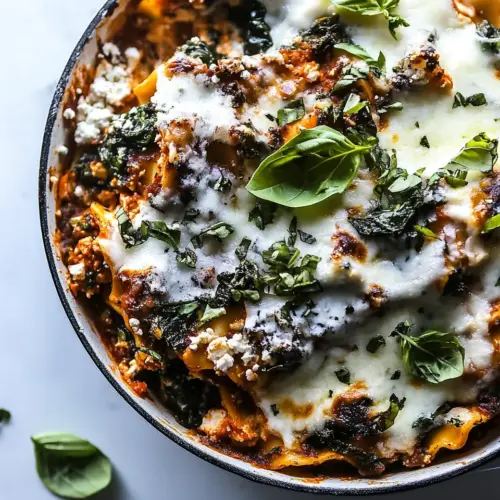
Simple Vegetarian Skillet Lasagna
Simple Vegetarian Skillet Lasagna is a creamy, cheesy, and easy weeknight dinner that layers sautéed vegetables, broken no boil noodles, and melty cheeses in one pan. The addition of green lentils adds hearty texture while sun dried tomatoes and basil brighten each bite, making this a comforting vegetarian meal worth making again.
Equipment
- Large high side skillet
- Dutch Oven
- Oven
- Baking Sheet
Ingredients
- 2 tablespoons olive oil Heat and flavor the skillet while providing a medium for sautéing vegetables and building the sauce base; brings a fruity richness that helps brown other ingredients and carry aromatics.
- 1 zucchini chopped Add texture and mild moisture when chopped, contributing a tender bite and subtle vegetal sweetness that balances richer components in the skillet layers.
- 8 ounces button mushrooms finely chopped Supply an earthy, umami depth and meaty texture when finely chopped; release moisture that melds into the sauce and enhances savory complexity throughout the dish.
- 1 red pepper seeded + chopped Deliver a bright, sweet peppery note and colorful contrast when seeded and chopped; contributes fresh crunch and balances richer, creamier cheeses.
- 2 cloves garlic minced or grated Infuse pungent, aromatic intensity when minced or grated; provides a foundational savory kick that brightens the entire skillet and pairs with herbs and tomatoes.
- 1 jar roasted garlic or tomato basil pasta sauce Form the saucy backbone of the lasagna layers; brings concentrated roasted garlic or tomato-basil flavors that coat noodles and vegetables and create cohesive seasoning.
- 1 cup milk Add creaminess and loosen tomato sauce, creating a silkier texture for the filling; mild dairy notes temper acidity and help bind the components when heated.
- pinch of crushed red pepper flakes Introduce a touch of heat and subtle smoky warmth; a small pinch elevates overall flavor without overpowering the dish, complementing tomatoes and cheeses.
- 1/2 cup oil packed sun-dried tomatoes oil drained Contribute concentrated sweet-tangy tomato flavor and rich oil that carries herbs and spices; drained oil-packed sun-dried tomatoes add chewy texture and intense savory notes.
- 1/2 cup rinsed green lentils Provide plant-based protein and a hearty, slightly nutty texture; rinsed green lentils hold shape in the skillet and contribute satisfying substance similar to traditional meat layers.
- 6 ounces no boil lasagna noodles Create the pasta structure for the skillet lasagna; no-boil noodles soften into tender sheets that separate layers and absorb sauce, binding the components together.
- 2 cups fresh spinach Add bright, leafy freshness and tender chew when layered; spinach wilts into the hot skillet, reducing volume while contributing color and mild vegetal flavor.
- 1 cup fresh basil Offer fragrant herbaceous brightness and aromatic lift when fresh; basil layered into the dish enlivens the rich cheeses and tomato sauce with a clean, peppery finish.
- 8 ounces mozzarella sliced Melt into gooey, milky strings and provide a classic lasagna melt; sliced mozzarella gives creamy pockets and a satisfying pull when baked or heated in the skillet.
- 4 ounces provolone shredded Supply sharp, melty complexity when shredded; provolone adds balanced tang and helps create a cohesive, stretchy cheese layer throughout the skillet lasagna.
- 1/3 cup grated parmesan plus more for topping Bring salty, nutty umami when grated; parmesan adds savory depth sprinkled into layers and as a finishing garnish to enhance overall flavor.
- pesto, for serving (optional) Serve as an optional vibrant finishing touch; pesto adds herbal, garlicky, and oily richness when spooned over individual portions, complementing the tomato and cheese flavors.
Instructions
- Preheat the oven to 375 degrees F.: Warmth in the kitchen sets the stage for finishing the dish properly, and preheating to 375 degrees F ensures the cheese melts evenly without overbrowning too fast. You'll want to notice the oven indicator reach temperature before the skillet goes in, this helps achieve a bubbly top within the suggested time. Common mistake to avoid is skipping preheat, which can lead to uneven melting and a longer bake time.
- Heat a large, high-side skillet or dutch oven over medium heat. Add a drizzle of olive oil. Once hot, add the zucchini, mushroom and red pepper. Season with salt + pepper. Cook 3 minutes or until just lightly caramelized. Add the garlic and cook another minute. Stir in the tomato pasta sauce, milk and a pinch of crushed red pepper flakes. Stir in the sun-dried tomatoes, lentils + 1/4 cup water. Break each lasagna noodle into 2-3 pieces and stir them into the sauce, making sure most of them are submerged. Cook until the noodles are al dente and the lentils are soft, about 15 minutes. If the sauce seems like it is getting too thick, add water to thin.: When the pan warms, add a drizzle of olive oil and watch for a gentle shimmer, signaling it's ready. A roomy, deep skillet or dutch oven helps contain sauce and pasta pieces as they soften, and moderate medium heat prevents the vegetables from burning while allowing them to brown slowly. If the pan gets too hot, the vegetables will char rather than caramelize, so reduce the heat slightly when you see rapid smoking.
- Stir in the spinach + basil until they have wilted down into the sauce. Remove from the heat and add the mozzarella, provolone and parmesan.: As the vegetables hit the oil, you should hear a soft sizzle and then see moisture released as they soften. Stir occasionally, allowing bits to brown and develop sweeter, roasted notes. Let them cook until just lightly caramelized, which usually takes a few minutes and adds depth to the finished sauce. A common error is overcrowding the pan which leads to steaming rather than browning, so give them space and cook in batches if necessary.
- Place the skillet on a large baking sheet. Place in the oven and bake for 10 minutes or until the cheese has melted and is bubbly. Remove and let sit 5 minutes. Serve with basil pesto and fresh parmesan. Enjoy!: Seasoning at this stage helps draw moisture from the vegetables and enhances natural flavors, creating a more layered sauce. Taste as you go and adjust, adding more seasoning gradually. Over-salting early is a trap, so add in small increments and remember cheeses and sauce add salt later.
- Cook 3 minutes or until just lightly caramelized: Listen for the gentle sizzle and watch for edges to turn golden, these visual cues tell you the vegetables have developed sweetness. This step concentrates flavor and builds a flavorful base for the sauce, which prevents a flat tasting final dish. Be careful not to overcook, or the vegetables will lose their texture.
- Add the garlic and cook another minute: When garlic hits the warm vegetables you should immediately smell its fragrant aroma deepen, and the pan will come alive with savory scent. Cooking garlic briefly mellows its raw bite and releases sweet undertones, but it burns quickly so keep it moving and reduce heat if you smell charring.
- Stir in the tomato pasta sauce milk and a pinch of crushed red pepper flakes: Combining the pasta sauce with milk softens acidity and yields a creamier base, while the crushed red pepper flakes add gentle heat. The sauce should look glossy and slightly thinned; if it seems curdled, keep stirring gently and bring to a simmer to marry the liquids. A mistake is adding cold dairy to a very hot pan, which can cause separation, so temper by stirring steadily.
- Stir in the sun-dried tomatoes lentils and 1 4 cup water: Fold in the drained sun-dried tomatoes for concentrated tomato flavor and the rinsed green lentils for body. The added water helps the lentils and pasta hydrate, creating the right consistency for the noodles to cook. If the sauce becomes too thick while the noodles cook, add small splashes of hot water to maintain a gentle simmer instead of a hard boil which can stick the pasta to the pan.
- Break each lasagna noodle into 2 to 3 pieces and stir them into the sauce: As you add the broken lasagna noodles , press them gently into the sauce so they are mostly submerged, which helps them soften evenly. The noodles will absorb liquid and soften over the next several minutes, becoming tender and infused with sauce flavor. Avoid piling them on top; if they are not submerged they will cook unevenly and stay firm in spots.
- Cook until the noodles are al dente and the lentils are soft about 15 minutes: During this simmer notice small bubbles around the pan edge and a fragrant steam rising, signals that the pasta is cooking through. Taste a noodle piece for the ideal al dente texture, slightly tender but with a faint chew. If your noodles are underdone after the suggested time, continue simmering, adding a little hot water as needed to avoid dryness. Overcooking will make the pasta mushy, so monitor frequently.
- If the sauce seems like it is getting too thick add water to thin: Keep an eye on the sauce viscosity, it should coat the noodles without being gluey. Adding hot water by tablespoons keeps the consistency flexible and prevents burning on the bottom. A thick sauce can leave dry pockets; the fix is gentle thinning, but do not add so much water that the dish becomes soupy.
- Stir in the spinach and basil until they have wilted down into the sauce: Fresh spinach and basil will collapse quickly, turning from bright and leafy to a deep green that blends seamlessly into the sauce. Stir gently until the leaves are fully incorporated and you can smell the fragrant herbs. Overcooking herbs will mute their aroma, so add them near the end for maximum freshness.
- Remove from the heat and add the mozzarella provolone and parmesan: With the skillet off the stove, scatter the sliced mozzarella , shredded provolone , and grated parmesan across the top so they start to soften from residual heat. This step readies the dish for the oven and ensures even melting, contributing to a creamy, cohesive finish. A common slip is piling all cheese into one spot, which can lead to uneven melting, so distribute evenly.
- Place the skillet on a large baking sheet and place in the oven and bake for 10 minutes or until the cheese has melted and is bubbly: Moving the skillet to a baking sheet makes it easy to transfer in and out of the oven and catches any bubbling sauce. Look for the cheeses to become uniformly melted and beginning to bubble, with pockets of golden color. If the top is not bubbling after the time suggested, give it a few more minutes, but watch carefully to avoid excessive browning.
- Remove and let sit 5 minutes: Letting the skillet rest allows the sauce to settle and the cheese to firm slightly, making serving cleaner and enhancing texture. During this brief rest the flavors meld and the temperature evens out. Cutting into it too soon can cause the sauce to run excessively and the layers to fall apart.
- Serve with basil pesto and fresh parmesan: A spoonful of pesto and a shower of extra parmesan on each plate brightens the dish with herbaceous and salty notes, elevating the overall profile. The contrast of warm, cheesy skillet lasagna with cool, vibrant pesto is delightful. Avoid adding too much pesto so the original flavors remain balanced.
Notes
- Make it gluten free: Use certified gluten free no boil lasagna noodles and ensure your jarred pasta sauce is labeled gluten free, this preserves the overall technique while accommodating gluten sensitivities.
- Boost protein: Increase the green lentils to three quarters cup and cook them until tender for a heartier version that keeps the dish vegetarian but more filling.
- Swap cheeses for lower fat: Choose part skim mozzarella and reduce the provolone quantity slightly if you prefer a lighter finish while maintaining a melty texture.
- Increase herb brightness: Stir extra chopped basil into the finished skillet off heat and finish with an extra drizzle of pesto to amplify herbal notes without changing cooking time.
- Make it ahead: Prepare through the stovetop steps, cool, cover, and refrigerate. When ready, add cheeses and bake until bubbly. This makes entertaining simpler and flavors meld overnight.