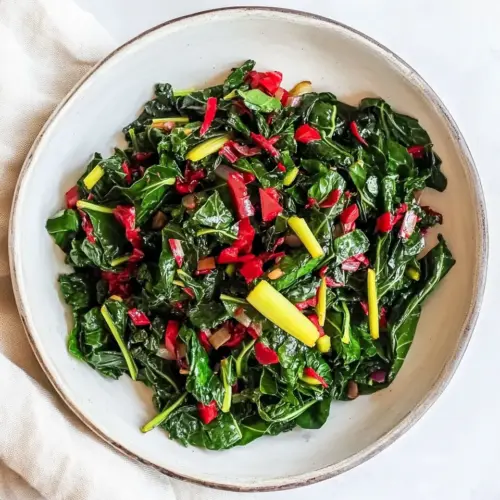
Simple Swiss Chard
Simple Swiss Chard is a quick, bright side that celebrates leafy greens with garlicky depth and a citrus finish. This easy recipe yields tender, vibrant chard in minutes, perfect for an easy weeknight dinner or a spring vegetable side. Expect crisp stems, wilted leaves, and a balance of savory and fresh flavors that make it worth making again and again.
Equipment
- Large Skillet
- Knife
- Cutting Board
Ingredients
- 2 bunches Swiss chard, about 1 pound Wilt and tenderize the leafy greens while providing the base volume for the dish; remove thick stems or chop them finely so they cook evenly and release a mild, earthy flavor that complements the other components.
- 1 tablespoon extra-virgin olive oil Coat the pan evenly and infuse the dish with a fruit-forward richness; heat gently to release aromas and prevent sticking without overpowering the delicate chard.
- 2 garlic cloves, thinly sliced Impart a sharp, aromatic punch and deepen savory notes; slice thinly to maximize surface area so the garlic softens quickly and flavors the oil during cooking.
- 1/4 teaspoons ea salt, plus more to taste Season gently and help elevate the natural flavors; measure precisely to avoid oversalting, then adjust at the end to taste for a balanced finish.
- Freshly ground black pepper Add a to-your-taste savory warmth and subtle heat; grind fresh over the finished dish to brighten flavors and provide a final, aromatic seasoning contrast.
- Lemon wedge, for squeezing Brighten and balance the dish with a burst of acidity; squeeze just enough juice to lift the greens and cut through richness without overwhelming the other flavors.
Instructions
- Slice the stems off the chard leaves and chop the stems into 1/4-inch slices. Coarsely chop the leaves.: The scent of fresh greens is immediate, slightly earthy and green, and as you slice you'll hear the stems snap faintly, a sign of freshness. Chopping stems into even, about 1/4-inch pieces ensures they soften uniformly when cooked, avoiding some pieces turning to mush while others stay too firm. A common mistake is leaving stems whole, which leads to long cooking times and a limp texture in the leaves. Keep the leaf pieces roughly the same size so they wilt evenly, and if the stems are very thick, slice them a touch thinner to speed cooking.
- Heat the oil in a large skillet over medium heat. Add the chard stems and cook for 1 to 2 minutes, or until they begin to soften. Add the chard leaves, garlic, salt, and several grinds of pepper and sauté for 1 to 2 minutes, or until the leaves are wilted.: As the extra virgin olive oil warms you should smell a faint fruity aroma, and the surface will shimmer gently when it's ready. Adding the stems first allows them to release a mild sweetness as their cell walls break down, giving textural contrast to the leaves. If the pan is too hot the oil will smoke and the stems can brown too fast, so aim for a steady medium heat. A frequent error is crowding the pan, which steams rather than sautés the stems; give them room so they cook with a little sizzle and stay bright.
- Turn off the heat, squeeze a little lemon juice over the chard, and toss. Season to taste and serve.: Once the leaves hit the pan you'll hear a soft hiss as they fold into the hot oil, releasing steam and a green, vegetal aroma that is instantly pleasing. The thin slices of garlic will warm and smell nutty rather than harsh, integrating with the wilted leaves. You're aiming for tender, glossy leaves that still retain some structure, not a limp, lifeless pile. Overcooking here dulls the flavor and makes the texture mushy, so watch closely and stir so heat distributes evenly. If the garlic starts to brown too much, reduce the heat quickly to prevent bitterness.
- Turn off the heat, squeeze a little lemon juice over the chard, and toss. Season to taste and serve.: The zesty spray of lemon will lift the aroma, adding sharp citrus notes that balance the greens' earthiness. Tossing off-heat lets the lemon keep its brightness without breaking down into bitterness under high heat. Taste and adjust the salt and black pepper , because seasoning at the end ensures flavors are vibrant and tailored to preference. A typical slip is adding too much lemon early on, which can overwhelm; adding it at the end preserves its sunny character.
Notes
- Add toasted nuts — Sprinkle toasted pine nuts or chopped walnuts at the end for crunch and a toasty note that contrasts the tender leaves.
- Finish with citrus zest — Grate a touch of lemon zest over the dish before serving to intensify the citrus aroma without extra acidity.
- Use flavored oil — Swap plain oil for a chili infused oil to introduce a gentle heat, being mindful not to overpower the greens.
- Swap citrus — Try a splash of mild vinegar instead of lemon when you want a different bright acid profile, adding it off the heat for freshness.
- Fold in cooked grains — Toss the cooked chard with warm quinoa or farro to turn this side into a more substantial warm salad, serving as a light main.