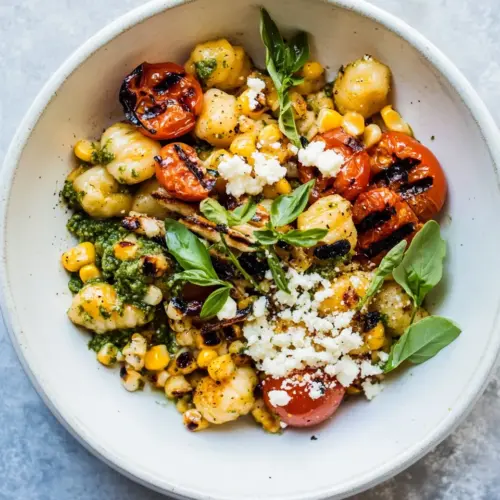
Simple Summer Tomato Pesto Grilled Corn Gnocchi
Simple Summer Tomato Pesto Grilled Corn Gnocchi is a creamy yet bright summer bowl, combining roasted cherry tomatoes, smoky grilled corn, and pillowy potato gnocchi with a nutty walnut pesto. This easy weeknight dinner feels indulgent but fresh, perfect for casual entertaining or a satisfying solo meal. Make it for seasonal produce and a fast, flavorful reason to celebrate summer.
Equipment
- Oven
- Baking Dish
- Food Processor
- Large Pot
- Colander
- Grill
Ingredients
- 2 pints cherry tomatoes Burst with juicy sweetness and acidity to build the fresh tomato base; roast or blister to concentrate flavor and add depth to the pesto-tossed gnocchi.
- 1/3 cup + 2 tablespoons olive oil divided Dress and sauté components using measured oil portions; reserve two tablespoons for finishing to add sheen and carry flavors across the dish.
- kosher salt + pepper Season generously to enhance all elements; balance saltiness and pepper heat to taste while bringing out tomato and cheese nuances.
- 2 cloves garlic finely chopped or grated Mince finely to infuse bright aromatics into the pesto and pan sauces; release pungent garlic oils for savory backbone without overpowering.
- 2/3 cup toasted walnuts Provide toasty, nutty richness when ground into the pesto; contribute texture and body that replaces traditional pine nuts affordably.
- 1 teaspoon lemon zest Zest to add concentrated citrus brightness and lift; scatter into the pesto or finish to cut through richness and refresh the palate.
- 1/2 teaspoon crushed red pepper flakes Sprinkle for layered heat and subtle smokiness; adjust quantity to suit spice tolerance while adding a lively kick.
- 1/2 cup grated parmesan Grate finely to introduce savory umami and creamy saltiness that binds the pesto and complements both gnocchi and vegetables.
- 16 ounces potato gnocchi I like to use DeLallo Brand Cook quickly to pillowy tenderness and absorb surrounding flavors; choose a high-quality brand for consistent texture when pan-searing or tossing.
- 1 zucchini or yellow summer squash peeled into ribbons Create delicate vegetable ribbons to add tender-crisp freshness and mild vegetal notes; fold into the warm gnocchi for contrast and color.
- 2 ears grilled corn kernels removed from the cob Add sweet, charred corn kernels for smoky crunch and summer character; fold in to create bursts of texture and natural sweetness.
- 1 cup fresh basil roughly torn Tear roughly to provide bright herbaceousness and aromatic lift; mix into the pesto so leaves wilt slightly and perfume the dish.
- 6 ounces feta cheese crumbled Crumble to contribute tangy creaminess and salty depth; scatter over the finished plate for contrast against the pesto and egg yolk.
- 2 -3 poached eggs Poach and top to introduce silky richness and luxurious mouthfeel; break to allow runny yolk to meld with pesto for a velvety finish.
Instructions
- Preheat the oven to 400 degrees F.: You will feel the kitchen shift as warmth builds, and the consistent oven temperature ensures the cherry tomatoes roast evenly into soft, jammy pockets. The dry heat encourages skins to split and sugars to concentrate, which is what gives depth to the pesto. A common mistake is uneven placement on the baking dish, which causes some tomatoes to scorch while others remain firm. Arrange them in a single layer and check at the 10 minute mark for caramelization.
- Add the cherry tomatoes, 2 tablespoons olive oil, the garlic and a generous sprinkle of salt and pepper to a baking dish. Toss well, making sure the tomatoes are coated in olive oil. Roast for 10-15 minutes or until the tomatoes collapse. Remove, and allow the tomatoes to cool slightly.: As the garlic and cherry tomatoes mingle with oil, you will notice a fragrant, savory aroma starting to rise. Tossing ensures each tomato is coated so they blister uniformly instead of drying out. The oil helps them roast rather than bake dry, locking in juicy texture. Avoid using too much salt at this stage because flavors concentrate during roasting.
- Add half of the tomatoes (reserving the remaining tomatoes for tossing with the gnocchi) and both cloves of garlic to a food processor along with the remaining 1/3 cup olive oil and the toasted walnuts. Pulse until mostly smooth. Add the lemon zest, crushed red pepper and parmesan, pulse to combine. Taste and add more salt if needed.: When you toss, listen for gentle sliding and look for a glossy sheen on the tomatoes, which signals they are ready for the oven. This step primes the tomatoes to caramelize and release bright juices. A common problem is using a pan that is too deep, which traps steam and prevents that blistered finish; use a shallow baking dish instead.
- Bring a large pot of salted water to a boil. Boil the gnocchi according to package directions. Before you drain the gnocchi scoop out about 1/2 cup pasta water, drain the gnocchi well, and then add it back to the hot pot. To the gnocchi, add the zucchini and give it a good toss. Next add about half of the tomato pesto and toss, adding more pesto if desired (you may not use all of the pesto). Stir in the reserved roasted tomatoes, grilled corn and basil. If needed, thin the gnocchi sauce with the reserved pasta water.: The visual cue is the skins splitting and the tomatoes collapsing into softened blobs, releasing concentrated juices. You will smell a deeper, slightly sweet roasted scent, and some edges may brown, adding savory complexity. If you pull them out too early they will still be firm and lack the jammy character needed for the pesto.
- Divide the hot gnocchi among plates and top with feta cheese and a poached egg. Sprinkle the egg with salt + pepper. EAT!: Cooling a bit makes them safer to handle and keeps stray steam from watering down the pesto when blended. The slight cooling helps preserve some texture for the tomatoes reserved for tossing with the gnocchi . A frequent oversight is processing while too hot which can thin the sauce excessively; let them come down for a few minutes.
- PS. I like to break the egg and then toss it with the gnocchi, it creates a carbonara like gnocchi!: The sound of the processor engaging will be immediate, and the mixture will transform from chunky to a silky paste. The walnuts create body while the oil emulsifies the tomatoes into a cohesive pesto. If your processor is too small, work in batches to avoid uneven blending and splatter.
- Pulse until mostly smooth: You are aiming for a texture that is spreadable but still has tooth from the walnuts. The pulsing motion prevents overheating, preserving vibrant flavors and bright color. Overprocessing can lead to a pasty texture and loss of fresh aroma, so stop when you see a slightly coarse creaminess.
- Add the lemon zest, crushed red pepper and parmesan, pulse to combine: These final additions layer brightness, gentle heat, and umami. The aroma will lift as the lemon oils release, and the parmesan will melt into the warm mixture, binding it. Taste and adjust salt at this point because the cheese adds salinity; avoid oversalting early.
- Taste and add more salt if needed: Tasting is the control point for balancing acid, salt, and heat. A small pinch of salt can make the pesto pop, while too much will dominate the delicate tomato and basil notes. If it tastes flat, a touch more lemon zest can revive it, but be cautious about adding more oil that can mute brightness.
- Bring a large pot of salted water to a boil: The water should be at a rolling boil so the gnocchi cook evenly. Salted water seasons the gnocchi from the inside out, improving flavor. An under-salted pot results in bland dumplings, while over-salting is hard to correct later, so aim for water that tastes slightly briny.
- Boil the gnocchi according to package directions: You’ll see the gnocchi float when they are nearly done, a visual cue to watch closely. The tender, pillowy texture should be preserved, not dissolved into the water, so once they float give them a brief additional simmer and then scoop promptly. Overcooking makes them fall apart and turn gummy.
- Before you drain the gnocchi scoop out about 1/2 cup pasta water: The starchy cooking liquid is gold for adjusting sauce consistency; it helps the pesto cling and creates silkiness. Notice how the water looks slightly cloudy with starch. If you discard it all, the sauce may be too thick or fail to coat the gnocchi properly.
- Drain the gnocchi well, and then add it back to the hot pot: Returning the gnocchi to the warm pot allows residual heat to help the sauce adhere. The pot's gentle warmth invites the pesto to meld with the dumplings. Avoid leaving them sitting in a colander where they can cool and stick together.
- To the gnocchi, add the zucchini and give it a good toss: The warmth slightly wilts the zucchini ribbons so they soften but keep structure, creating a pleasant bite. Tossing at this stage integrates the ribbons without letting them release excess water, which would make the sauce watery. If the zucchini seems too moist, drain briefly on paper towel before adding.
- Next add about half of the tomato pesto and toss, adding more pesto if desired: As you fold the pesto in, the aroma will turn herbaceous and nutty, and you will see the sauce coat each pillow of gnocchi . Start with half to control balance, because too much pesto can overwhelm the tender dumplings and make the dish oily. If sauce clumps, add a splash of reserved pasta water for smoothness.
- Stir in the reserved roasted tomatoes, grilled corn and basil: The roasted tomatoes add sweet bursts, the grilled corn gives smoky sweetness, and the fresh basil lifts the whole bowl with herbal perfume. Stir gently to keep the tomatoes intact and to distribute kernels evenly. A common slip is stirring too vigorously which can mash the roasted tomatoes into the sauce completely; be gentle for texture contrast.
- If needed, thin the gnocchi sauce with the reserved pasta water: Use the starchy water in small increments until the pesto achieves a glossy, clingy finish. The sauce should coat but not pool at the bottom of the bowl. Adding too much water will dilute flavors, so adjust gradually and taste as you go.
- Divide the hot gnocchi among plates and top with feta cheese and a poached egg: The contrast between warm gnocchi , salty feta cheese , and the soft runny yolk creates a luscious mouthfeel. The visual of crumbled cheese and a glossy egg on top is inviting. If the egg is overcooked, you lose that saucy richness, so time poaching carefully.
- Sprinkle the egg with salt + pepper: A final seasoning lift accentuates flavors. Salt draws out the yolk's silkiness while cracked pepper adds warmth. Taste one forkful to ensure seasoning is balanced across the plate, and adjust at the table if needed.
- EAT!: Enjoy the symphony of textures and flavors: pillowy gnocchi , roasted tomato bursts, crunchy walnuts, smoky corn , tangy feta cheese , and the luxurious poached egg . Serve immediately for best texture, as gnocchi will firm up if left to cool.
- PS I like to break the egg and then toss it with the gnocchi: When the runny yolk coats the gnocchi it creates a silky, carbonara like sauce that binds everything together. The silky texture elevates the dish from simple to indulgent, and it is a technique I reach for whenever I want an extra comforting bite. Be mindful not to scramble the yolk by tossing too vigorously.
Notes
- Use quality olive oil it makes a noticeable difference in flavor and mouthfeel, especially since oil is a main binder for the pesto.
- Toast nuts carefully walnut oils bloom quickly, so watch for fragrant aroma and light browning to avoid a bitter note.
- Control salt in stages taste after assembling the pesto and again after tossing with the gnocchi so you can adjust without over seasoning.
- Grill the corn for smoky depth the charred kernels add a savory-sweet element that contrasts beautifully with the roasted tomatoes.
- Keep basil fresh tear it rather than chopping to preserve essential oils and avoid bruising which dulls flavor.
- Use reserved pasta water to adjust sauce viscosity slowly, a tablespoon at a time until glossy and cohesive.