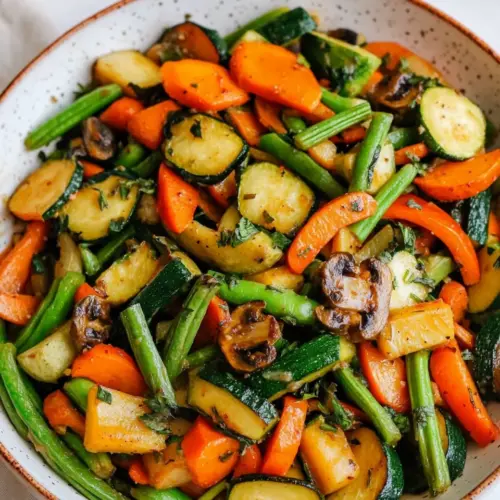
Simple Sautéed Vegetables
Simple Sautéed Vegetables are a quick, colorful medley of tender asparagus, sweet carrots, zucchini, and mushrooms tossed in fragrant olive oil and garlic. This easy weeknight side is crispy at the edges yet tender within, with warm spices that add depth. Perfect for busy evenings, it elevates everyday produce into a satisfying and healthy dish you'll want to make again and again.
Equipment
- Large Skillet
- Spatula
Ingredients
- 2 tbsp olive oil Provides a flavorful cooking medium and promotes even browning while preventing sticking; adds a subtle fruity richness to vegetables and helps distribute seasonings. Use moderate heat to avoid smoking and preserve its aroma. Enhances mouthfeel and assists in sautéing ingredients to tender-crisp perfection.
- 3 garlic cloves, minced Adds a pungent aromatic base and builds savory depth when softened; releases oils that infuse the oil and vegetables with a warm garlicky flavor. Mince finely to maximize surface area for quick cooking and even distribution. Helps bridge and amplify the flavors of the vegetable mix.
- 1 cup carrots, sliced Contributes natural sweetness and firm texture; slices offer bite and color contrast while softening with heat. Cook early or add slightly before denser vegetables to ensure even tenderness. Complements savory seasonings and balances sharper flavors.
- 1 lb asparagus, ends trimmed and cut into 1-inch pieces Provides a crisp-tender, slightly grassy element and substantial texture; trimming ends and cutting into uniform pieces ensures even cooking. Adds bright green color and a fresh flavor that pairs well with garlic and lemony seasonings. Cooks quickly and should be timed to avoid over-softening.
- 1 zucchini, sliced Delivers a mild, slightly sweet, and tender component that soaks up seasonings; slicing promotes rapid, even cooking. Adds soft texture and neutral flavor that complements stronger vegetables. Helps create a balanced medley without overpowering other flavors.
- 1 red bell pepper, sliced Offers sweet, fruity tones and vibrant color; slicing creates ribbons that cook quickly and provide pleasant crunch when not overcooked. Adds visual appeal and a slightly crisp texture that contrasts with softer elements. Pairs well with savory herbs and spices.
- 8 oz mushrooms, sliced Adds umami richness and earthy flavor while releasing moisture to create silky texture; slicing increases surface area for browning. Sautés to develop caramelized edges that deepen overall dish flavor. Helps balance sweetness from other vegetables with savory depth.
- 3 or 4 green onions, chopped Contributes a mild oniony sharpness and fresh green aroma; chopped pieces provide bursts of flavor and a delicate crunch. Sprinkle toward the end of cooking to preserve color and brightness or use raw as a finishing garnish. Enhances aromatic complexity without overwhelming the dish.
- 1 tsp kosher salt Seasoning that enhances overall flavor balance and amplifies natural tastes; kosher salt dissolves easily and can be adjusted to preference. Distributes evenly over vegetables to draw out moisture and improve seasoning penetration. Essential for bringing together the various vegetable flavors.
- 1/2 tsp Italian seasoning Offers a balanced blend of Mediterranean herbs that introduce earthy, aromatic notes; Italian seasoning simplifies flavoring with oregano, basil, and thyme. Sprinkling during cooking allows the herbs to bloom and meld with other spices. Provides a cohesive herbal backbone to the sauté.
- 1/2 tsp onion powder Provides concentrated onion flavor without adding moisture; onion powder blends smoothly into oil and vegetable juices for consistent taste. Useful for layering savory notes without texture changes that fresh onion would bring. Enhances depth and complements garlic presence.
- 1/4 tsp paprika Adds mild smoky warmth and color; paprika contributes subtle sweetness and visual appeal when dusted over vegetables. Works well with other spices to create complexity and a gentle roasted flavor. Use sparingly to avoid overwhelming delicate vegetable flavors.
- 1/4 tsp black pepper Contributes subtle heat and a sharp, biting warmth that enhances overall spice profile; black pepper adds aroma and a peppery finish when freshly ground. Distribute toward the end of cooking to preserve its pungency. Balances sweetness and herbaceous notes in the dish.
- Pinch of red pepper flakes Provides concentrated spicy lift and lingering heat in small amounts; a pinch of flakes introduces complexity and liveliness without dominating. Add cautiously and taste as you go to reach desired warmth. Acts as a background accent to highlight other seasonings.
Instructions
- In a large skillet over medium-high heat, drizzle olive oil and sauté garlic for about a minute, stirring constantly so that it doesn't burn.: The oil will begin to shimmer and release a warm, fruity aroma as it heats, signaling the right moment to add garlic . As you stir the minced garlic , listen for a gentle sizzle and notice the scent turning sweet and nutty. This brief aromatizing step flavors the entire pan, but be watchful because garlic can go from golden to bitter very quickly, especially over too high a flame. If you see dark specks forming, reduce the heat immediately. A common mistake is leaving the garlic unattended, which leads to burning and an unpleasant taste, so stir continuously and remove from heat for a moment if it starts to brown too fast.
- Next add the carrots and asparagus and sauté for about 6 minutes, stirring occasionally. Then add in zucchini, bell pepper, mushrooms, green onions and seasonings. Cook an additional 8 to 10 minutes, stirring occasionally so that all the vegetables will evenly cook.: When you add the firmer carrots and asparagus , the pan will hiss as moisture meets hot oil, and the vegetables will begin to soften and slightly color at the edges. This initial period allows the tougher pieces to cook through without overcooking more delicate items. Pay attention to the carrots becoming tender yet still slightly resistant to the fork, and the asparagus maintaining its bright green color. Overcrowding the skillet will trap steam and prevent browning, so work in a single layer or use a larger pan if necessary. A pitfall here is adding softer vegetables too early, which results in mushy texture, so hold off on zucchini and mushrooms until later.
- Taste veggies, adjust seasonings as needed and serve immediately. Enjoy!: As the softer vegetables hit the hot pan, you will hear a renewed energetic sizzle and notice steam lifting as they release moisture. This is the moment to add your Italian seasoning , onion powder , paprika , black pepper , and a pinch of red pepper flakes . The spices bloom in the heat, coating each piece and melding flavors. Visually, look for the zucchini to soften and pick up slight browning on the cut sides, the bell pepper to become tender but still holding shape, and the mushrooms to shrink and turn richly golden. Stir occasionally to ensure even cooking and to prevent sticking. If the pan becomes too wet, increase the heat briefly to encourage evaporation, but beware of scorching the spices.
- Cook an additional 8 to 10 minutes, stirring occasionally so that all the vegetables will evenly cook: During this longer cook phase, the aromas deepen and the colors harmonize into a cohesive dish. You want to achieve tender vegetables with some pieces showing gentle caramelization, which adds sweetness and complexity. Use your senses to judge doneness, tasting a piece of each vegetable for texture. The sound will shift from vigorous sizzles to a softer, steady cooking hiss as moisture diminishes. A common error is constant stirring, which prevents browning, so allow brief periods of contact with the pan before turning. If you find uneven cooking, separate the pan and allow thicker pieces to sit on the hottest area briefly to finish.
- Taste veggies, adjust seasonings as needed and serve immediately: Once the vegetables are glistening and their flavors have concentrated, they should smell invitingly savory with a hint of heat from the flakes. Taste for salt and pepper balance and adjust with small increments, remembering that kosher salt seasons differently than table salt. Serve while still warm to enjoy the best texture and aroma, as cooling will soften textures and mute some flavors. A frequent misstep is letting the pan rest too long before serving, which results in a loss of vibrancy, so plate and enjoy promptly.
Notes
- Swap seasonal vegetables: If you find yourself at a farmers market, trade any listed vegetable for local produce that is in peak condition, keeping similar textures in mind so cooking times stay consistent.
- Adjust spice level: Increase or omit the red pepper flakes to match your heat tolerance, and consider stirring in a small pinch at the end if you want the heat to remain bright rather than diffuse.
- Make it heartier: Serve over warm grains or toss with cooked pasta to transform the dish into a more substantial main, letting the sautéed juices mingle with the base for added flavor.
- Boost umami: Increase the amount of mushrooms and let them brown deeply to add savory richness that complements the sweeter vegetables.
- Finish with fresh aroma: Reserve some chopped green onions to sprinkle on top right before serving for a fresh, crisp note against the warm vegetables.
- Control moisture: If your zucchini releases too much water, cook it separately to brown, then fold it back in, preserving texture and preventing a soggy pan.