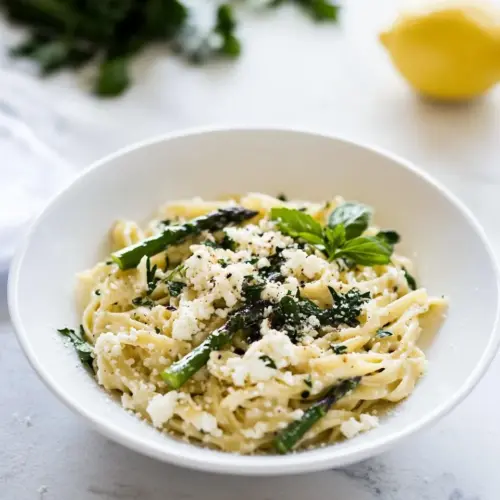
Simple Lemony Feta and Mascarpone Pasta with Grilled Asparagus
Simple Lemony Feta and Mascarpone Pasta with Grilled Asparagus is a creamy, bright pasta that combines silky mascarpone, tangy feta, and charred asparagus for an easy weeknight dinner. The lemon juice and zest lift the rich sauce while the grilled spears add a smoky crunch, making this both comforting and fresh. Try it when asparagus is in season for a quick, elegant meal everyone will love.
Equipment
- Large Pot
- Colander
- Grill or Oven
- Baking sheet or roasting pan
- Large skillet with high sides
- Whisk
Ingredients
- 1 pound long cut pasta I used Diada De Laurentiis Pasta from Target Boil in generously salted water until al dente and toss with sauce to bind everything together; long-cut shapes hold creamy sauces well and create pleasing texture in each bite.
- 1 large bunch asparagus ends trimmed Trim and grill or roast until tender-crisp and slightly charred to add bright vegetal notes and a satisfying crunch that contrasts the creamy pasta.
- 1 tablespoon olive oil Drizzle over asparagus before grilling or add to the sauce for gentle richness; olive oil helps carry flavors and prevents sticking while contributing fruity depth.
- salt and fresh black pepper to taste Season during cooking and at the table to enhance all flavors; fresh black pepper adds a sharp, aromatic bite while salt balances and elevates the cream and cheese.
- 2 tablespoons unsalted butter Melt into the sauce to add silky richness and a smooth mouthfeel; butter helps create a glossy emulsion that rounds out the lemon and cheese acidity.
- 8 ounces mascarpone cheese may sub cream cheese if needed Fold into warm sauce to lend luxurious creaminess and subtle tang; mascarpone stabilizes the texture and enriches the pasta without overpowering delicate flavors.
- 1 cup heavy cream Simmer gently into the sauce to provide body and a velvety consistency; heavy cream helps create a cohesive, luscious coating for the pasta and cheeses.
- 2 cups milk I used 2% Lightly heat with cream or add to finish the sauce for a lighter texture; 2% milk adds moisture and balances the richness without thinning the sauce too much.
- 8 ounces feta cheese finely crumbled or grated Crumble or grate into the sauce to provide salty tang and crumbly texture; feta adds bright acidity and savory depth that contrasts the mascarpone's sweetness.
- 1/4 cup fresh lemon juice Squeeze into the sauce and over finished pasta to impart bright, acidic lift; lemon juice cuts through the richness and brightens the overall dish.
- 1 teaspoon freshly grated lemon zest Grate finely over the dish to contribute concentrated citrus aroma and a fresh, zesty finish; lemon zest intensifies the lemon flavor without adding liquid.
- pinch of crushed red pepper optional Sprinkle for a hint of heat if desired; crushed red pepper adds subtle warmth that can balance the richness and lemon brightness without overwhelming the dish.
- 1/4 cup flat leaf parsley chopped Chop and scatter over the finished pasta to add fresh herbaceousness and color; flat-leaf parsley brings a clean, slightly peppery finish to each serving.
Instructions
- Bring a large pot of water to a boil. Boil the pasta according to package directions until al dente. Drain.: The moment the water hits a rolling boil you should smell its mineral warmth and see large bubbles breaking the surface, signaling it is ready. When you add the pasta , stir immediately so the strands do not clump, and keep an eye on the package timing to achieve al dente, where the bite is firm yet yielding. Drain the pasta briefly in a colander, letting the steam rise so residual heat carries a bit of the cooking water into the next step, which helps the sauce cling. A common mistake is overcooking, which produces limp noodles that will not hold up when tossed with the sauce; taste a strand one minute before the lower bound of the package time to avoid that. Also reserve a cup of cooking water if you need to loosen the sauce later, the starchy water is a silk-making trick.
- Preheat your grill to high heat. Place the asparagus in a baking dish, coat with olive oil and sprinkle salt and pepper over them. Grill the asparagus spears for 5-10 minutes, until nicely charred and just fork tender, turning them every few minutes so that they brown relatively evenly. Remove and chop into thirds.: On the grill you will hear a steady sizzle and see dark brown char marks forming, which add a smoky perfume that contrasts the creamy sauce. As you turn the spears, watch for uniform browning and gentle shrinking indicating they are tender but not limp. Once they yield to a fork with slight resistance, transfer them to a cutting board and chop into thirds for bite sized pieces. The easiest misstep here is leaving them on too long and ending up with soft, lifeless asparagus; watch the color and firmness closely. If your grill runs hot in spots, move spears around to ensure even caramelization.
- Alternately, you may roast the asparagus by preheating the oven to 400 degrees.: In the oven, you will notice the air warming and a dry, enveloping heat that draws moisture from the asparagus , concentrating its flavor. Roasting at this temperature encourages even browning without stewing them, creating crisp tender spears with tiny toasted tips. A typical mistake is crowding the pan, which causes steaming rather than roasting, so spread the spears in a single layer for best results. Use the same visual cues of browning and slight shrinkage to judge doneness.
- Place the asparagus in a roasting pan or on a baking sheet and toss with the 1 tablespoon olive oil, salt and pepper. Roast in the preheated oven for 25-30 minutes or until tender and crisp. Remove and chop into thirds.: As the asparagus roasts you'll smell a toasty, vegetal note as the tips deepen in color. The olive oil promotes that golden surface while salt and pepper season from the outside in. After roasting, let them rest briefly so they hold their shape when chopped. Avoid leaving them too long in the oven because they will continue to soften from residual heat; plan to remove them at the first sign of caramelized edges and a tender center.
- Heat a large skillet with high sides over medium-high heat, add the butter, cream, milk, and mascarpone and feta cheeses. Bring to a boil and simmer until smooth and creamy, about 5 minutes. Add the lemon juice, lemon zest, crushed red pepper and a good pinch of pepper, whisking until the cheese has fully melted. Simmer the sauce 3-5 minutes until the sauce is smooth and creamy. Add the pasta and asparagus to the sauce and toss well. Cook another 1-2 minutes to warm through. Add the parsley and toss. Serve immediately with fresh feta or parmesan.: When the skillet is hot, the butter should melt and foam slightly, releasing a nutty aroma that primes the pan. Adding the heavy cream and milk introduces a gentle steam and a gloss as the liquids warm. Crumble in the mascarpone and feta , and watch them soften and begin to meld, producing a creamy, slightly grainy texture that will smooth with gentle whisking. A common error is overheating too quickly, which can cause the dairy to break or become grainy; maintain medium high to medium heat and stir often to keep the texture silky.
- Bring to a boil and simmer until smooth and creamy, about 5 minutes.: As the mixture reaches a simmer you'll see small bubbles along the edge and smell a rich, dairy perfume. Whisk continuously to encourage the cheeses to meld into a cohesive sauce; the friction and gentle heat help dissolve curds into a smooth emulsion. Keep the simmer gentle so the sauce reduces slightly and thickens, concentrating flavor. Avoid a rolling boil, which can separate the sauce; if you see separation, remove from heat and whisk in a splash of milk to bring it back together.
- Add the lemon juice, lemon zest, crushed red pepper and a good pinch of pepper, whisking until the cheese has fully melted.: The addition of lemon juice will brighten the room with citrus aroma and slightly cool the sauce's richness. Zest adds aromatic oils that perfume the pan, while crushed red pepper introduces a gentle warmth that contrasts the tang. Whisk vigorously until you cannot see lumps of cheese and the sauce feels cohesive and glossy. If the sauce curdles or looks grainy, a splash of warm milk and continued whisking usually rescues it. The main miscue here is adding acid too early or in too large an amount, which can cause curdling; add gradually and taste as you go.
- Simmer the sauce 3 to 5 minutes until the sauce is smooth and creamy. Add the pasta and asparagus to the sauce and toss well.: In this brief simmer the sauce will thicken slightly and the flavors will meld into a harmonious whole. When you add the hot pasta and chopped asparagus , listen for a soft hiss as the noodles meet the warm sauce, and notice steam rise carrying lemon and cheese aroma. Toss thoroughly so each strand is coated and the asparagus pieces are distributed evenly. If the sauce seems too thick, a tablespoon or two of reserved pasta water will loosen it while maintaining cling. A frequent mistake is not combining hot ingredients quickly, which can cause the sauce to set and coat unevenly, so toss promptly and confidently.
- Cook another 1 to 2 minutes to warm through. Add the parsley and toss. Serve immediately with fresh feta or parmesan.: Those final minutes let the flavors knit and the pasta absorb a touch more sauce so every bite is unified. When you add the chopped parsley , its fresh green aroma will pop against the warm lemony sauce. Serve promptly so the textures remain contrasted, with creamy sauce, tender pasta, and crisp tender asparagus. Leftovers tend to thicken and lose a bit of the fresh brightness, so reheat gently with a splash of milk to revive creaminess. Avoid reheating at high heat which can make the sauce break and the pasta dry out.
Notes
- Use different pasta shapes: Try long cut noodles or ribbon shapes to see which carries the sauce best for your preference, while keeping cooking times in mind so you maintain al dente texture.
- Swap roasting for grilling: If you do not have a grill, roast the asparagus at 400 degrees for a similar charred flavor, watching closely so the tips do not overbrown.
- Control the tang: Adjust the amount of feta to make the sauce milder or more assertive, tasting as you go so the seasoning balances with the lemon.
- Stretch the sauce: If you need more volume without losing texture, add warm milk a little at a time until you reach the desired consistency, whisking to maintain smoothness.
- Add heat carefully: Introduce crushed red pepper sparingly; a pinch goes a long way and keeps the citrus and cheese front and center.
- Finish with herbs: Toss in fresh chopped parsley at the end rather than cooking it, to preserve its bright color and fresh flavor as a finishing touch.
- Make ahead tips: Prepare the sauce and asparagus separately, then reheat gently and toss with freshly cooked pasta just before serving to retain texture.