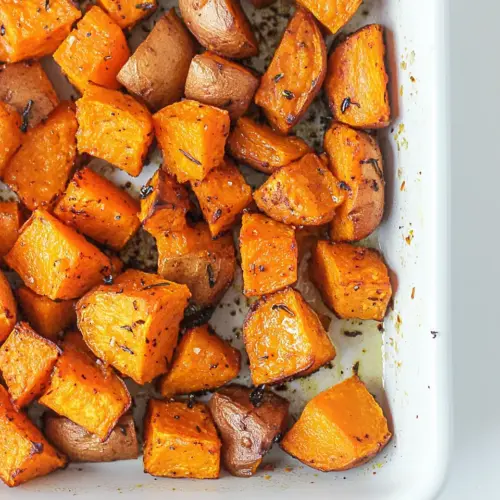
Simple and Savory Roasted Sweet Potatoes and Carrots
Simple and Savory Roasted Sweet Potatoes and Carrots brings together caramelized, tender sweet potatoes and carrots with savory onion and herbs for an easy weeknight dinner side. The result is crispy edged, soft centered vegetables with warm, herbal notes and a satisfying, homey aroma that’s perfect for fall or any cozy meal.
Equipment
- Baking Sheet
- Large Bowl
Ingredients
- 2 sweet potatoes, peeled and cut into equal size pieces (about 3 cups) Peel and cube to provide tender, creamy texture and natural sweetness that balances savory flavors when roasted. Cut into equal-size pieces to ensure even cooking and caramelization on the edges.
- 3 cups baby carrots Bring natural sweetness and a firm bite that holds up well in the oven while absorbing seasonings. Use even-sized baby carrots so they roast uniformly and develop a slightly caramelized exterior.
- 1 large onion, peeled and cut into 1 inch pieces Provide savory aromatics and a mild sweetness that melts into the dish, adding depth and complexity. Chop into 1-inch pieces for quick roasting and to match the cooking time of the root vegetables.
- 1 tbsp olive oil Coat vegetables to promote even browning and help seasonings adhere, while contributing a subtle fruity flavor and healthy fats. Drizzle and toss thoroughly so each piece is lightly covered before roasting.
- 1 tsp Italian Seasoning Infuse a blend of dried herbs to add aromatic, earthy, and slightly peppery notes that complement the vegetables. Sprinkle evenly to distribute classic Mediterranean flavors throughout the roasted mix.
- salt and pepper Season to taste to enhance and balance natural flavors, bringing out sweetness while adding savory depth and contrast. Use a moderate amount and adjust after roasting for bright, finished seasoning.
Instructions
- Preheat oven to 425 degrees F.: The air in the oven becomes hot and dry, which promotes caramelization and browning on the surface of the vegetables. You will notice a warm, slightly sweet aroma as the oven reaches temperature, signaling readiness. If the oven is not fully preheated, the vegetables can steam and fail to brown. A common mistake is placing the pan in too early, which leads to pale, soggy vegetables rather than those with golden edges.
- Combine the sweet potatoes, carrots and onions in a large bowl. Drizzle with the olive oil, adding more if necessary to lightly coat, sprinkle with the seasonings and salt and pepper. Toss to coat.: As you toss the vegetables, you should feel the weight of the pieces and hear them gently clinking together. The bowl allows even distribution of oil and seasoning, which ensures each piece gets coated. The olfactory hint of herbs begins to emerge here, and a light sheen from olive oil signals proper coating. Avoid under tossing, which can leave pockets of unseasoned vegetables and inconsistent flavor.
- Spread into an even layer on a lightly greased baking sheet.: At this stage, the scent of Italian Seasoning will lift, and the oil will help ingredients adhere. A visual cue to look for is an even glossy coating over each piece. If some pieces look dry, add a touch more olive oil . A frequent error is over oiling, which creates a puddle on the pan and prevents crisping; use just enough for coverage.
- Roast for 25-30 minutes, turning halfway through. Vegetables should be soft and lightly browned when done.: Hearing the vegetables land on the sheet and seeing a single layer are important indicators that they will roast instead of steam. Crowding traps moisture, which yields soft, steamed surfaces rather than crisped edges. Space allows hot air to circulate and produces uniform browning. Avoid piling pieces, because uneven contact with the pan leads to mixed textures.
- Season with additional salt and pepper if desired. Serve hot.: During roasting you will notice the aroma intensify and edges gradually darken into golden brown spots. Turning the vegetables midway encourages even caramelization on all sides, and the sound of slight sizzling is a good sign you are on track. Use visual cues, like fork tender centers and browned rims, to know they're done. One common pitfall is skipping the turn, which can produce uneven color and texture.
- Vegetables should be soft and lightly browned when done.: When you pierce a piece with a fork, it should offer little resistance and the surface should show patches of caramelization. The contrast between tender interiors and crisp edges is the hallmark of successful roasting. If pieces seem undercooked, return them to the oven for a few more minutes; if they are too brown, lower the temperature slightly next time. Avoid overcooking, which causes mushy vegetables lacking pleasant texture.
- Season with additional salt and pepper if desired. Serve hot.: A final seasoning lift brings flavors into balance, and serving while warm preserves the textural contrasts. The aroma rising from the tray as you plate the vegetables is inviting, and a light sprinkle of salt at the end can brighten the dish. Don’t skip tasting before serving, as ovens vary and final adjustments may be needed. A mistake to avoid is seasoning only before cooking, which can lead to muted flavor; finishing salt makes a difference.
Notes
- Herb boost — Add a sprinkle of fresh chopped herbs after roasting to introduce brightness without changing the cooking method.
- Spice twist — Toss in ground warm spices before roasting if you want a slightly exotic profile; adjust quantity to taste.
- Textural crunch — Finish with a handful of toasted nuts or seeds for added crunch and nutty flavor when serving.
- Slight sweetness — Drizzle a small amount of natural sweetener near the end of roasting to enhance caramelization and glaze the vegetables.
- Acid finish — A squeeze of citrus just before serving brightens and balances the natural sweetness of the vegetables.