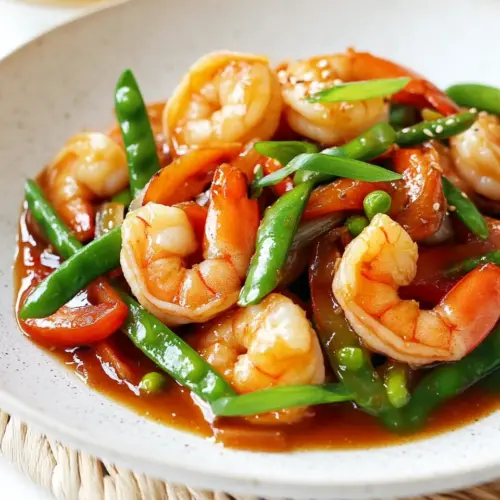
Shrimp Teriyaki Stir Fry
Shrimp Teriyaki Stir Fry is a quick, glossy, and flavorful weeknight favorite that combines tender shrimp with crisp vegetables and a savory sweet teriyaki glaze. This easy weeknight dinner is perfect when you want restaurant style results at home with minimal fuss. The balanced textures and bright ginger note make it a repeatable family pleaser, ideal for quick meals or casual entertaining.
Equipment
- Wok or Large Sauté Pan
- Mixing Bowl
- Tongs or spatula
Ingredients
- 1/2 pounds shrimp peeled and deveined Coated lightly with cornstarch to help form a glossy exterior and promote even browning when sautéed; toss shrimp with the starch just before cooking to avoid a gummy texture. Enhances sauce adherence and yields a slightly crisp surface while keeping the interior tender and juicy.
- 1 teaspoon cornstarch preferred Argo Corn Starch Dissolved into a slurry or sprinkled on proteins to thicken pan sauces and bind marinades; measure accurately to prevent a gluey consistency. Provides a clear, silky finish to the teriyaki glaze when activated by heat.
- 2 tablespoons neutral flavored cooking oil divided (like canola, corn or vegetable oil) Heated in the pan to create the cooking medium; divide between initial stir-frying and finishing to prevent sticking and add flavor. Neutral oils tolerate high heat and let the other aromatics and sauce shine without imparting competing flavors.
- 1/2 small onion sliced Sliced thin to soften quickly and add mild sweetness and savory depth; cook briefly to retain some texture and avoid overpowering delicate seafood. Releases natural sugars that help build a caramelized base for the stir-fry.
- 1 cup sliced bell pepper Sliced into strips to contribute crunch, color, and a sweet, slightly vegetal flavor; add early enough to soften slightly but late enough to preserve brightness. Complements the shrimp and soaks up the teriyaki sauce for balanced bites.
- 1 cup sugar snap peas Added for crisp, snappy texture and a fresh, slightly sweet flavor; cook briefly to retain crunch and vibrant color. Acts as a refreshing counterpoint to richer sauce elements while providing visual contrast.
- 1 stalk green onion chopped or thinly sliced Chopped or thinly sliced and stirred in at the end to lend a mild allium bite and fresh herbal note; use both white and green parts as desired. Brightens the finished dish and complements the ginger and soy flavors.
- 1 teaspoon grated fresh ginger Grated finely to release aromatic, peppery heat and citrus-like notes; incorporate early in the cooking to bloom its flavor and scent the oil. Balances sweetness in the sauce and pairs especially well with soy and sake.
- 2 tablespoons soy sauce Poured into the pan to supply savory umami and saltiness while forming the backbone of the teriyaki flavor; combine with mirin and sake for a balanced sauce. Allows the sauce to penetrate proteins and vegetables while enhancing overall depth.
- 2 tablespoons mirin Added to provide a sweet, slightly tangy shimmer and to help thin the soy sauce for glazing; simmer briefly to evaporate some alcohol and concentrate flavor. Works with sake and soy to create the characteristic teriyaki sweetness.
- 2 tablespoons sake Poured in to add floral, umami-rich complexity and help deglaze the pan; cook off most alcohol to mellow the flavor. Partners with mirin and soy to create a layered, authentic tasting sauce base.
- 1 teaspoon chili garlic sauce optional Stirred in sparingly to add a touch of heat and garlic flavor; optional for those who want a spicy-sour kick. Helps elevate the savory-sweet profile without overwhelming the shrimp when used in small amounts.
- 1 teaspoon cornstarch preferred Argo Corn Starch Mixed into the sauce at the end as a finishing thickener to achieve a glossy, clingy teriyaki glaze; dissolve first in a little cold water to prevent lumps. Adds body so the sauce coats shrimp and vegetables evenly without becoming pasty.
Instructions
- Pat the shrimp very dry. In a bowl, toss the shrimp with cornstarch to coat.: You will notice the shrimp go from slightly glossy to a matte, lightly dusted finish, which helps them brown. As the shrimp hit the hot pan you should hear a confident sizzle, and that brief sear locks in juices while the starch creates a thin barrier so the glaze clings later. If the shrimp are wet, they will steam rather than brown, so pat them thoroughly and avoid overcrowding the bowl when tossing with the cornstarch . A common mistake is skimping on drying, which leads to pale, soft shrimp instead of the appealing caramelization you want.
- Heat a wok or large saute pan over high heat. When hot, swirl in just 1 tablespoon of the cooking oil. Add the shrimp to the pan, trying not to overlap. Let cook for 30 seconds. Flip, and cook an 30 seconds. Remove the shrimp to a clean bowl. The shrimp will be half-cooked, we will finish cooking in a later step.: As the pan heats, it should shimmer and the oil will thin, indicating it is ready. When the first shrimp batch hits, listen for a sharp sizzle and look for tiny edges turning opaque and gold. Cooking briefly on both sides gives a seared exterior while keeping the center slightly translucent so it will not overcook in the final sauce stage. If you crowd the pan you will trap steam and lose that sear, so work in a single layer. Watch closely since shrimp cook extremely fast and can turn rubbery if left too long.
- Turn the heat to medium-high. To the same pan, swirl in the remaining cooking oil. When hot, add in the onion and bell pepper. Stir fry for 1 minute. Add in the sugar snap peas and continue to stir fry for an additional minute.: The vegetables should hit the pan and immediately begin to sing with a bright hiss as they make contact. You want them to soften slightly while keeping their vibrant color and crispness, so use quick, continuous motion to expose faces to the heat. The onion will begin to sweeten, and the bell pepper will show softened edges and glossy skin. Adding the snap peas second ensures nothing overcooks. A common misstep is leaving the vegetables too long, yielding limp, dull pieces instead of the lively crunch that contrasts with the shrimp .
- Add in the half-cooked shrimp and pour in the Ginger Teriyaki Sauce. Cook until the sauce comes to a simmer, thickens, and is glossy. Garnish with green onions.: As the sauce hits the hot pan it will steam and release fragrance from the ginger and soy sauce . Stir to coat everything evenly, and watch for the sauce to change from a watery sheen to a syrupy, glossy film that clings to the shrimp and vegetables. You will hear gentle bubbling as it reduces, and smell the melding of sweet and savory. This is when the flavor concentrates, so be patient and let it reach that glaze stage, then remove from heat to avoid over reducing. A frequent error is turning the heat too high and scorching the sauce, which gives a bitter finish instead of the balanced glaze you want.
Notes
- Prep is everything, have the shrimp, vegetables, and sauce components measured and ready so you can work quickly once the pan is hot.
- High heat matters, use a very hot wok or pan to get that quick sear on the shrimp and to keep vegetables crisp rather than waterlogged.
- Dry before coating, always pat shrimp dry before tossing with cornstarch so you get a better crust and less steaming in the pan.
- Divide the oil, adding a small amount first for the shrimp then fresh oil for the vegetables prevents burnt fond and keeps flavors clean.
- Finish gently, let the sauce come to a gentle simmer and thicken until glossy, then remove from heat to avoid over reducing and a cloying finish.