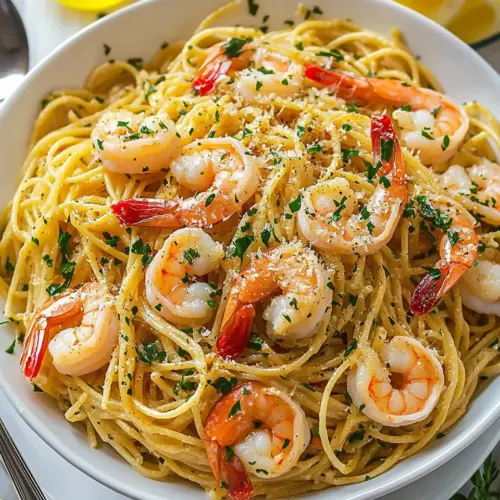
Shrimp Scampi Pasta
Shrimp Scampi Pasta is a bright, buttery, and garlicky Shrimp Scampi Pasta that combines tender shrimp, al dente spaghetti, and crisp asparagus for an easy weeknight dinner. The fresh lemon and parsley keep it vibrant while the buttery sauce makes it feel indulgent, perfect for a quick family meal or a small gathering.
Equipment
- Large Pot
- Large deep pan
- Colander
- Tongs
Ingredients
- 1/2 lbs spaghetti Provide a starchy base that soaks up sauce and flavors; cook until al dente, then toss with shrimp and aromatics for a cohesive dish. Offer texture contrast to tender shrimp and crisp asparagus while carrying the lemony garlic sauce throughout the plate.
- 1 lb asparagus, trimmed and cut into 2″ pieces Add bright, tender-crisp vegetable bites that contrast the pasta; trim and cut into uniform 2-inch pieces for even cooking. Contribute fresh green color, subtle sweetness, and a pleasant snap that complements the buttery, garlicky sauce.
- 3 tbsp unsalted butter, divided Bring rich, creamy mouthfeel and help brown garlic for depth; divide so some melts for sauce finish and some is used for cooking. Enhance the sauce’s silkiness and balance the acidity of lemon while coating pasta and shrimp evenly.
- 3 tbsp olive oil, divided Provide a fruity, savory cooking fat that helps sauté garlic and brown shrimp; divide to manage heat and flavor layering. Contribute aromatics and a lighter fat profile that rounds out butter and carries herbs through the sauce.
- 4 cloves garlic, minced (about 1 1/2 Tbsp) Infuse the dish with pungent aromatic flavor and savory depth when minced; sauté briefly to avoid bitterness and release fragrance. Build the garlicky backbone of the scampi, pairing especially well with butter, oil, and lemon.
- 1/4 tsp red pepper flakes, or added to taste Introduce gentle heat and a subtle smoky kick; add sparingly and adjust to taste for desired spiciness. Lift the overall flavor profile and contrast the richness of butter and olive oil without overwhelming delicate shrimp.
- 1 lb large shrimp, peeled and deveined (16-20 or 21-25 count) Provide the primary protein with sweet, tender bites; peel and devein for clean texture and quick, even cooking appropriate for 16–25 count shrimp. Absorb the sauce flavors while offering a satisfying, briny contrast to pasta and asparagus.
- 1 1/4 tsp fine sea salt, divided, plus more for cooking pasta Season the dish to enhance all flavors; divide between shrimp and pasta while reserving extra for pasta-cooking water. Help bring out natural sweetness of shrimp and balance the acidity of lemon juice throughout the sauce.
- 1/4 tsp black pepper, ground, or to taste Add mild heat and savory complexity; grind fresh for best aroma and sprinkle to taste during cooking and finishing. Provide subtle spiciness that complements lemon and garlic without dominating delicate seafood notes.
- 1 tbsp grated lemon zest Deliver bright citrus oils that intensify aroma and flavor; grate finely to avoid bitter pith and add just before serving for freshness. Layer concentrated lemon fragrance that enlivens the butter-garlic sauce and cuts through richness.
- 1/4 cup fresh lemon juice, from 1 large or 2 small lemons Contribute vibrant acidity and tang that brightens the sauce; squeeze fresh lemons for the cleanest flavor and add gradually to taste. Balance butter and oil richness while bringing brightness that complements shrimp and asparagus.
- 1/3 cup fresh parsley, finely chopped Offer fresh herbal brightness and a clean, slightly peppery finish when finely chopped; stir in at the end to preserve color and flavor. Provide a verdant accent that freshens the dish and ties together lemon, garlic, and seafood elements.
- freshly grated parmesan, to serve Provide salty, savory finishing notes and umami when freshly grated over the plated dish; sprinkle just before serving for melting texture. Elevate depth and richness while harmonizing with butter and lemon to complete the scampi experience.
Instructions
- Bring a large pot of water to a boil, add 1 Tbsp salt and 1 Tbsp olive oil, and cook pasta according to package instructions until Al'dente, or desired doneness (meanwhile, continue with recipe). Drain pasta, return to pot, and cover to keep warm.: Listen for the vigorous roar of the water before adding the spaghetti , the bubbles should be large and steady which indicates it is hot enough so the strands will not stick together. The starchy scent that rises as the pasta cooks is normal and signals that a little of that starch will help bind the sauce later. I salt the water liberally so the spaghetti is seasoned from within, and adding a touch of olive oil can help prevent foaming and sticking while you manage other steps. When you test for doneness, bite into a strand to check for a firm center, and aim for that slight chew, because it will continue to soften slightly when tossed with the sauce. A common pitfall is overcrowding the pot; if you do that, strands clump and cook unevenly.
- Place a large, deep pan over medium/high heat and add 1 Tbsp olive oil and 1 Tbsp butter. Add asparagus, season lightly with 1/4 tsp salt and 1/8 tsp pepper, and cook uncovered for 5 minutes or until crisp-tender, stirring occasionally. Remove from pan.: Once the fat is shimmering and the butter has melted with a gentle foam, add the asparagus ; you should hear a lively sizzle which means the surface will caramelize slightly. Stirring occasionally lets each piece get a flash of color without steaming, and the aroma will shift to a green, toasty note as the sugars begin to brown. Cook until the spears are verdant and yield to gentle pressure from a fork, this crisp tenderness keeps them lively against the soft spaghetti . If you cover the pan or cook at too low a temperature, the asparagus will become limp and lose its bright flavor.
- In the same hot skillet, add 2 Tbsp oil and 2 Tbsp butter. Once the butter is melted, add minced garlic and red pepper flakes if using, and sauté stirring frequently for 1 minute. Add shrimp in a single layer and season with 1 tsp salt and 1/4 tsp black pepper. Sauté until shrimp are pink and not translucent (about 1 minute per side). Be careful not to overcook or the shrimp will be tough.: As the second portion of fat warms, the smell of butter and olive oil combining becomes nutty and inviting, which is the perfect foundation for the pungent sweetness of the garlic . Sautéing the garlic for only about a minute releases its fragrance without letting it brown and turn bitter; you will notice its aroma bloom and then stabilize. Lay the shrimp in one layer so each piece makes contact with the hot pan, you should hear a crisp sizzle as they hit the surface; that sear locks in juices and yields pleasant caramelized edges. Watch closely as the shrimp transition from translucent to opaque and pink; they will curl and firm up, and at the right moment they will spring slightly when nudged. Overcooking is the classic mistake here, producing a rubbery texture instead of tender bites.
- Add lemon zest, juice, and parsley, and stir to combine. Turn off the heat and return the pasta and asparagus to the pan. Toss everything to combine and serve with freshly grated parmesan.: The moment you add the grated lemon zest and fresh lemon juice the pan brightens, releasing citrus oils that perfume the sauce and cut through the richness of the butter . The aroma becomes lifted and clean, and the chopped parsley introduces a fresh, green scent that rounds the profile. Turning off the heat before adding the spaghetti and asparagus prevents the shrimp from overcooking while the strands absorb the sauce. As you toss, you should see the glossy coating cling to the spaghetti , and steam will rise carrying a balanced mix of lemon, garlic, and butter. Finish by grating freshly grated parmesan over each portion so it melts slightly into the warm noodles for a savory, rounded finish. If you toss while the pan is too hot, the cheese can clump rather than melting evenly, so moderate the heat carefully.
Notes
- Boost the herb notes by stirring in extra chopped parsley at the end for a fresher finish that brightens every bite.
- Make it more lemon forward by adding an extra half tablespoon of freshly squeezed lemon juice right before serving for an uplifting zing.
- Adjust the heat by increasing or decreasing the amount of red pepper flakes, adding them early for a mellow warmth or at the end for more immediate spice.
- Swap the vegetable if asparagus is out of season, using similar quick cooking greens that match the texture, while keeping the cooking time short.
- Finish with extra richness by folding in an additional tablespoon of butter off the heat for a silkier, more luxurious sauce.
- Hold back some zest to sprinkle over plated bowls just before serving so the lemon aroma is bright and present.