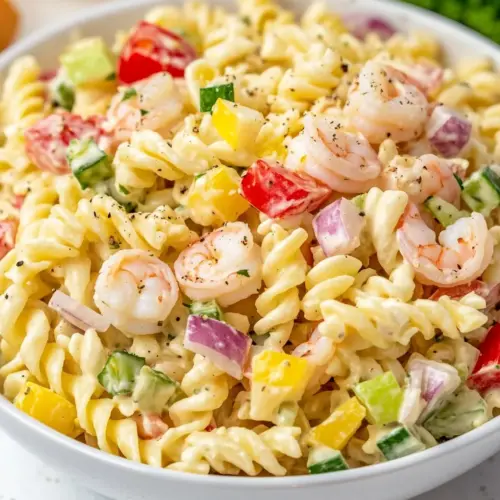
Shrimp Pasta Salad
Shrimp Pasta Salad is a creamy, tangy, and easy chilled salad featuring tender shrimp, small pasta, and crunchy vegetables. Bright lemon and fresh dill lift the dressing, making this an ideal easy weeknight dinner or picnic dish. Make it ahead for better flavor and a stress free entertaining option.
Equipment
- Large Mixing Bowl
- Whisk
Ingredients
- 3 cup s/12 oz. (340 g) elbow macaroni pasta or any small shape pasta Cooked until tender to provide a sturdy, neutral base that holds dressing and other mix-ins; contributes bulk and texture to the salad and absorbs flavors from the dressing when cooled.
- 1 pound (450 g) frozen pre-cooked salad shrimp thawed and drained, see note 1 Added thawed and drained to supply savory seafood flavor and protein; offers a tender, slightly sweet bite that complements the creamy dressing and pasta.
- 1 cup diced celery Chopped finely to add crisp, watery crunch and a mild, slightly peppery flavor; helps lighten the richness of the dressing and adds bright texture contrast.
- 1 bell pepper diced Diced to contribute sweet, juicy, and slightly crisp bites with mild vegetal flavor; provides color contrast and a fresh pop that balances the creamy components.
- 1/2 small red onion finely diced Minced very finely to impart a sharp, pungent bite and subtle sweetness when raw; enhances overall flavor complexity and pairs well with mayonnaise-based dressings.
- 1 cup mayonnaise full-fat Used as the creamy, rich base to bind components and create a smooth dressing; supplies fat and mouthfeel while mellowing acidic and herbal notes.
- 1 cup sour cream or plain Greek yogurt Combined as a tangy, creamy binder alternatively or with yogurt to add brightness and a slight tang; lightens texture while contributing creaminess and acidity balance.
- 1 tablespoon Dijon mustard Stirred in to introduce sharp, piquant flavor and slight acidity that lifts the dressing; helps emulsify the mayonnaise and sour cream for a cohesive salad coating.
- 1 teaspoon lemon juice freshly squeezed Squeezed fresh to add bright, clean acidity that balances richness and enhances other flavors; provides a light citrus note that prevents the salad from tasting heavy.
- 2 tablespoons chopped fresh dill Chopped fresh to impart aromatic, herbaceous, and slightly anise-like notes; contributes freshness and green flavor that complements seafood and creamy dressing.
- 1/2 teaspoon salt Sprinkled in to season and enhance overall flavors while controlling saltiness; critical for balancing sweetness, acidity, and creaminess in the finished salad.
- 1/4 teaspoon ground black pepper Ground and added sparingly to introduce mild heat and earthy aroma; rounds out seasoning by providing subtle bite and contrast to creamy elements.
Instructions
- Cook macaroni in salted water according to the package instructions. Most small pastas will be ready in 10-12 minutes. Drain and rinse under cold water to stop the cooking process.: You will hear a gentle rolling boil and see the pasta swirl freely, that tells you the pot has enough room for even cooking. The salted water seasons the pasta from within which matters because plain pasta can taste flat once combined with the dressing. As it cooks, test a piece for al dente texture, which should be tender with a slight bite in the center. A common mistake is overcooking, which leads to mushy salad once chilled, so start checking a few minutes before the lower end of the package time. When the texture is right, drain immediately; lingering in hot water will make the pieces gummy.
- As the pasta is being cooked, make the dressing: In a bowl, combine mayo with sour cream, dijon mustard, lemon juice, dill, salt and pepper. Whisk to combine.: After draining, rinse the pasta under cold running water until it feels room temperature, this halts carryover cooking and cools the pasta for mixing. The rinse also removes excess surface starch, preventing clumps and keeping the salad light rather than gluey. You should see the water run clear, and the pasta will feel firm to the bite yet cool to the touch. Avoid leaving it under water too long or the pasta can become waterlogged, which dilutes the dressing and reduces flavor concentration.
- In a large bowl, combine the cooked pasta with small salad shrimp, celery, bell pepper, and red onion. Dress the salad and give everything a stir until well combined. Garnish with additional fresh dill if desired.: In a bowl, combine mayo with sour cream, dijon mustard, lemon juice, dill, salt and pepper : Mixing the dressing while the pasta cooks is efficient and helps flavors meld slightly before assembly. Whisk until the mixture is glossy and uniform, you should smell the fresh brightness of lemon and the herbaceous note of dill . This emulsion coats each ingredient better than a hastily stirred dressing. A typical error is under seasoning, so taste and adjust salt or acid; the dressing should be lively enough to stand up to the cold shrimp and crunchy vegetables.
- Cover and chill until you’re ready to serve.: When combining, toss gently so you maintain the integrity of the tender shrimp and avoid mashing the pasta . The visual cue is a uniformly mixed bowl where colors are distributed and you can see tiny flecks of dill . The sound is quiet, just soft clinking of utensils, and the texture should look varied with crunchy vegetables and soft proteins. Watch out for oversized pieces of shrimp which can dominate bites; smaller or chopped pieces deliver better balance.
- Dress the salad and give everything a stir until well combined: After adding the dressing, stir until each piece is lightly coated and the salad glistens. This is when the fragrance of lemon and dill becomes prominent, and you should taste a marriage of creamy tang and fresh herbs. Use a gentle folding motion to avoid crushing the ingredients. A common mistake here is overdressing, which can make the salad heavy and mask the delicate shrimp flavor. Add dressing gradually and stop when the mixture looks evenly coated rather than swimming.
- Garnish with additional fresh dill if desired: A final sprinkle of chopped dill brightens the aroma and provides a fresh green contrast on the surface. Visually it signals freshness, and the scent of herb will be the first thing guests notice when you lift the lid. Be mindful to chop the dill finely so it disperses rather than clumping, and avoid adding too much which can tip the salad towards an herb forward profile.
- Cover and chill until you’re ready to serve: Chilling allows flavors to marry and the dressing to settle into the pasta and vegetables, leading to a more cohesive bite. You should cool the salad for at least 30 minutes, though a few hours often yields better flavor. The bowl will lose some sheen as it chills but the flavor will deepen. Do not leave the salad at room temperature for long periods, especially on warm days, as the dairy and seafood components are perishable and are best kept refrigerated until serving.
Notes
- Tip 1: Use appropriately sized shrimp, between 150 to 200 count per pound works great because the smaller pieces distribute evenly and deliver consistent flavor in every bite.
- Tip 2: If you prefer a tangier dressing, replace part of the sour cream with plain Greek yogurt, which adds acidity and protein while keeping the dressing creamy.
- Tip 3: To mellow raw onion bite, soak the diced red onion in ice water for 20 minutes, then drain well to preserve crunch while removing sharpness.
- Tip 4: Make ahead by assembling the salad up to two days early but only toss with half the dressing, storing the remainder separately to refresh the salad before serving.
- Tip 5: For best texture, cook the pasta to al dente and immediately rinse under cold water to stop cooking and prevent stickiness.
- Tip 6: If fresh dill is unavailable, use 2 teaspoons of dried dill weed rather than tablespoons, because dried herbs are more concentrated and can overpower the salad.