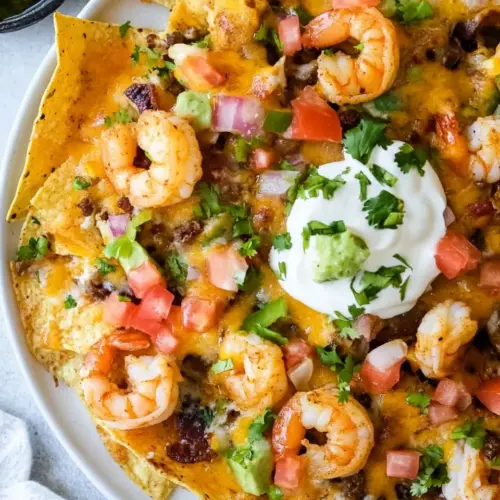
Shrimp Nachos
Shrimp Nachos are a crispy, savory, and easy crowd pleaser that combine seasoned shrimp, gooey cheese, and crunchy tortilla chips for an irresistible bite. This quick weeknight or party dish delivers smoky, bright, and creamy contrasts with every forkful, making it an ideal easy weeknight dinner or festive appetizer to share.
Equipment
- Oven
- Baking Sheet
- Skillet
- Mixing Bowl
Ingredients
- 16 ounces shrimp raw and tails removed (medium to large work best) Season and cook quickly to add tender seafood flavor and protein; deveined, peeled shrimp take on spices and heat in minutes, providing the main surf element for the nachos. Use medium-to-large shrimp for texture that stands up to chips and toppings without becoming rubbery.
- 1/2 teaspoons salt Enhance overall flavor balance and bring out other seasonings; a small amount seasons the shrimp and beans while also helping to brighten savory notes. Sprinkle evenly during cooking to avoid pockets of oversalt.
- 1/4 teaspoon pepper Add subtle heat and depth to savory components while balancing richness; ground black pepper complements the shrimp and beans without overpowering. Grind fresh if possible to preserve aromatic oils.
- 1 teaspoon chili powder Provide warm, earthy chili flavor that contributes to the nachos' southwestern profile; dust the shrimp and beans lightly for smoky, piquant notes. Adjust quantity to control heat level across the dish.
- 1/4 teaspoon garlic powder Introduce a mild aromatic garlic background that supports the seafood and cheese; garlic powder blends easily and distributes flavor evenly across the shrimp and chips. Use sparingly to avoid bitterness when heated.
- 1/4 teaspoon onion powder Contribute a sweet, mellow onion aroma that enhances savory layers; onion powder mixes smoothly into rubs and sprinkled toppings for consistent flavor. Helps mimic the complexity of fresh sautéed onions without added moisture.
- 1/2 teaspoon cumin Offer warm, slightly citrusy earthy notes that tie together chili and cumin-forward flavors; cumin boosts the nachos' classic Mexican-inspired profile. Match with other spices to avoid overwhelming the shrimp.
- 1/4 teaspoons smoked paprika Impart a faint smoky sweetness that elevates the overall spice blend; smoked paprika adds depth without additional heat, complementing chili powder and cumin. Use a pinch to add complexity to the shrimp rub.
- 1 tablespoon olive oil or another neutral oil Facilitate even cooking and prevent sticking while carrying fat-soluble flavors; olive or neutral oil allows spices to adhere to shrimp and helps achieve a light sear. Choose a neutral oil for higher-heat cooking to avoid burning.
- 12 to 16 ounces tortilla chips Provide a crunchy base and vehicle for toppings; tortilla chips determine texture contrast and portion size for nacho servings. Select thick, sturdy chips to support shrimp, beans, and melted cheese without breaking.
- 8 ounces monterey jack cheese or cheddar, Pepper Jack or Colby Jack Add creamy, melty richness that binds toppings to chips; choose Monterey Jack, cheddar, Pepper Jack, or Colby Jack depending on desired spice and meltability. Scatter evenly and melt thoroughly to create cohesive layers.
- 14.5 ounces pinto beans rinsed and drained, black beans are also delicious Supply earthy, creamy body and additional protein; pinto (or black) beans add fiber and a contrasting texture beneath cheese and shrimp. Rinse and drain to control moisture and prevent soggy chips.
- avocado Lend creamy texture and cool counterpoint to spicy elements when sliced or mashed; avocado adds healthy fats and balances heat from chili spices and jalapeños. Add just before serving to maintain color and freshness.
- salsa we used salsa verde Introduce bright, tangy, and sometimes spicy sauce notes; salsa verde or chosen salsa contributes acidity and savory heat that complements shrimp and cheese. Spoon over finished nachos for a fresh, vibrant finish.
- lime wedges Bring zesty acidity and freshness when squeezed over assembled nachos; lime wedges brighten flavors and cut through richness of cheese and sour cream. Offer wedges on the side so guests can adjust acidity.
- cilantro Provide fresh, herbal brightness and visual contrast; cilantro scattered over nachos adds a citrusy, slightly peppery finish that complements lime and salsa. Chop roughly and add just before serving for maximum aroma.
- banana peppers Offer tangy, mildly spicy, pickled bite with crisp texture; banana peppers contribute acidity and crunch that balance creamy and cheesy components. Scatter slices sparingly to control vinegar intensity.
- pepperoncinis Contribute tangy, briny, and slightly spicy pickled flavor; pepperoncinis add acidity and a soft crunch that cuts through richness and pairs well with beans and cheese. Remove seeds for milder heat or leave for more punch.
- sour cream Provide cool, creamy tang to balance heat and add silkiness; sour cream acts as a finishing dollop that mellows spices and adds a luxurious mouthfeel. Dollop or drizzle over nachos just before serving.
Instructions
- Preheat oven to 350˚F. Line a large baking sheet with foil or parchment paper (for easy clean up).: Warmth from the oven creates a gentle, even heat that melts cheese without burning the chips, and lining the sheet helps with quick cleanup. You should feel the kitchen begin to warm, and the foil will reflect heat for even melting. If your oven has hot spots, rotate the sheet part way through baking to avoid uneven browning. A common mistake is skipping the lining, which makes cleanup tedious and risks stuck-on melted cheese.
- Spread half of the tortilla chips onto the prepared baking sheet. Top with half of the beans and cheese. Repeat layers.: As you layer, listen for the faint crackle of chips settling into an even bed, and aim for a single layer that still overlaps slightly for coverage. Stacking chips too thickly can prevent heat from reaching inner layers, leaving unmelted cheese. Distribute the beans evenly so each chip has some support, and save enough cheese to create cohesive melting between layers. A trap I see often is overcrowding the pan, which yields soggy rather than crisp results.
- Bake for 10-15 minutes or until cheese is melted.: As the oven works, the cheese will go from solid to glossy, bubbling gently at edges; this visual cue means it is time. You will notice a toasty aroma when the cheese starts to brown slightly. Avoid leaving them in too long because chips can overbake and turn bitter. If you want a golden top, broil for a very short burst, watching closely to prevent burning.
- While the nachos are baking, prepare the shrimp. Pick through the shrimp and make sure all the shells have been removed and the shrimp have been deveined. (You'd be surprised at how many shells I have found over the years!) Pat the shrimp dry with a paper towel.: Handling the shrimp before cooking is tactile and helps you notice any leftover bits of shell. Patting them dry is crucial because moisture prevents a good sear and can steam the shrimp instead, yielding a rubbery texture. If you skip drying, the shrimp may release water into the pan and not brown properly.
- Add the raw shrimp to a medium bowl. Add all of the seasoning and toss together until shrimp are evenly coated.: When you toss, inhale the spice blend and note how the aroma changes, signaling that the flavors are mingling. Coating evenly ensures every bite is seasoned, so take a moment to toss thoroughly. Letting them sit briefly allows the spices to adhere, but avoid marinating too long, which can alter the shrimp texture. A frequent misstep is uneven seasoning, which creates pockets of blandness.
- Add oil to a large skillet and heat over medium high heat. Add shrimp in a single layer and cook for 2 to 4 minutes on each side until opaque and cooked through.: Heat the oil until it shimmers, then add the shrimp so they sizzle on contact, releasing a savory aroma and forming a light crust. Cook time is short; watch for the flesh to turn opaque and curl slightly, avoiding overcooking which makes them tough. You should hear a steady sizzle and see slight browning. Crowding the pan causes steaming and prevents browning, so cook in batches if needed.
- Remove the nachos from the oven and top with the shrimp. Add any desired topping and serve immediately. Enjoy!: Once you add the hot shrimp , finish with cool elements like sliced avocado , a spoonful of salsa , and a squeeze of lime to create contrast. The sound of plates and voices is often the final cue that the dish is ready. Serve quickly to preserve crispness, and warn guests that the platter will be hot. A common oversight is letting the platter sit too long, which makes chips soggy and less enjoyable.
Notes
- Prep toppings ahead so you can assemble and serve the nachos immediately, preserving chip crispness and the contrast between hot and cool elements.
- Toast chips briefly if you like extra crunch, placing them in the oven for a few minutes before layering to dry them out and prevent sogginess under toppings.
- Use a mix of cheeses for better melt and flavor complexity, combining a mellow melter like Monterey Jack with a sharper Cheddar or a spicier Pepper Jack.
- Cook shrimp in batches to avoid overcrowding the pan, which ensures a good sear and prevents steaming that leads to rubbery texture.
- Serve with lime wedges and let guests squeeze to taste, the acidity brightens the whole dish and balances rich components.
- Store leftovers properly in an airtight container in the refrigerator for up to three days, keeping wet toppings separate to maintain texture.