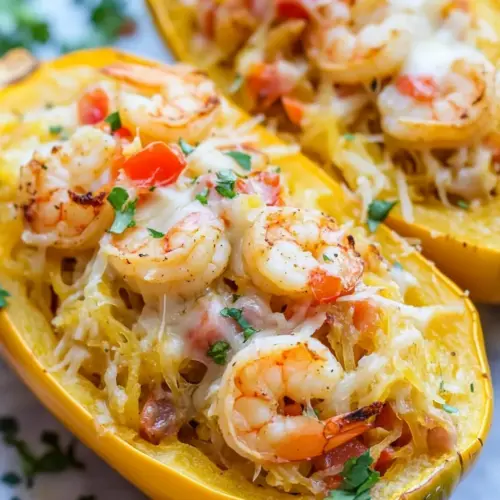
Shrimp Fajita Stuffed Spaghetti Squash
Shrimp Fajita Stuffed Spaghetti Squash is a colorful, easy weeknight dinner that pairs tender roasted squash strands with smoky, spiced shrimp and charred peppers. The dish is creamy from melted cheese yet light thanks to the squash, delivering crispy char notes and bright flavors. Make it when you want a low carb, satisfying meal that looks special and comes together quickly.
Equipment
- Baking Sheet
- Sharp Knife
- Spoon
- Large non stick skillet
- Fork
Ingredients
- 1 medium spaghetti squash Roast to tender, stringy flesh that mimics pasta and serves as the vessel for the filling; halve, seed, and bake until easily shredded with a fork, then scrape into strands to hold the shrimp fajita mixture.
- 1 tbsp . olive oil Sauté briefly to coat and carry flavors while preventing sticking; drizzle over vegetables and shrimp during cooking to facilitate caramelization and meld the fajita seasoning into the filling.
- 1/4 tsp . salt Season lightly to enhance overall flavor balance and amplify the natural sweetness of the squash and shrimp; sprinkle over the strands and filling to bring out savory notes without overpowering the dish.
- 1/8 tsp . pepper Season sparingly to add mild heat and accentuate the shrimp and vegetables; grind freshly if possible and adjust to taste so it complements the fajita seasoning without masking other spices.
- 8 oz . shrimp, peeled and deveined Cook quickly until opaque and slightly browned to provide tender, protein-rich bites; toss with fajita seasoning and vegetables so shrimp absorb smoky, citrusy flavors and finish in the roasted squash halves.
- 1 medium bell pepper, sliced Sauté until softened and slightly charred to contribute sweet, crisp textural contrast and bright color; slice into strips that mix with shrimp and onions to provide classic fajita flavor and crunch.
- 1/2 medium red onion, sliced Caramelize until translucent edges develop to introduce sweet, savory depth and tender texture; slice thinly so the onion melds with peppers and shrimp, releasing moisture and enhancing the filling.
- 1/2 tbsp . Fajita seasoning Season to deliver the characteristic smoky, tangy fajita profile; measure carefully and mix with oil before tossing with shrimp and vegetables so the blend evenly coats and flavors the stuffing.
- 1/2 cups shredded cheese Melt over the hot filling to bind ingredients and add creamy, salty richness; sprinkle evenly atop the stuffed squash and broil briefly until bubbly and slightly golden for a cheesy finish.
Instructions
- Cut the squash in half lengthwise with a sharp knife and remove the seeds with a spoon. Brush the flesh of each half with 1 teaspoon of olive oil and season with salt and pepper. Put the halves flesh-side down on a baking sheet and bake at 400°F until the edges just turn brown, about 45 minutes.: You will feel the resistance of the outer skin as you slice, and the satisfying release when you open the squash to expose the pale golden flesh. Removing seeds clears a tidy cavity for the filling and prevents bitter pockets from remaining in each boat. Use a stable cutting board and steady pressure to avoid slips. One common mistake is forcing the knife too quickly, which can be unsafe; take a breath and use a rocking motion if needed.
- About 10 minutes before the spaghetti squash is fully cooked, make the fajita shrimp. In a large non-stick skillet, stir-fry the bell pepper and onion in olive oil for about 3-4 minutes over high heat, until slightly charred.: As you brush the glossy oil, the flesh will take on a slight sheen, helping it roast evenly and preventing it from drying. The tiny crystals of salt will draw out a hint of moisture and concentrate flavor, while the pepper adds a subtle background warmth. If you skip oil, the surface can become dry and stringy, so make sure each cavity is lightly coated.
- Add the shrimp and fajita seasoning. Keep cooking until the shrimp are just cooked through (about 3-4 minutes). Set it aside and get back to the spaghetti squash.: The oven will fill with a gentle, nutty aroma as the squash caramelizes at the edges. Visual cues matter, look for slightly darkened rims and fork tender flesh. If the squash is still firm, it needs more time; under roasted squash will resist forming the spaghetti strands. Avoid overbaking which can make it mushy and lose the strand texture that makes this dish special.
- When the spaghetti squash is baked, remove it from the oven and separate the strands of squash by scraping the flesh with a fork. Transfer the scraped strands into the skillet with the shrimp and mix well.: Your pan should be hot enough that the bell pepper and red onion hiss as they hit the surface, yielding a quick char on the edges while keeping some bite. The aroma of caramelizing sugars will be bright and inviting. Commonly people overcrowd the pan which causes steaming instead of charring, so work in a hot pan with room to move the vegetables around.
- Divide the fajita shrimp between the spaghetti squash boats and top with cheese. Return it to the oven for about 5 minutes, until the cheese has melted and the dish is heated nicely. Garnish with chopped cilantro or parsley. Serve.: You'll hear a sizzle and see browned edges appear, with softened centers that still hold shape. This brief high heat step concentrates sweetness and creates the smoky notes that define fajitas. If the vegetables go limp and release too much water, the pan may be too crowded or not hot enough; increase heat and cook in batches if needed.
- Add the shrimp and fajita seasoning: The shrimp should hit the pan and produce a quick sizzle, releasing a briny, savory scent. Sprinkle the fajita seasoning evenly so each piece picks up flavor. The seasoning helps build an outer savory crust that contrasts the tender interior of the shrimp . Avoid over seasoning at this stage; you can always adjust later.
- Keep cooking until the shrimp are just cooked through: Watch for the visual cue where the shrimp turn pink and opaque, and the flesh firms slightly. The cooking time is short, and the moment you remove them matters because residual heat will carryover cook them. Overcooked shrimp become rubbery, so pull them off a touch early if you are unsure.
- Set it aside and get back to the spaghetti squash: Resting the skillet contents briefly lets flavors settle and gives you a chance to test the squash. The pan will still hold heat and aroma, which will mingle with the roasted squash when combined. A common oversight is leaving everything in the pan where it continues to cook aggressively, so transfer to a bowl to preserve texture.
- When the spaghetti squash is baked, remove it from the oven and separate the strands of squash by scraping the flesh with a fork: As you scrape, the flesh will peel away in delicate, noodle like strands that glisten slightly. This motion creates the signature texture, and you will know it’s right when the strands pull free easily without turning to mush. Scraping too forcefully or while the squash is extremely hot can bruise the strands, so use gentle strokes.
- Transfer the scraped strands into the skillet with the shrimp and mix well: The warm strands will steam slightly as they meet the hot filling, marrying flavors quickly. You will smell the combined aroma of roasted squash and spiced shrimp , and notice the textures blending. Toss gently to avoid breaking the strands, and taste to adjust seasoning. A trap here is overmixing which can pulverize the strands, losing their spaghetti like charm.
- Divide the fajita shrimp between the spaghetti squash boats and top with cheese: As you spoon the filling into each cavity, the contrast of colors becomes appealing. The sprinkle of shredded cheese should land evenly to provide a melting, creamy finish. If you add cheese too thickly, it may melt unevenly; distribute a modest layer for the best result.
- Return it to the oven for about 5 minutes, until the cheese has melted and the dish is heated nicely: The short return to the oven warms the filling through and creates a cohesive bite. Look for glossy, bubbling cheese and a hot center. Avoid leaving it in too long as the squash can dry out and the shrimp may overcook from residual heat.
- Garnish with chopped cilantro or parsley: A final herb sprinkle adds freshness and a pop of color that contrasts with the warm tones of the squash and filling. The bright herbal scent lifts each forkful, making the dish feel complete. Don’t skip this if you enjoy a fresh finish, but add right before serving so the herbs stay vibrant.
- Serve: Plate the squash boats and present them while warm so the textures and melted cheese are at their best. Serve immediately for peak enjoyment, as standing too long can cool the filling and soften the visual appeal.
Notes
- Faster weeknight option Use pre-peeled and deveined shrimp and prepare the vegetables ahead of time so the skillet work only takes minutes.
- More melty finish Increase the amount of shredded cheese slightly and broil for one to two minutes at the end to get a golden top, watching closely to prevent burning.
- Extra charred vegetables Cook the bell pepper and red onion a bit longer over higher heat for deeper smokiness, which pairs especially well with bolder fajita seasoning.
- Make it milder Use half the listed fajita seasoning if you prefer gentler flavors, then adjust at the end after tasting.
- Advance prep Roast the squash earlier in the day and store airtight in the refrigerator; rewarm before filling to speed dinner assembly.