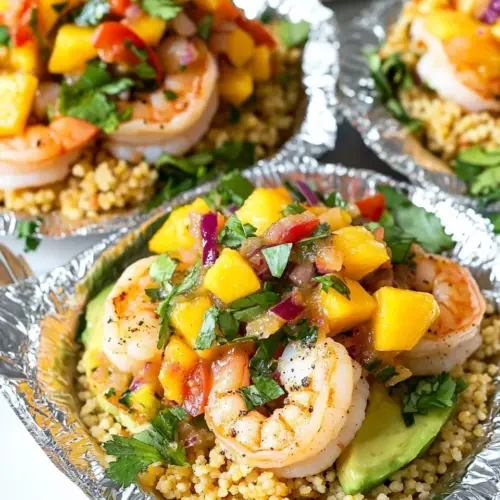
Shrimp Couscous Packets with Avocado Mango Salsa
Shrimp Couscous Packets with Avocado Mango Salsa deliver tender, spiced shrimp and fluffy couscous paired with a creamy, bright avocado mango salsa. This easy weeknight dinner is fragrant, colorful, and full of contrasting textures, making it perfect for summer cookouts or casual gatherings. Make it to enjoy a quick, flavorful meal that feels elevated and fresh.
Equipment
- Foil
- Oven
- Grill
- Mixing Bowl
- Cookie Sheet
Ingredients
- 1 cup couscous Provide a light, fluffy base for the dish and quickly soaks up steaming liquid to become tender; couscous pairs well with spices and seafood and helps carry flavors from the shrimp and salsa across each bite.
- 1/2 cup water Bring gentle moisture to the couscous and activate its quick-cooking process; water controls the final texture and ensures grains separate rather than clump when steamed.
- 1 pound medium-sized shrimp, shelled and deveined Offer sweet, briny protein that cooks rapidly in foil packets and absorbs spice rubs; shrimp contribute texture and savory depth while keeping the meal lean and quick to prepare.
- 2 cloves garlic, minced Add a pungent, aromatic note that mellows with cooking and infuses the shrimp and couscous with savory warmth; minced garlic enhances overall umami and complements the spice blend.
- 1/4 cup minced fresh cilantro Introduce a fresh, citrusy-herb element that brightens the couscous and shrimp mixture; minced cilantro also ties together the salsa and cooked components for cohesive flavor.
- 1 tablespoon extra virgin olive oil Provide a smooth, fruity fat that helps disperse spices and prevents sticking while adding richness; extra virgin olive oil also contributes subtle peppery and grassy notes to the packets.
- 3/4 teaspoon coriander Impart warm, floral citrus undertones that complement cumin and cilantro; coriander rounds out the spice mix and pairs particularly well with shrimp and mango components.
- 3/4 teaspoon kosher salt Season the couscous and shrimp with a clean, mineral saltiness that enhances all flavors; kosher salt helps draw out moisture and balance sweetness from the mango and tomatoes.
- 1/2 teaspoon cumin Contribute earthy, warm notes with slight bitterness that anchor the spice profile; cumin adds depth and a subtle smokiness which complements both shrimp and couscous.
- 1/4 teaspoon crushed red pepper flakes Deliver a bright heat and slight smokiness when added sparingly to the seasoning mix; crushed red pepper flakes introduce layered spice without overwhelming the dish.
- Black pepper, to taste Add freshly ground heat and aromatics to taste, providing balance and a bright finish; black pepper sharpens flavors and complements both the cooked components and the salsa.
- Vegetable oil cooking spray Help prevent sticking and allow easy removal of food from the cooking surface or packet; vegetable oil cooking spray enables even cooking without excess oiliness.
- 8 cups baby spinach Supply a tender, leafy volume that wilts quickly in the packet and adds color and nutrients; baby spinach contributes mild, slightly sweet vegetal notes and boosts the dish's freshness.
- 1 large mango, peeled and small diced Offer juicy, tropical sweetness and firm texture when diced small for the salsa; mango contrasts the savory shrimp and adds vibrant tropical flavor and acidity when ripe.
- 1 medium avocado, small diced Contribute creamy, buttery texture and mild flavor to the salsa when diced small; avocado softens the bite, balances heat, and lends richness to each spoonful.
- 1 pint cherry tomatoes, quartered Bring bright, acidic bursts and sweet-tart complexity when quartered; cherry tomatoes add juiciness and color while cutting through richer components.
- 1/4 cup small-diced red onion Provide a sharp, crunchy bite and slight pungency when finely diced for the salsa; red onion adds structure and a savory counterpoint to the sweet mango and creamy avocado.
- 1/4 cup minced fresh cilantro Add another layer of fresh herbaceous brightness to both cooked and fresh elements; minced cilantro in the salsa echoes the cilantro in the couscous mixture for continuity.
- 1/2 jalapeño pepper, seeded and finely chopped Introduce a focused, sharp heat and a vegetal brightness when seeded and finely chopped; jalapeño gives the salsa a fresh spicy kick that can be adjusted to taste.
- 1/2 lime, juiced Deliver lively acidity and a citrusy tang that brightens both the salsa and the cooked shrimp; juiced lime helps balance sweetness and elevate all flavors.
- Kosher salt, to taste Provide final seasoning control to the salsa and cooked elements, allowing diners to adjust saltiness; kosher salt enhances natural flavors and rounds out the dish.
Instructions
- Preheat oven or outdoor grill to 450 degrees F.: The air should smell faintly hot and dry as the surface reaches temperature, which ensures quick, even steaming inside the packets; this high heat creates the steam pocket that puffs the foil. If the appliance is not fully heated when you start cooking, packets may take longer and shrimp can overcook while waiting. A common mistake is underestimating warm up time, so always confirm with an oven thermometer or a well heated grill surface.
- Combine couscous with water and set aside.: When you mix couscous and water , you should see the grains begin to absorb liquid and swell slightly; letting it rest allows the texture to become tender without active stirring. This passive absorption keeps the granules light instead of gummy. Avoid adding too much water at once, which can make the couscous mushy, and resist stirring aggressively while it hydrates.
- Combine shrimp, garlic, cilantro, extra virgin olive oil, coriander, kosher salt, cumin, crushed red pepper flakes, and black pepper.: As these seasonings meet the shrimp , the oil begins to coat each piece so the spices cling, releasing an aromatic mix of citrusy and earthy notes; minced garlic and cilantro will smell sharp and herbaceous. This marinating moment boosts flavor penetration and produces more cohesive seasoning after cooking. A frequent slip up is using too much salt before tasting, so measure and adjust later if needed.
- Stir to combine.: You will notice the mixture become evenly glossy as the olive oil binds the spices to the shrimp . Uniform coating ensures every bite carries the intended seasoning profile and that nothing cooks blandly. Avoid over handling, which can break delicate shrimp , and do not let the seasoning sit at room temperature for too long.
- Using cooking spray coat inside of four 18-inch long pieces of foil.: The sprayed surface will glint slightly and prevent sticking, keeping the packet tidy and easy to open. This also helps the spinach bed release when you present each packet. Skipping this step often leads to torn packets and stuck greens, so be generous with the spray but avoid pooling oil.
- Place 2 cups of spinach in the center of each piece of foil.: The fresh spinach should sit flat and vibrant, providing a moisture barrier that wilts into a tender bed under heat; you will see the leaves begin to soften as steam forms. This leafy layer protects the couscous from direct contact with the foil and adds color. Packing too much spinach can block steam circulation, so keep the portion consistent per packet.
- Divide couscous and shrimp evenly among packets.: As you portion, the visual cue is balance; each packet should look proportionate with a nest of couscous and an even layer of seasoned shrimp on top. Equal distribution guarantees consistent cook times and serving sizes. Avoid piling ingredients high, which prevents even steaming and can undercook the center.
- Fold foil to close and crimp edges to seal.: When sealed properly the packets will trap steam and begin to balloon slightly as they cook; the edges should be tightly crimped to keep juices inside. This steam pocket is what cooks ingredients gently and concentrates flavors. A leak will let steam escape and dry out the contents, so double check seals and press firmly to avoid gaps.
- If cooking on the grill place on the grill and bake for about 10-12 minutes or until the packets are puffed and the shrimp is fully cooked.: On the grill you will hear a soft hiss and see the foil puff as steam builds, signaling near doneness; the shrimp inside should be opaque and springy to the touch. Grilling adds a hint of smoky complexity as well. Avoid high flare ups and check one packet early to confirm timing since grills vary widely in actual surface heat.
- If cooking in the oven put onto a cookie sheet and add to the oven. Cook until packets are fully puffed, 10 – 12 minutes.: In the oven the packets will expand uniformly, and the interior aroma will perfume the oven air. Ovens offer steady heat so timing is usually reliable, but altitude or dense fillings can extend cooking time. Do not open packets mid cook or you will lose steam and potentially lengthen the process.
- Serve warm with a scoop of salsa on top.: Warm packets open to release an inviting plume of steam and the surface of the shrimp will glisten; spooning the cool salsa over the hot filling creates an immediate contrast in temperature and texture. This finishing move brightens the whole dish and adds refreshing notes. A common error is serving the salsa too cold from the fridge, which can mute aromatics, so let it rest at cool room temperature briefly before topping.
- Combine all ingredients in a medium-sized mixing bowl.: When the salsa ingredients come together they create a mosaic of color and aroma, with sweet mango juices and zesty lime mingling; stirring helps flavors meld and redistributes juices evenly. This blending step ensures every spoonful is balanced. Overmixing can break up the avocado , so stir gently to maintain texture.
- Stir until completely combined.: The sound here is quiet, but visually you should see uniform distribution of diced mango , avocado , and herbs; the salsa should glisten without being soupy. Proper combining lets the acidity season the entire mix, elevating each component. Avoid letting the salsa sit uncovered too long, which can cause oxidation of the avocado .
- Serve over the shrimp.: Adding the salsa over the warm packet offers a contrast of temperatures and textures that is immediately pleasing to the palate, and the first bite will showcase the thoughtful interplay of spice and sweetness. Presenting it this way keeps components distinct and visually appealing. Do not let the salsa soak into the couscous for extended periods, which can soften the grains too much.
Notes
- Swap the grain: If you prefer a heartier base, try making small adjustments by replacing the couscous with a similar quick cooking grain, though follow the same packet technique to preserve steam cooking.
- Adjust the spice level: Increase or reduce crushed red pepper flakes and jalapeño pepper to tailor the heat, tasting the salsa as you go so it complements but does not overwhelm the shrimp.
- Make it citrus forward: Boost lime juice in the salsa for greater brightness, which can lift the whole plate and bring contrast to the warm, spiced filling.
- Turn up herb intensity: Add more minced cilantro to either the shrimp mixture or the salsa for an herbal punch that ties both components together.
- Serve family style: Open packets at the table so guests can scoop the warm filling and top with salsa themselves, enhancing the interactive dining experience.