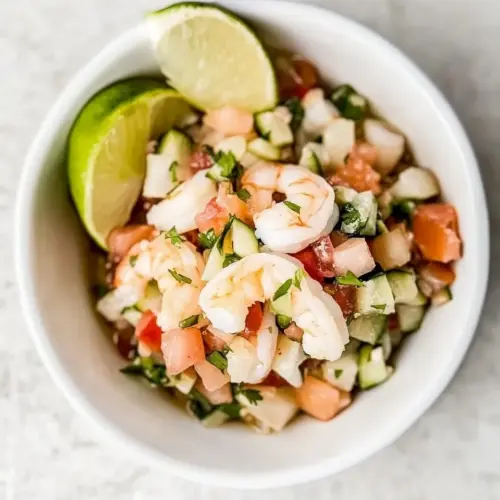
Shrimp Ceviche
Shrimp Ceviche is a bright, refreshing seafood dish that combines tangy lime, creamy avocado, and crunchy jicama for an easy summer crowd pleaser. This recipe yields a lively, citrus forward appetizer or light meal thats perfect for easy weeknight dinner or entertaining. Make it for its bold flavor contrast and quick prep time, you will want to make it again and again.
Equipment
- Medium Saucepan
- Large Bowl
- Small strainer
Ingredients
- 1/2 cup (plus 2 tablespoons) freshly squeezed lime juice (divided) Freshly squeezed lime juice provides bright acidity to cure the shrimp and balance the dish; divide usage so some juice is used for cooking and some for final seasoning. Adds a tangy citrus aroma and helps meld flavors while keeping the ceviche lively and refreshing.
- 16 ounces peeled and de-veined small-ish shrimp (41/50 count per pound) Peeled and de-veined small-ish shrimp supply the primary protein and texture, becoming opaque and firm when 'cooked' in the lime juice; using 41/50 count yields bite-sized pieces ideal for ceviche. Ensures a tender yet substantial mouthfeel and carries the marinade flavors well.
- 1/2 medium white onion, finely chopped Finely chopped white onion offers sharpness and crisp texture that contrasts the tender shrimp and creamy avocado; chopping finely prevents overpowering bites while dispersing flavor evenly. Contributes mild pungency and a pleasantly crunchy element to each spoonful.
- 1/3 cup chopped fresh cilantro (plus extra sprigs, for garnish) Chopped fresh cilantro imparts herbaceous, citrusy notes that brighten the ceviche and complement the lime; include extra sprigs for garnish to enhance visual appeal and aroma. Provides a fresh green flavor that ties together the seafood and vegetables.
- 1/2 cup ketchup Ketchup adds a subtle sweetness, tomato depth, and vibrant color to the ceviche base, creating a blended cocktail-style sauce; it softens the acidity and yields a familiar tangy backbone. Balances spicy and savory elements while contributing body to the marinade.
- 1 to 2 tablespoons hot sauce (like Cholula) Hot sauce introduces heat and a vinegary kick that can be adjusted to taste; use Cholula or a similar sauce for a smoky, chile-forward profile. Enhances complexity and liveliness without overwhelming delicate seafood flavors.
- 2 tablespoons extra virgin olive oil Extra virgin olive oil lends a silky mouthfeel and rounds out the acidity, helping to emulsify the marinade and carry fat-soluble flavors. Adds richness and a subtle fruity note that complements the seafood and vegetables.
- 1/2 cup peeled and diced jicama Peeled and diced jicama provides a crisp, mildly sweet crunch that contrasts soft textures and refreshes the palate; dicing small ensures even distribution throughout the ceviche. Contributes light juiciness and a neutral sweetness that harmonizes with citrus.
- 1/2 cup diced cucumber Diced cucumber offers cool, hydrating crunch and a mild vegetal flavor that balances the acidity and heat; seeding or selecting firm cucumber prevents excess wateriness. Adds refreshing texture and a clean finish to each bite.
- 1 medium ripe avocado (peeled, pitted and cubed) Ripe avocado, peeled, pitted and cubed, contributes creamy richness and a buttery texture that tempers acidity and spice; add gently to avoid mashing and to preserve cubes. Brings mouth-coating smoothness and a pleasant contrast to crunchy elements.
- sea salt, to taste Sea salt seasons and enhances all flavors, helping to round out acidity, sweetness, and heat; add incrementally and taste to achieve balance. Essential for amplifying natural seafood taste and tying together the ceviche components.
- lime wedges Lime wedges provide extra acidity for brightening individual servings and allow guests to adjust tang to preference; serve alongside for finishing touches. Offer a fresh citrus burst that elevates flavors just before eating.
- tortilla chips Tortilla chips supply a crunchy vehicle for scooping ceviche and add salty crispness that contrasts tender seafood and creamy avocado; choose sturdy chips to hold scoops without breaking. Enhance textural interplay and make the dish suitable for sharing.
Instructions
- In a medium saucepan, bring 1 quart of salted water to a boil and add 2 tablespoons of the lime juice. Add the shrimp, cover and return to a boil. Immediately remove from heat, set the lid askew and pour off all of the liquid. Replace the cover and let the shrimp steam off the heat for 10 minutes. Spread out the shrimp in a large bowl to cool completely. Toss the shrimp with the remaining 1/2 cup lime juice, cover and refrigerate for 1 hour.: The moment the water comes to a rolling boil you will smell the faint citrus lift, which helps temper the cooking water so it does not overwhelm the shrimp. The boiling point gives a quick, even heat that cooks the shrimp through without overcooking. A common mistake is leaving the shrimp in the hot water too long, which makes them rubbery, so watch the clock and proceed right away.
- In a small strainer, rinse the onion under cold water, then shake off the excess liquid. Add the onion to the shrimp along with cilantro, ketchup, hot sauce, olive oil, jicama, cucumber and avocado. Taste and season with salt (about 1/2 teaspoon). Cover and refrigerate if not serving immediately.: When the shrimp hit the water you will often hear a soft hiss and see the surface agitate, signaling rapid heat transfer. This quick contact with boiling water firms the flesh and sets the color. Avoid crowding the pan, as overcrowding lowers the temperature and can produce unevenly cooked shrimp.
- Spoon the ceviche into small bowls or martini glasses, garnish with cilantro sprigs and slices of lime. Serve with tortilla chips.: Removing the saucepan from heat stops the active cooking, and pouring off the liquid prevents the shrimp from continuing to poach in residual heat. You should notice the shrimp shift from translucent to opaque, a visual cue the proteins have tightened. Do not leave the liquid in place, or the texture will tighten too much and become tough.
- Replace the cover and let the shrimp steam off the heat for 10 minutes: During this resting period the shrimp finish cooking gently, and the steam keeps them tender rather than jerky. You will feel residual warmth when you lift the lid, and the aroma will be savory and slightly citrusy. A frequent error is shortening this rest, which results in undercooked centers, so be patient with the full ten minutes.
- Spread out the shrimp in a large bowl to cool completely: Spreading the shrimp prevents carryover cooking and helps them cool faster so they are ready to absorb the marinade. As they cool, they lose some steam and the texture firms just enough. Leaving them piled up traps heat and continues cooking, so be sure they are in a single layer for efficient cooling.
- Toss the shrimp with the remaining 1/2 cup lime juice, cover and refrigerate for 1 hour: The sharp, fresh scent of added lime juice signals the start of the curing process, where the acid alters the shrimp s proteins and brightens flavor. This hour allows the acid to permeate the shrimp without making them mealy. Skipping the chill or shortening it reduces flavor infusion, so aim for that full hour for best results.
- In a small strainer, rinse the onion under cold water, then shake off the excess liquid: Rinsing softens the raw bite and removes excess sulfur notes, leaving crisp, clean onion pieces. You will notice a milder onion aroma afterward. Forgetting to rinse can leave the onion overly pungent, overshadowing the delicate shrimp and herbs.
- Add the onion to the shrimp along with cilantro, ketchup, hot sauce, olive oil, jicama, cucumber and avocado: At this stage the bowl becomes a chorus of textures and scents, from herbaceous cilantro to creamy avocado . Stir gently so the ingredients combine without mashing the avocado. The olive oil will mellow the acidity and the ketchup will add gentle sweetness. Overmixing will bruise the avocado and make the mixture visually unappealing, so fold carefully.
- Taste and season with salt (about 1/2 teaspoon): Seasoning activates the flavors, and you will notice the difference immediately when salt balances the acid and sweetness. Start with a modest amount and adjust after the ingredients have rested a bit. A common misstep is over-salting early, which can be hard to correct once the flavors have fused.
- Cover and refrigerate if not serving immediately: Chilling harmonizes the flavors and tightens the overall texture, offering a cool, refreshing profile when served. The bowl should smell clean and bright with a subtle herb and lime perfume. Leaving it at room temperature for too long risks losing the crispness of the jicama and cucumber and increases food safety concerns, so refrigerate if there is any delay.
- Spoon the ceviche into small bowls or martini glasses, garnish with cilantro sprigs and slices of lime: Presenting the ceviche in small vessels makes it feel special and contagious at the table, while the garnish adds an aromatic top note. You will see the avocado and shrimp colors pop against the green cilantro. Avoid overcrowding the presentation, which can compress textures and reduce the visual appeal.
- Serve with tortilla chips: The chips add a satisfying crunch and act as a vehicle for every layered bite, providing contrast to the cool ceviche. Serve chips on the side so guests can scoop without sogginess. Placing the chips directly in the bowl too early will cause them to soften and lose their crunch.
Notes
- Choose the right shrimp: Use small to medium sized peeled and de veined shrimp as listed for a pleasing texture. Larger shrimp can be used, but they take longer to poach and may not absorb the lime flavors evenly. If frozen, thaw them gently in the refrigerator or under cold running water to preserve firmness.
- Fresh lime matters: Freshly squeezed lime juice provides lively acidity and aromatic oils that bottled juice lacks. When possible, zest a little lime into the mix for extra brightness. If your limes are small, buy a few more so you do not run short mid recipe.
- Control the heat level: Start with the lower amount of hot sauce and add incrementally until you reach your preferred spice. Different brands vary widely in intensity, so tasting is essential. Remember that flavors meld in the refrigerator, so a little restraint up front prevents an overly spicy final dish.
- Keep crunch alive: Dice the jicama and cucumber into similar sizes so each bite has balanced texture. If you prefer more snap, chill the vegetables before assembly. Avoid salting them heavily beforehand, which draws out moisture and makes them limp.
- Timing for the avocado: Add the cubed avocado right before serving or just a short time before, to maintain color and texture. If you must prepare earlier, toss the avocado with a little extra lime juice to slow browning and keep it vibrant.