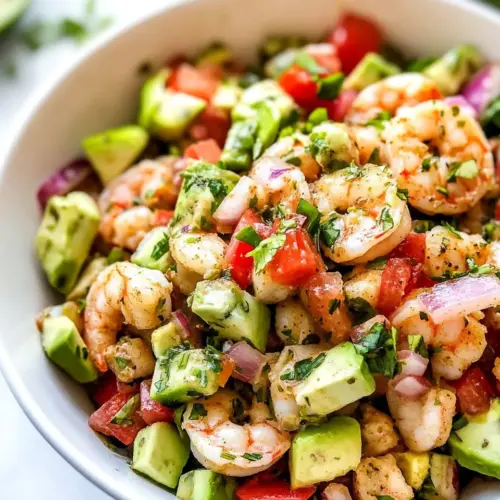
Shrimp Ceviche
Shrimp Ceviche delivers bright, tangy, and herbaceous flavors with creamy avocado and crisp vegetables. This easy to prepare dish is perfect as an appetizer or a light main for summer gatherings, offering a fresh and zesty profile that feels celebratory. Make it for an easy weeknight dinner or entertaining, you will love how fast it comes together and how vibrant each bite tastes.
Equipment
- Non reactive bowl
- Knife
- Cutting Board
- Refrigerator
Ingredients
- 1 pound medium, high-quality shrimp, peeled, deveined, tails removed, chopped into 1/2-inch pieces Provide delicate seafood texture and protein by using medium, high-quality shrimp that are peeled, deveined, tails removed, and chopped into 1/2-inch pieces to ensure even marination and a pleasant bite.
- 3/4 cup freshly squeezed lime juice, plus more as needed Add bright acidity and help 'cook' the shrimp through denaturation by using freshly squeezed lime juice; include extra for adjusting brightness and balancing flavors to taste.
- 1 teaspoon salt Enhance overall seasoning and bring out natural flavors with salt; use precisely to taste to avoid over-salting the ceviche while helping the lime juice penetrate the shrimp.
- 1/2 tsp EACH pepper, garlic powder, ground cumin, smoked paprika Season evenly by combining pepper, garlic powder, ground cumin, and smoked paprika in equal small amounts to introduce warmth, mild heat, and smoky complexity without overpowering the dish.
- 1 cup chopped English cucumber Introduce a crisp, refreshing crunch and subtle vegetal flavor with chopped English cucumber, which also adds moisture and balances the acidity of the lime juice.
- 2 Roma tomatoes, seeded and chopped Contribute juicy sweetness and slight acidity using Roma tomatoes that are seeded and chopped to prevent excess liquid while adding fresh color and texture.
- 1/2 cup diced red onion Provide a sharp, pungent bite with diced red onion, whose crispness and mild sweetness contrast the citrus-cured shrimp and brighten the overall profile.
- 1 cup packed cilantro, minced Impart vibrant herbaceousness and a citrusy undertone with packed, minced cilantro, which complements the lime and seafood while adding fresh green flavor.
- 2 -4 jalapenos, seeded and minced Deliver variable heat and bright pepper flavor by adding 2 to 4 jalapenos that are seeded and minced; adjust quantity based on desired spiciness and remove seeds to reduce heat.
- 1 large avocado, chopped (or 2 small avocados) Contribute creamy richness and a buttery texture by chopping a large avocado (or two small), which balances acidity and adds a luxurious mouthfeel to the ceviche.
- 1/3 cup picante clamato juice or V8 (optional) Optionally enhance savory depth and add a slight tomato-clam flavor by stirring in picante clamato juice or V8, which can thin the mixture and introduce umami.
- 1 teaspoon Worcestershire sauce Boost savory complexity and add subtle tanginess with Worcestershire sauce, which deepens flavor without overwhelming the fresh ingredients when used sparingly.
- saltine crackers Serve as a classic crunchy accompaniment by offering saltine crackers for scooping the ceviche and adding a light, salty contrast to the citrus-cured shrimp.
- tostadas Provide a sturdy, crispy vehicle by including tostadas so diners can enjoy larger scoops of ceviche with a satisfying crunch and a toasted corn flavor.
- tortilla chips Offer a casual, shareable option with tortilla chips that pair well for scooping and bring corn flavor and crunch to each bite of the ceviche.
- hot sauce Allow diners to customize heat by providing hot sauce, which can be added sparingly to individual servings for an extra kick without altering the whole batch.
Instructions
- Add the lime juice and all shrimp seasonings to a non-reactive bowl and stir to combine. Add shrimp and stir to combine. Make sure the shrimp is covered, adding additional juice if necessary. Cover and marinate in the refrigerator for 60 minutes, stirring halfway through. Meanwhile, chop the vegetables.: The first sensory cue is the scent of citrus hitting the spices, a bright, peppery aroma that should make you feel awake and focused; this mix creates the marinade pool that evenly contacts each piece of shrimp , ensuring consistent curing; one common mistake is using a reactive metal bowl which can discolor the lime juice and impart a metallic taste, so always choose glass or stainless steel; if the mixture smells overly sharp add a touch more lime juice or a pinch more salt to balance; when stirring you want the spices dispersed not clumped, and visually the marinade should look smooth and uniform.
- After the shrimp has been marinating for 60 minutes, add the diced cucumbers, tomatoes, red onions, cilantro and jalapenos to the bowl with the shrimp and stir to combine. Cover and refrigerate for an additional 30-60 minutes, stirring every 15 minutes, or until shrimp are cooked through – opaque, with a white and pink exterior.: Once the shrimp hits the marinade you will notice the mixture cooling and the shrimp beginning to take on a paler hue around the edges; stir gently to coat every piece, this ensures even exposure to acid; avoid overworking the shrimp with vigorous stirring which can break the pieces and make the texture mushy; a light fold is all you need, and if any shrimp float up simply press them back under so they are fully covered by the lime juice .
- When ready to serve, stir in the avocados, clamato juice and Worcestershire sauce; season to taste with salt, pepper or cayenne pepper. You may drain off a little excess juice if you like. Serve with crackers, tostadas or tortilla chips as an appetizer or as a main dish with rice, sweet potatoes, corn on the cob, etc. Shrimp ceviche is best consumed within four hours of being made.: The visual sign you want is all shrimp submerged in the marinade, no pale pockets exposed to air; if the bowl seems shallow, add more fresh lime juice until everything is immersed; a frequent oversight is skimping on liquid which leads to uneven cooking and chewy bits; covering the surface also helps maintain an even acid contact, so check the bowl once more before chilling.
- Cover and marinate in the refrigerator for 60 minutes, stirring halfway through: During this stage you will hear the ambient kitchen quiet and smell the citrus deepen as the shrimp cures; the interior texture transitions from translucent to fully opaque, indicating the acid has firmed the protein; stirring at the halfway point redistributes marinade and prevents any uneven curing; avoid leaving it unrefrigerated as the citrus action should happen in a cold environment to keep the texture delicate and safe.
- Meanwhile, chop the vegetables: While the shrimp marinates you will enjoy the crisp sounds of knife work, the release of tomato and cucumber juices, and the herbal perfume of cilantro ; chop uniformly so each bite has balanced texture; a common error is uneven chopping leading to some bites overly onion forward or otherwise unbalanced; keep a bowl nearby to collect scraps so you stay efficient and clean.
- After the shrimp has been marinating for 60 minutes, add the diced cucumbers, tomatoes, red onions, cilantro and jalapenos to the bowl with the shrimp and stir to combine: At this point the mixture smells layered, bright citrus with vegetal sweetness and a herbaceous lift; add the vegetables and fold gently to integrate them without bruising the avocado later on; the combination of textures should look vibrant and colorful in the bowl; a typical misstep is adding too much at once and overmixing, which can crush the vegetables, so fold carefully.
- Cover and refrigerate for an additional 30 to 60 minutes, stirring every 15 minutes, or until shrimp are cooked through – opaque, with a white and pink exterior: Here you are looking for the final visual cue of fully opaque, pink edged shrimp , and the aroma should be bright but balanced; stirring intermittently keeps flavors even and prevents any one side from sitting too long in marinade; avoid leaving it longer than recommended as the shrimp will continue to firm and can become rubbery over time.
- When ready to serve, stir in the avocados, clamato juice and Worcestershire sauce; season to taste with salt, pepper or cayenne pepper: Adding the avocado at the last moment preserves its creamy texture and prevents it from breaking down into the marinade; the optional clamato juice adds savory depth, and a small splash of Worcestershire sauce brings umami; taste carefully and adjust seasoning with salt and pepper , watch not to over season as the marinade is already salty; visually the bowl should look glossy and full of color.
- You may drain off a little excess juice if you like: The decision to drain is a textural one, draining slightly will prevent sogginess and make scooping onto tostadas or saltine crackers easier; if you prefer juicier ceviche leave more liquid for spooning over rice; a misstep is draining too aggressively which can remove flavor, so taste the drained liquid first if you are unsure.
- Serve with crackers, tostadas or tortilla chips as an appetizer or as a main dish with rice, sweet potatoes, corn on the cob, etc: The presentation can be rustic or tidy, either way the contrast between crunchy carriers and soft ceviche is delightful; when serving as a main, plate with warm sides like corn or rice to create a balanced meal; avoid serving everything cold and damp, crisp the carriers just before serving to preserve texture.
- Shrimp ceviche is best consumed within four hours of being made: Because the lime juice continues to "cook" the shrimp , the ideal window for texture is short; within four hours you will enjoy tender, juicy pieces; a frequent error is storing it too long which leads to tough, rubbery shrimp , so plan servings accordingly and combine components close to serving time when possible.
Notes
- Choose proper shrimp, use the freshest raw or verified raw frozen shrimp, as quality is essential for safety and texture, avoiding pre cooked shrimp keeps the curing method effective.
- Work in small batches, if serving many people prepare in batches to keep the marinade ratios consistent and maintain optimal texture across servings.
- Mild the onion if needed, soak diced red onion in cold water for 10 minutes to soften its bite while preserving crunch if raw onion feels too sharp.
- Control heat with jalapeno seeds, reserve seeds to add at the table so diners can customize spice without overwhelming the whole batch.
- Use a non reactive bowl, glass or food safe plastic prevents any metallic flavor that can come from acidic contact with reactive metals.