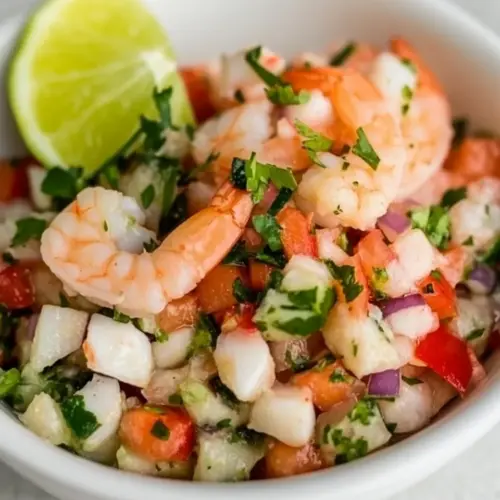
Shrimp Ceviche
Shrimp Ceviche delivers bright, tangy seafood flavor with crisp vegetables and herbaceous cilantro. This easy, fresh recipe is perfect for warm weather and quick gatherings, offering a light and zesty option for an easy weeknight dinner or party appetizer. Make it for its refreshing texture contrast and lively citrus cure that keeps guests coming back for more.
Equipment
- Knife
- Cutting Board
- Glass or stainless steel bowl
- Refrigerator
Ingredients
- 1 pound raw shrimp thawed (see note 1) Use to provide the primary seafood element; devein and peel if needed, then allow the citrus to cure the shrimp until opaque and firm, yielding a tender ceviche texture and fresh ocean flavor.
- 1 cup citrus juice (see note 2) Provide the acidic cure that cooks the shrimp; combine lime, lemon, or orange juices to fully submerge the shrimp and balance brightness with a touch of sweetness for proper acid denaturation.
- 1 medium onion peeled and finely diced (about 1 cup) Add a crisp, sharp bite by finely dicing to distribute even texture and mild pungency throughout the ceviche without overpowering the other fresh ingredients.
- 1 large carrot peeled and finely chopped (about 1/2 cup, see note 3) Contribute subtle sweetness and firm crunch when peeled and finely chopped, helping to balance acidity and offer a pleasant contrast to the soft shrimp.
- 1 -2 roma tomatoes seeded and finely chopped (about 1/2 cup) Bring ripe, juicy acidity and a mild tomato earthiness when seeded and finely chopped, adding body and freshness without excess liquid.
- 1 -2 jalapeño peppers minced (seeded if desired, see note 4) Introduce a bright, spicy kick when minced, with seeds removed if less heat is desired; adjust amount to taste to control the overall heat level.
- 1 bunch fresh cilantro stems removed, minced (see note 5) Add a fragrant, citrusy-herb note when stems are removed and leaves minced; fold in toward the end to preserve color and fresh aroma.
- Salt Season to taste to enhance and balance flavors; sprinkle gradually and taste as acidity and other ingredients can change salt needs.
- tortilla chips or tostadas or saltine crackers Provide a crunchy or scoopable accompaniment to serve with the ceviche; choose tortilla chips, tostadas, or saltines depending on desired presentation and texture.
- mayonnaise and hot sauce, for serving Offer a creamy and tangy finishing option when served alongside the ceviche; combine mayonnaise and hot sauce lightly if a richer dipping sauce is preferred.
Instructions
- To peel and clean shrimp, start by pinching off the tail, then the rest of the shell should peel off fairly easily. Use a knife to make a shallow slice on the shrimp’s back, from its head to its tail.: Begin with the tactile task of shelling the shrimp , enjoying the quiet rhythm of removing each shell as the kitchen fills with a faint briny scent. As you make the shallow slice along the back, you will notice a slight change in texture where the knife meets the flesh, and that incision makes it easier to remove the vein. Keep the pieces uniform so the citrus cures evenly, and work over a bowl to catch any liquid. A common mistake is rushing and leaving shells or bits of membrane attached, which can make the texture unpleasant, so take your time and use a sharp paring knife to keep cuts clean.
- Carefully pick out the black or green vein that runs along the back and discard it, then rinse out the vein with water. Chop the shrimp into 1/2-inch pieces.: When you pull the vein you may notice a slightly metallic or earthy smell, which is why removal improves both flavor and appearance. Rinsing briefly under cold water removes any residue, then pat the shrimp dry so the citrus can contact the flesh directly. As you chop into 1/2 inch pieces, watch for consistent sizes; visually the bowl should look uniform, and the texture will be even when cured. Avoid over chopping which makes the pieces mushy, and beware of leaving the shrimp too wet because excess moisture dilutes the citrus and alters curing.
- In a medium glass or stainless-steel bowl, add shrimp and citrus juice and toss to coat. Cover and refrigerate until the shrimp is opaque and 'cooked' through, about 2 to 4 hours depending on the size of the shrimp (see note 1).: As the citrus hits the shrimp , you will see the color shift from translucent to a firm, opaque tone, and the kitchen will smell bright and zesty. Tossing ensures all surfaces are contacted, and covering the bowl prevents other fridge odors from interfering. Place the bowl on a lower shelf to keep the temperature steady. A typical error is checking too frequently, which interrupts the cure and can lead to uneven texture; instead, trust the time guidance and only test once near the end of the suggested window.
- Drain off and discard excess citrus juice. Add onion, carrots, tomatoes, jalapeños, and cilantro and toss until evenly coated. Season to taste with salt and more fresh citrus juice if desired.: Carefully pour off the excess citrus so the ceviche remains lively instead of soupy, and listen for the quiet clink as liquid leaves the bowl. When you fold in the diced onion , carrot , tomato , jalapeño peppers , and cilantro , inhale the layered aromas of citrus, herb, and pepper. Toss gently so the pieces stay intact. Taste at this stage and adjust salt or a splash more citrus if the mixture feels flat. A frequent slip is over seasoning before flavors meld; seasoning lightly first then tasting is a safer approach.
- Serve with tostadas, tortilla chips, or saltine crackers, passing hot sauce and mayonnaise separately.: Present the ceviche chilled, spooning it onto crisp tostadas or offering a bowl with chips for scooping, and watch how the textures contrast pleasingly. The first bite should start cool and tangy, then finish with the herb and pepper notes. If you offer hot sauce and mayonnaise on the side, guests can tailor each bite. One mistake to avoid is letting the assembled ceviche sit too long on crispy carriers, as they will soften; serve promptly for the best crunch.
Notes
- Adjust the heat by removing seeds from the jalapeño peppers or using less of them, mincing finely so a little spreads easily; this keeps the dish approachable for children while still offering a hint of warmth.
- Vary the citrus by combining lime and lemon or adding grapefruit for subtle sweetness; taste as you go because different juices change acidity levels and can make the cure faster or slower.
- Control texture by chopping the carrot and onion finer for a smoother mouthfeel or leaving them slightly larger if you want more crunch in every bite.
- Make it ahead by curing the shrimp earlier in the day and adding vegetables just before serving to preserve crispness; store the cured seafood in the fridge covered until you are ready to combine.
- Present with variety by offering tostadas, tortilla chips, and saltine crackers so guests can choose their preferred base; each carrier changes the experience and invites sharing.