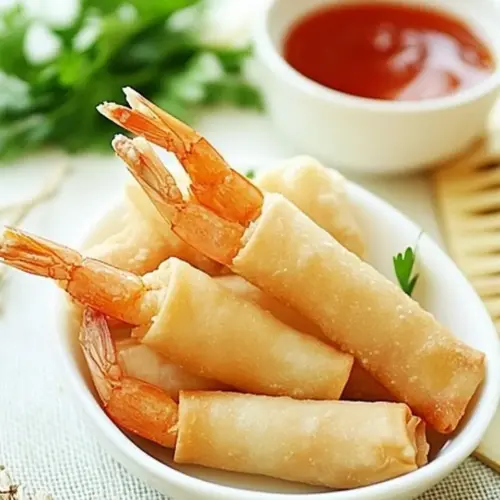
Shrimp and Cheese Spring Rolls
Shrimp and Cheese Spring Rolls are crispy, savory bites featuring plump shrimp and melty cheddar in a thin spring roll skin. These easy crowd pleasers offer crunchy exterior texture and a creamy, briny center, perfect for an easy weeknight dinner or party appetizer. Make a batch for your next gathering, they disappear fast and deliver big flavor with simple technique.
Equipment
- Frying Pan
- Paper towels
- Mixing Bowl
- Slotted Spoon
Ingredients
- 50 medium sized shrimp, shelled and deveined but leave the tail on Provide a firm, sweet-tasting seafood element that becomes tender when cooked; use shelled and deveined shrimp with tails left on for ease of handling and presentation. Ensure even cooking by keeping pieces medium-sized so they fit comfortably in each spring roll wrapper.
- 50 spring roll skin, small piece Serve as delicate wrappers that crisp up when fried or baked; choose small spring roll skins to match the portion size and achieve a thin, crunchy exterior. Handle gently to avoid tearing and keep refrigerated until ready to assemble to maintain flexibility.
- 4 oz (125 g) cheddar cheese, cut into very tiny cubes Add a rich, sharp dairy bite and melty texture; cut cheddar into very tiny cubes so the cheese distributes evenly and melts inside the roll without oozing out. Balance quantity to complement the shrimp rather than overpower the seafood flavor.
- 2 scallions, finely chopped Introduce a mild oniony freshness that brightens the filling; finely chop scallions so they blend seamlessly with other ingredients and release aromatic oils. Stir into the mixture just before filling to preserve their crisp, green color.
- 1 egg white, lightly whisked for sealing Provide a sticky sealing agent to secure edges when assembling; lightly whisked egg white adheres wrappers together without adding extra yolk richness. Apply sparingly along seams to prevent sogginess and ensure tight seals.
- 1 1/2 teaspoons fresh ginger juice Impart a zesty, warming note with concentrated aromatics; fresh ginger juice adds depth and a subtle heat that pairs well with shrimp and cheese. Use measured amount to avoid overpowering the delicate balance of flavors.
- 1 teaspoon salt Season the filling to enhance natural flavors and ensure overall balance; salt should be mixed thoroughly so it seasons shrimp and cheese uniformly. Adjust slightly to taste, keeping in mind that cheese already contributes saltiness.
- 2 teaspoons sugar Contribute a touch of sweetness to round flavors and counteract savory and acidic elements; sugar dissolves easily and helps develop a balanced palate. Dissolve into any wet components to blend seamlessly throughout the filling.
- 2 teaspoons cornstarch Thicken and bind small amounts of liquid for a cohesive interior texture; cornstarch helps absorb moisture released during cooking and prevents soggy wrappers. Mix with cold liquid before adding to avoid lumps and ensure smooth consistency.
- 2 teaspoons sesame oil Add a nutty, aromatic layer that enhances overall fragrance; sesame oil should be used sparingly for its potent flavor to complement seafood and cheese. Stir in at the end of mixing to preserve its scent and prevent loss during cooking.
- 1 1/2 teaspoons lime juice Provide bright acidity to lift and balance rich ingredients; lime juice cuts through the cheese and oil, adding a fresh citrus tang that enlivens the filling. Squeeze fresh and strain if needed to avoid pulp in the rolls.
- 1/2 teaspoon white pepper Offer subtle heat and floral pepper notes to finish seasoning; white pepper blends evenly and adds a gentle spiciness without visible specks. Incorporate in small amounts to maintain a delicate, rounded flavor profile.
Instructions
- Pat the shrimp dry with paper towels and marinate them with the marinade ingredients. Add the scallions and marinate for 15 minutes.: The first sensory cue you want is the faint aroma of ginger and lime rising from the bowl, which tells you the flavors are permeating the shrimp . When you pat the shrimp dry, the paper towels should come away almost clean, indicating you removed excess moisture that would otherwise cause violent splattering in hot oil. The marinate will lightly season the flesh, and you will notice the surface becoming slightly tacky due to the cornstarch , which helps the filling hold together. One reason this matters is that dry surfaces brown faster and more evenly, giving you a pleasing color and a crisp bite. A common mistake here is rushing the patting step, leaving the shrimp damp, which results in oil spitting and a soggy wrapper during frying. Allow at least fifteen minutes of marinating for flavors to meld and to let the texture firm up slightly.
- Add some cheddar cheese before wrapping each shrimp with spring roll skin. Refer to the wrapping guide pictures below for instructions. Use egg white to seal the edges.: As you fold in the finely chopped scallions , you'll notice a fresh, green fragrance that lightens the overall aroma. During the fifteen minutes, the oniony notes diffuse into the mixture, softening the raw edge of the scallions and marrying with the acidity from the lime juice . Texture-wise, this short rest gives the scallions time to relax so they are not sharp in every bite, producing a balanced mouthfeel. The goal is a blend that is neither too wet nor too dry; if it looks overly loose, a touch more cornstarch can help. Avoid overmixing, which bruises the scallions and releases excess water, making the filling wetter and harder to wrap.
- Heat a frying pan or sauté pan with oil and deep fry the shrimp spring rolls until golden brown and crispy. Serve hot with bottled chili sauce topped with sesame seeds and/or mayonnaise.: When you nestle a tiny cube of cheddar cheese next to each shrimp , you should feel a slight weight that promises a molten center once fried. The cheese must be very small so it heats through quickly, turning creamy rather than leaving a solid core. As you fold the spring roll skin over the filling, keep an eye on the wrapper's moisture; dry skins crack, and overly damp skins become gummy. The wrapping stage determines the final presentation, so take a breath and make neat turns. A frequent mistake is overfilling, which leads to tears and leaks in the oil. Use a light touch and trim any ragged edges of the wrapper before sealing.
- Refer to the wrapping guide pictures below for instructions: While I can't show the images here, the tactile feedback tells you when the wrap is right, the edges lying flat and snug. You should hear the faint papery sound of the wrapper as you fold, and visually, the parcel should look compact and even. Properly wrapped rolls maintain their shape and cook uniformly, leading to an even golden color on all sides. If you notice air pockets before frying, press them out gently, because trapped air can expand and cause bursts in the oil. Rushing this step often produces misshapen rolls that brown unevenly.
- Use egg white to seal the edges: Brushing the edges with a thin film of egg white gives a nearly invisible glue that sets quickly in hot oil. The egg white should be barely wet, just enough to meld the layers of the spring roll skin , preventing filling from leaking out. You will see the seal become satin and tacky, which means it will hold during frying. Avoid using too much egg white because excess will bubble and create dark spots on the wrapper. One troubleshooting tip is to re-wet the edge if it dries before frying, but do so sparingly to prevent sogginess.
- Heat a frying pan or sauté pan with oil and deep fry the shrimp spring rolls until golden brown and crispy: When the oil is ready, it will shimmer and give off a faint scent of warmth without smoking. Drop a test piece of wrapper into the oil; it should bubble actively and rise to the surface within seconds, indicating the right temperature. As you place each roll in the oil, listen for a steady sizzle that signals the moisture inside is escaping properly, producing a crisp exterior. Visually, watch for an even golden brown that suggests the wrapper is perfectly cooked and the interior warmed through. If the oil is too cool, the rolls absorb oil and become greasy; if it's too hot, the outside will darken before the inside heats, so maintain a consistent medium high heat. Use a slotted spoon to turn rolls gently, ensuring even color on all sides. Do not overcrowd the pan, because that drops the oil temperature and yields limp results.
- Serve hot with bottled chili sauce topped with sesame seeds and/or mayonnaise: The final sensory joy arrives when you break one open and see the molten center, the aroma of toasted sesame oil , and the tang of the dipping sauce. Hot rolls have the ideal contrast between crisp exterior and soft interior. Sprinkle a few sesame seeds on the sauce for a nutty note and a pleasant contrast in texture. A common serving mistake is letting the rolls sit too long, which causes steam to soften the wrapper. Have your dipping sauce ready and serve immediately for the best experience.
Notes
- Dry shrimp thoroughly — Patting the shrimp dry prevents oil from sputtering and keeps the wrapper crisp; wet seafood makes frying hazardous and messy.
- Keep wrappers covered — Place unused spring roll skin under a damp cloth to stop them from drying and cracking while you work.
- Small cheddar cheese cubes — Cut the cheddar cheese into tiny pieces so it melts quickly and spreads evenly inside each roll.
- Seal with egg white — A light brush of egg white gives a clean, invisible seal that stops filling from escaping during frying.
- Fry in batches — Maintain oil temperature by frying only a few at a time, which yields evenly golden and crisp rolls.
- Use a neutral oil with a high smoke point — Choose an oil that tolerates high heat so the rolls brown without burning, keeping the interior moist.