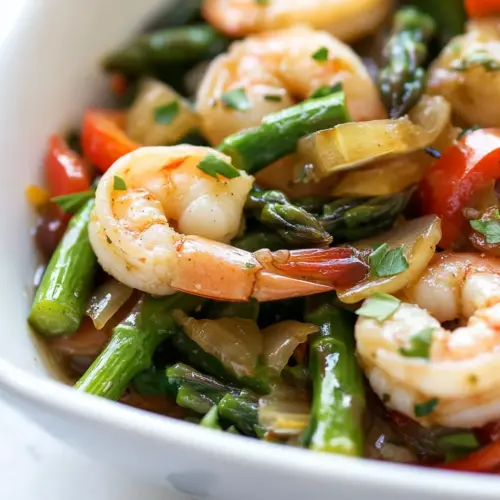
Shrimp and Asparagus Stir Fry
Shrimp and Asparagus Stir Fry is a bright, quick springtime skillet that pairs tender shrimp with crisp asparagus and sugar snap peas in a glossy sweet tangy sauce. This easy weeknight dinner delivers restaurant style texture and bold flavor in about 25 minutes, making it perfect when you want something fast but impressive. It is a must make for quick, healthy meals.
Equipment
- Wok
- Spatula
- Slotted Spoon
Ingredients
- 1 pound raw shrimp, peeled, tails on Season generously and help enhance overall flavor while balancing sweetness and acidity; use to taste and adjust during cooking, ensuring shrimp are well-seasoned before and after stir-frying to bring out natural flavors.
- salt and pepper Season sparingly to enhance savory notes and control taste balance; apply during cooking and at the end to avoid over-salting delicate seafood and vegetables.
- 1 pound asparagus spears, fresh Provide crisp texture and fresh, grassy flavor when trimmed and cut into bite-sized pieces; cook briefly to maintain bright color and slight crunch that complements the shrimp.
- 2 tablespoon vegetable oil, divided Provide a neutral cooking medium for stir-frying and assist in searing ingredients; reserve half for initial high-heat cooking and use the remainder for finishing to prevent sticking and uneven browning.
- 2 teaspoons ginger, grated fresh Impart warm, slightly spicy aromatic notes that brighten the dish; grate finely and add early in cooking to release oils and integrate with sauces for depth.
- 2 cloves garlic, minced Offer pungent, savory aroma and build umami complexity; mince finely and add with ginger to aromatize the oil and infuse the entire stir-fry.
- 1 medium red sweet pepper, seeded and cut into 1-inch pieces Add sweet, crisp texture and vibrant color when cut into 1-inch pieces; cook briefly to retain crunch and provide contrast to softer ingredients like shrimp and onions.
- 1 medium red onion, cut into thin wedges Contribute mild sweetness and subtle sharpness with tender layers that caramelize; cut into thin wedges to quickly soften and add body while maintaining a bit of bite.
- 2 cups sugar snap pea pods, fresh or frozen Supply snap and fresh sweetness, offering a bright green color and crunchy texture; toss in toward the end of cooking if frozen, or early if fresh, to preserve crispness.
- 1 tablespoon sesame seeds Provide nutty crunch and visual garnish when toasted; sprinkle over the finished dish to add texture contrast and enhance sesame flavor.
- 2 tablespoons reduced-sodium soy sauce Deliver savory, salty depth and umami to bind the sauce components; mix with vinegar and sugar to create a balanced stir-fry glaze that coats shrimp and vegetables.
- 2 tablespoons rice vinegar Contribute acidity and brightness to cut through richness and balance flavors; combine with soy sauce and sugar to make a tangy sauce that lifts the whole dish.
- 1 tablespoon brown sugar, packed Add caramelized sweetness to round out flavors and balance acidity; dissolve into the sauce to create a subtle molasses note that harmonizes with soy and vinegar.
- 1 teaspoon toasted sesame oil Introduce concentrated toasted sesame aroma for finishing; drizzle sparingly to add a fragrant, nutty accent that enhances other sesame elements.
- 2 tablespoons cilantro, freshly chopped Provide fresh herbaceous finish and bright color when chopped; sprinkle over the completed stir-fry to add lift and a subtle citrusy, cilantro flavor.
Instructions
- Season shrimp with salt and pepper then sauté in 1 tbsp of vegetable oil over medium-high heat in a large wok for 3 to 5 minutes, or until no longer translucent. Remove to a plate and keep warm.: The moment the oil hits the hot wok you will hear a pronounced sizzle, and that sound is your cue that the pan is ready to give the shrimp a golden sear. As the shrimp cooks, it will change from translucent to opaque and firm up, and you may notice the scent become briny and slightly sweet. Searing quickly at medium high heat creates a caramelized surface that adds depth, while removing them to a plate prevents overcooking, which is the most common pitfall here. If the shrimp start releasing large amounts of liquid, the pan is not hot enough, and you will steam instead of sear.
- Snap off and discard woody bases from asparagus. If desired, scrape off scales. Cut asparagus diagonally into 2-inch pieces (you should have about 3 cups).: When you break the asparagus, the woody end naturally snaps where the tender part begins, and that tactile break is a quick test of freshness. Cutting on the diagonal increases the searing surface and gives attractive pieces that show off the vegetable's bright green color. The visual cue you want is vivid green with no limp spots, and the aroma should be fresh and grassy. A common mistake is leaving the tough base on, which results in chewy bites, so do not skip snapping or trimming.
- Pour remaining vegetable oil into the wok; heat wok over medium-high heat. Add ginger and garlic; cook and stir for 15 seconds. Add asparagus, sweet pepper, and red onion; cook and stir for 3 minutes. Add sugar snap peas and sesame seeds; cook and stir for 3 to 4 minutes more or until vegetables are crisp-tender.: As the oil warms and the ginger hits the pan you will smell fragrant, peppery steam, and that quick flash cooks out rawness while preserving brightness. When you add the cut vegetables, listen for the lively sizzle and watch for the edges to take on slight browning while the interiors remain firm. The sweet pepper and red onion will begin to soften and release sugars that enhance the sauce later. After adding the sugar snap peas , the pan should still be noisy with quick pops and cracks, which is perfect. Overcrowding is a typical error, it causes steaming instead of searing, so keep the pan roomy and stir frequently.
- Add soy sauce, vinegar, brown sugar, and sesame oil to vegetable mixture; return shrimp to wok and toss gently to coat. Stir in cilantro. Use a slotted spoon for serving.: The moment the sauce hits the hot vegetables the aromas will lift, a balance of savory soy sauce , bright rice vinegar , and caramel brown sugar . Tossing the reserved shrimp back in warms them through and lets the glaze cling to every surface, creating glossy bites. The final stir with chopped cilantro releases herbal perfume and adds a fresh counterpoint. Avoid vigorous tossing that breaks the vegetables; gentle movement ensures an even coating without mashing delicate pieces, which is a frequent misstep at this stage.
Notes
- Heat control: Maintain medium high heat so vegetables char slightly while staying crisp, and adjust your burner to prevent burning the garlic which turns bitter very quickly.
- Shrimp timing: Sear the shrimp only until opaque and just firm to the touch, then remove them to avoid overcooking when you finish the vegetables.
- Vegetable prep: Cut the asparagus and peppers into similar sized pieces to ensure even cooking and a uniform bite across the dish.
- Sauce balance: Taste the sauce before tossing, and tweak with small amounts of rice vinegar or brown sugar to reach your preferred sweet and tangy balance.
- Garnish smart: Add chopped cilantro and toasted sesame seeds at the end for contrast in flavor and texture, and sprinkle them just before serving so they stay vibrant.