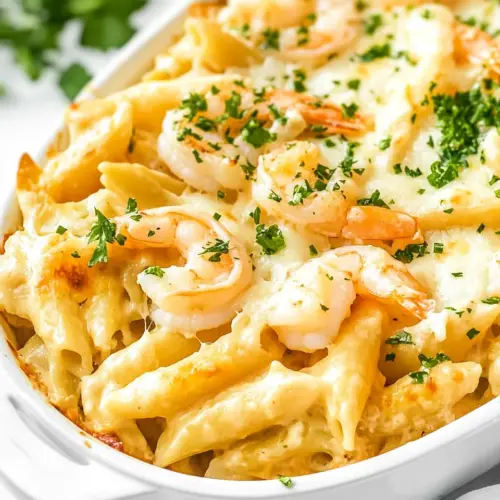
Shrimp Alfredo Bake
Shrimp Alfredo Bake is a creamy, cheesy pasta casserole with tender shrimp and a velvety Parmesan cheese sauce, perfect for an easy weeknight dinner or casual gathering. The comforting texture pairs gooey Mozzarella cheese on top with rich heavy whipping cream beneath, making it both cozy and elegant. Make it when you want something indulgent yet simple to pull together.
Equipment
- Saucepan
- Whisk
- 9x13-inch Baking Dish
Ingredients
- 16 ounces penne pasta cooked according to package directions Cooked according to package directions to provide the tender pasta base that soaks up the creamy sauce and binds the bake together; ensure al dente for best texture after baking. Serve as the primary carbohydrate and bulk of the dish, offering structure for the cheeses and shrimp to cling to.
- 1 cup Mozzarella cheese shredded Shredded to melt smoothly and create a stretchy, golden topping that browns lightly in the oven; adds creamy, milky flavor and pleasant chew. Use as both a binder and finishing cheese to give the dish a classic, gratin-like finish.
- 1 pound cooked shrimp peeled, deveined, and tails removed (about 20-25 pieces) Cooked, peeled, and deveined to supply tender, flavorful seafood protein throughout the casserole; remove tails for ease of eating and even distribution. Incorporate gently into the sauce and pasta so the shrimp stays succulent without becoming rubbery.
- chopped fresh parsley optional Chopped fresh to add bright herbaceous color and a fresh contrast to the rich, creamy sauce; sprinkle over the finished bake for visual appeal and a light flavor lift. Use sparingly as an optional garnish to avoid overpowering the delicate seafood and cheese.
- 1/2 cup butter cut into large cubes Cut into large cubes to melt evenly into the sauce, contributing rich butterfat that enhances mouthfeel and helps create a silky emulsion with the cream. Brown lightly if desired to develop a nuttier flavor before adding the cream and cheese.
- 2 cups heavy whipping cream Measured to produce a luscious, rich cream base that makes the sauce velvety and luxurious; simmer gently to thicken slightly and coat the pasta. Combine with butter and cheeses to form the characteristic Alfredo sauce consistency.
- 4 cloves garlic minced Minced to infuse the sauce with pungent, aromatic garlic flavor distributed throughout the dish; sauté briefly in butter to mellow harshness and bring out sweetness. Balance carefully so the garlic complements but does not dominate the creamy profile.
- 1/2 teaspoon garlic powder Measured to add concentrated garlic flavor and reinforce the fresh minced garlic, providing consistent savory notes throughout the bake. Use modestly to control intensity while enhancing depth in the sauce.
- 1/2 teaspoon Italian seasoning Measured to contribute a balanced blend of Mediterranean herbs that enhance the sauce with oregano, basil, and other warm flavors; complements both shrimp and cheese. Sprinkle in during sauce preparation to allow flavors to meld and become aromatic.
- 1/2 teaspoons salt Measured to season the dish and elevate all flavors, helping to bring out savory, cheesy, and seafood notes; dissolve into the sauce for even seasoning. Adjust cautiously to avoid oversalting, especially if cheeses are salty.
- 1/4 teaspoon ground black pepper Ground to provide subtle heat and a warming counterpoint to the creaminess, enhancing overall flavor complexity; sprinkle into the sauce for balanced seasoning. Start with the listed amount and adjust to taste as needed.
- 1 cup grated Parmesan cheese Grated to blend into the sauce and contribute a sharp, nutty umami character that thickens and enriches the Alfredo; stir in gradually to achieve a smooth, cohesive sauce. Use freshly grated for best melting and flavor integration.
Instructions
- Preheat the oven to 375 degrees Fahrenheit. Coat a 9×13 inch baking dish with cooking spray and set aside.: As you preheat, notice the shift in the kitchen air as warmth builds, which helps the crust form on top during baking. Preheating ensures the oven is hot enough so the dish bakes evenly, delivering a bubbly center and lightly browned top. A common mistake is placing the casserole into a cool oven, which leads to longer bake times and uneven texture. Make sure the rack is positioned in the center so the heat circulates evenly around the pan.
- In a saucepan or skillet add the butter and cream. Turn to medium-low heat. Whisk until the butter is completely melted.: You will smell the sweet richness of the butter as it melts into the heavy whipping cream , and the mixture should glisten. This gentle melt prevents the dairy from scorching and creates a smooth base. If the heat is too high, the cream can separate or scorch, giving a burnt note, so keep it at medium low and whisk frequently to maintain a silky texture.
- Add the minced garlic, garlic powder, Italian seasoning, salt and pepper to the skillet. Whisk until combined.: The moment you add the garlic , its aroma will bloom and fill the room with savory perfume. Whisking incorporates the seasonings so flavor distributes evenly, which is essential for every bite to taste balanced. Avoid adding the seasonings all at once at high heat because the garlic can brown too quickly, producing bitterness; keep stirring to meld flavors gently.
- Bring to a gentle simmer, making sure not to boil and cook 3-4 minutes or until it starts to thicken. Whisk constantly.: At a simmer, subtle bubbles will appear at the edges and the sauce will begin to coat the back of a spoon. This reduced state concentrates flavor and slightly thickens the sauce, which helps it cling to the pasta . Boiling will break the emulsion and can make the sauce grainy, so maintain a gentle simmer and whisk to keep the texture smooth.
- Stir in Parmesan cheese and whisk until melted. Remove from heat.: As you add the Parmesan cheese , you will see the sauce change from glossy to velvety, and a nutty aroma will develop. Whisking ensures the cheese melts fully without clumping. If you let it cook longer on direct heat, the cheese can seize and become stringy, so remove from heat once it is smooth and fully integrated.
- Place the cooked pasta and cooked shrimp in a large bowl. Pour the alfredo sauce over the top and stir until coated.: When you mix everything together, the steam from the pasta will loosen the sauce, helping it envelope each piece. The shrimp will warm through without overcooking if you fold it in carefully. A frequent issue is mixing while the pasta is too hot, which can thin the sauce, so let the pasta cool a minute if needed to keep the sauce creamy.
- Pour the pasta mixture into the prepared pan and top with shredded Mozzarella cheese.: Spreading the mixture evenly ensures uniform baking and bubbling. The Mozzarella cheese on top will form that irresistible golden layer, sealing in moisture. Pressing the mixture too firmly can compact it and prevent even bubbling, so gently level it instead of packing it down.
- Place in a preheated oven and bake, uncovered, for 20 minutes or until pasta is bubbly and cheese has just started to brown.: In the oven the surface will begin to bubble and the aroma will become more pronounced, signaling that the dish is nearing done. The visual cue of light browning on the Mozzarella cheese is the best indicator to remove it. Leaving it too long risks drying the edges and overcooking the shrimp , so check around 18 to 20 minutes for a perfect finish.
- Sprinkle chopped fresh parsley on top of casserole if desired.: The bright scent of freshly chopped parsley adds color and a hint of freshness that lifts the rich flavors. Sprinkle it right before serving so the herbs remain vivid and aromatic. Adding it earlier will cause it to wilt and lose its pop, which is an easy oversight to avoid.
Notes
- Swap the pasta shape for a different bite sized texture like rigatoni or ziti if you prefer a chunkier hold on the sauce.
- Try a lighter dairy option by blending part skim cream with whole milk, but reduce simmering time to avoid thinning the sauce.
- Use fresh lemon zest added just before serving to brighten the creamy profile and accentuate the shrimp flavor.
- Top with extra Parmesan for a nuttier finish, adding it after baking while the surface is still hot so it melts slightly into the crust.
- Add chopped fresh herbs like basil or parsley at the end to introduce freshness and a pop of color.