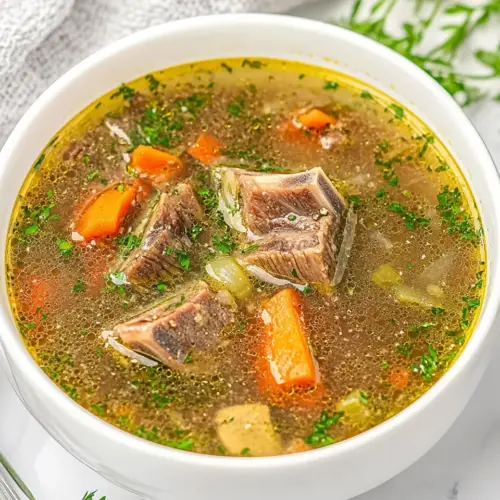
Short Rib Soup
Short Rib Soup is a rich, comforting bowl featuring tender shredded beef, savory vegetables, and a silky beef broth. This easy weeknight dinner is perfect for cold evenings, offering deep, savory aromas and satisfying texture. Make it for family meals or to warm friends, it rewards patience with a deliciously nourishing result.
Equipment
- Large Pot
- Knife
- Cutting Board
- Tongs
Ingredients
- 2 pounds beef short ribs Provide rich, meaty flavor and tender texture once slow-cooked; brown thoroughly to develop deep caramelized notes that form the soup's base. Release collagen and marrow during simmering to create a silky mouthfeel and body. Pair well with aromatics to balance richness.
- Salt and pepper to taste Season to enhance and balance flavors throughout cooking; apply generously to the ribs before browning to penetrate the meat. Adjust at the end to taste, ensuring the broth isn't under- or over-salted. Use freshly ground pepper for brighter heat and aroma.
- 1 tablespoon olive oil Add a fruity, slightly bitter oil to brown the meat and sauté vegetables; warm until shimmering but not smoking to avoid bitterness. Create a fond on the pan surface that will deglaze into the broth for added depth. Choose extra virgin for finishing or regular olive oil for high-heat sautéing.
- 1 large onion chopped Provide a sweet, aromatic backbone when chopped and sautéed; soften until translucent to release natural sugars that balance the soup's savory elements. Contribute texture and umami when combined with browned meat and aromatics. Caramelize slightly for additional complexity.
- 2 carrots peeled and chopped Offer natural sweetness and earthy flavor when peeled and chopped; cook until tender to add both texture and subtle sweetness to the broth. Help round out the soup's profile and complement the savory beef. Can be cut into uniform pieces for even cooking.
- 2 celery stalks chopped Impart a mild, vegetal aroma and slight bitterness that supports the soup's savory components; chop and sauté with onions and carrots to build a flavorful mirepoix base. Add color and texture while contributing to the overall aromatic bouquet. Cook until softened for best integration.
- 3 cloves garlic minced Deliver pungent, aromatic intensity and savory depth; mince and add during sautéing to bloom its flavors without burning. Enhance the broth's complexity and pair well with herbs and beef. Add near the end of the sweating stage to preserve brightness.
- 6 cups beef broth Form the liquid base, carrying flavors and providing body; simmer with the meat and aromatics to concentrate tastes and extract savory compounds. Use a quality beef stock for greater richness and depth, and adjust amount to desired soup consistency. Keep at a gentle simmer to clarify the broth.
- 1 bay leaf Contribute a subtle herbal, slightly floral note while lending a slow-release aromatic quality during simmering. Add whole to infuse background complexity, removing before serving to avoid overpowering the palate. Works well with thyme and other herbs for layered flavor.
- 1 teaspoon dried thyme Provide an earthy, slightly floral herbaceous tone that complements beef; add dried early in cooking to allow full flavor development during simmering. Use measured amounts since dried herbs are concentrated compared to fresh. Rehydrate in the hot liquid for best release.
- 2 tablespoons chopped parsley for garnish Add a fresh, bright finishing note and visual contrast when finely chopped and sprinkled over the soup at serving. Enhance perceived freshness and cut through the richness of the broth and meat. Use scissors or a sharp knife for uniform pieces that distribute evenly.
Instructions
- Season the short ribs with salt and pepper. In a large pot, heat olive oil over medium-high heat and brown the short ribs on all sides. Remove and set aside.: The aroma of properly seasoned beef short ribs at the outset is immediately promising. As you sprinkle the salt and pepper , press the seasoning into the meat so it adheres, this promotes even flavor penetration during cooking. You should smell a faint savory note when the rub meets the meat, a sign seasoning is productive. One reason this matters is that seasoning now builds layers as the meat browns and simmers, rather than relying solely on final adjustments. A common mistake is under seasoning, which can make the end result taste flat even after long cooking, so be deliberate but measured with the seasoning.
- In the same pot, add onion, carrots, and celery. Cook until softened, about 5 minutes. Add garlic and cook for another minute.: Listen for the satisfying sizzle when the olive oil hits the pot and the meat goes in, that sound means evaporation is happening and browning will occur. Watch for edges turning a deep golden brown, and rotate pieces to get even color on all faces. The visual of caramelized crusts is a clear indicator of the Maillard reaction, which adds rich, savory complexity to the broth. If the pot is too crowded, the meat will steam instead of brown, producing pallid color and less depth, so brown in batches as needed. Avoid moving the meat constantly; give it time to form a crust, typically about a few minutes per side, and adjust heat if it starts to smoke excessively.
- Return the short ribs to the pot. Add beef broth, bay leaf, and thyme. Bring to a boil, then reduce heat to low and simmer, covered, for 1.5 to 2 hours until the meat is tender.: When you lift the browned short ribs out, you will notice browned bits clinging to the bottom of the pot, these fond pieces contain tremendous flavor. Set the meat aside on a plate to rest briefly while you work the vegetables, this keeps them from overcooking and allows you to deglaze the pan more effectively. I find that allowing the meat a short rest helps the juices redistribute so when it returns to the liquid, it stays tender. A mistake to avoid here is discarding the fond; you want to scrape it up with the vegetables or broth to incorporate that concentrated flavor into the soup.
- Remove the short ribs from the soup, let cool slightly, then shred the meat, discarding any fat or bones. Return the shredded meat to the pot.: As you add the chopped onion , carrots , and celery , you will hear a softer sizzle and smell a sweetening aroma as sugars start to release. Cook over medium heat until the vegetables are softened and beginning to color, about several minutes, stirring occasionally. These softened vegetables form the aromatic base or mirepoix, which lifts the broth from merely savory to richly layered. If the pan looks dry, add a splash more olive oil , but avoid high heat which can char the vegetables and introduce bitterness. Rushing this step results in raw vegetable flavors that clash with the slow cooked broth.
- Adjust seasoning with salt and pepper. Serve hot, garnished with chopped parsley.: The texture change is the clearest signal here, the onion will turn translucent, and the carrots and celery will yield under the spoon, releasing a subtle sweetness. The scent should shift from sharp to mellow and slightly sweet, which tells you the base is ready to accept garlic and liquid. This gentle softening also allows the vegetables to begin to sweeten and integrate, which balances the beefiness later. Avoid overcooking to the point of collapse, because you still want some structure after the long simmer.
- Add garlic and cook for another minute: When you add the garlic , the aroma will brighten immediately with a toasty, aromatic perfume; keep it moving so it does not stick and burn. One minute is enough to release garlic oils and infuse the vegetables without introducing bitterness. This brief but impactful addition layers a warm pungency into the base, enhancing complexity. Burning garlic is a common error that results in a bitter undertone, so lower the heat if you see rapid darkening.
- Return the short ribs to the pot: Putting the browned short ribs back in reconnects the meat with the aromatic base and the fond, starting the extraction of rich flavors into the liquid. You should see the pieces nestle among the softened vegetables, and you may notice small bubbles forming along the edges as the pot comes back up to heat. This reunion is important because the meat will now slowly release juices that mingle with the vegetables, producing a unified broth. Avoid dropping the heat too low so the pot barely simmers, you want gentle movement for effective extraction.
- Add beef broth, bay leaf, and thyme: Pour in the 6 cups beef broth so it covers the meat and vegetables, then add the bay leaf and 1 teaspoon dried thyme , which will slowly infuse the pot. The initial scent will be meaty and herbal, and as things warm you may see small rolling bubbles signaling it is close to boiling. These aromatics are subtle but essential, contributing background warmth and a rounded flavor profile. A frequent misstep is using broth that is excessively salty or weak; taste and adjust by diluting or concentrating as needed before the long simmer begins.
- Bring to a boil, then reduce heat to low and simmer, covered, for 1.5 to 2 hours until the meat is tender: As the pot comes to a boil, steam will rise and the surface will move actively, the key is to then lower the heat so the soup maintains a gentle, steady simmer. You want the liquid to barely move, with occasional small bubbles breaking the surface; this is the ideal extraction regime for collagen and connective tissue to break down into silky gelatin. When the meat reaches the point it easily pulls from the bone, you know it is done. A common error is boiling too vigorously, which can churn fat and make the broth cloudy and greasy, so keep it low and patient.
- Remove the short ribs from the soup, let cool slightly, then shred the meat, discarding any fat or bones: The smell of the cooled meat will be intensely savory and slightly sweet from the vegetables. Shredding while warm makes it easy to separate tender strands from any cartilage or bone remnants. Discarding excess fat results in a cleaner mouthfeel in the final bowl, while keeping some of the shredded meat returns concentrated beef flavor to the pot. Be careful not to shred too finely; leaving bite sized pieces gives texture and satisfaction in each spoonful. A slip to avoid is leaving small bone fragments in the meat, so check carefully as you shred.
- Return the shredded meat to the pot: Once returned, the meat melds back into the broth, and you may notice the soup takes on an even deeper color and aroma as the shredded beef rehydrates and releases flavor. Stir gently to distribute the pieces evenly, and let the pot sit for a few minutes off heat so flavors settle. This reintegration ensures each bowl has a balanced composition of broth, meat, and vegetables. Avoid over stirring vigorously which can break apart vegetables and make the texture mushy.
- Adjust seasoning with salt and pepper: Tasting now will reveal the true final seasonings, since the long cook concentrates flavors. Add salt and pepper in small increments, tasting between additions to achieve a balanced profile. If the soup seems flat, a small pinch of salt or a squeeze of lemon can brighten it without changing the core character. A common error is over seasoning early, which leaves no room to adjust after reduction, so taste last.
- Serve hot, garnished with chopped parsley: The final flourish is a sprinkle of 2 tablespoons chopped parsley for garnish , which adds freshness, color, and a clean contrast to the savory broth. Serve in warmed bowls so the soup retains heat longer, and notice how the steam carries the aroma to the first spoonful, enhancing appetite. If you prepare ahead, reheat gently to avoid over reducing, and add garnish just before serving for best presentation. Avoid adding the garnish too early or it will wilt and lose its vibrancy.
Notes
- Brown in batches to prevent overcrowding the pot, which ensures the beef short ribs develop a deep caramelized crust that boosts the broth.
- Save and use the fond by deglazing the pan while cooking the vegetables, scraping up browned bits for added savory complexity.
- Keep a gentle simmer so collagen breaks down slowly and the broth becomes silky instead of cloudy or greasy.
- Adjust salt at the end since long simmering concentrates flavours; add seasoning incrementally and taste frequently.
- Garnish last with chopped parsley to maintain its fresh color and bright flavor contrast against the rich broth.