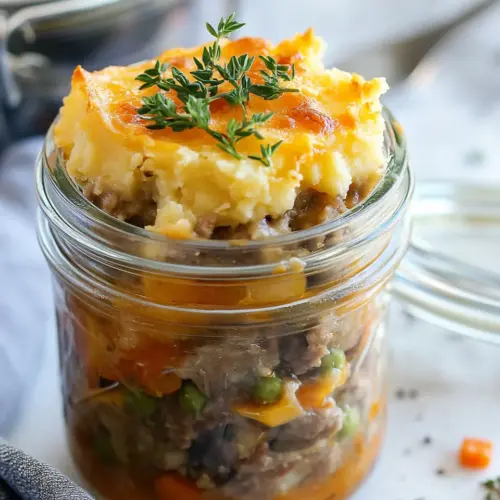
Shepherds Pie in a Jar
Shepherds Pie in a Jar offers a creamy mashed potato top layered over a savory, herb scented turkey and mushroom filling. This portable, comforting dish is perfect for an easy weeknight dinner or make ahead meal. The texture contrast between silky mash and rich filling creates a satisfying bite, so try it for a fuss free, crowd pleasing dinner solution.
Equipment
- Large Skillet
- Saucepan
- Pint sized jars
- Potato Masher
Ingredients
- 1/2 medium onion Chop finely and sauté until translucent to build a savory flavor base for the filling; provides sweetness and texture as it softens during cooking.
- 3 medium carrot Peel and dice into small cubes, then cook until tender to add natural sweetness and body to the meat layer; contributes color and a hearty bite.
- 3 clove garlic Mince finely and cook briefly with onions to release pungent aroma and depth; contributes a subtle sharpness that enhances the overall savory profile.
- 2 1/2 cup , pieces or slices mushroom, white Slice or chop and cook until browned to add umami richness and meaty texture for a vegetarian-like depth; helps bulk up the filling with earthy flavor.
- 1 tablespoon oil, vegetable Heat in the pan to sauté vegetables and brown the meat evenly; serves as the cooking medium that helps develop caramelization and flavor.
- 1 pound turkey, ground Brown thoroughly in the skillet to form the protein base of the pie; provides hearty texture and savory richness crucial to a shepherd’s pie.
- 2 tablespoon flour, all-purpose Sprinkle over the browned meat and vegetables to thicken the filling as it simmers; helps create a cohesive, gravy-like sauce.
- 1 teaspoon thyme, dried Add dried to the filling for aromatic, slightly minty notes that complement the meat; contributes subtle herbal warmth throughout the dish.
- 1 teaspoon rosemary, dried Crumble or sprinkle dried to impart a piney, slightly floral flavor that pairs well with thyme; enhances the savory herbaceous character.
- 1 cup green peas, frozen Stir in frozen during the final minutes of cooking to add bursts of sweetness, color, and tender texture; balances the richness of the meat.
- 1 tablespoon tomato paste, canned Mix in a small spoonful to deepen tomato flavor and add concentrated sweetness and acidity; helps round out the filling’s savory profile.
- 1/2 cup beef broth Pour in to deglaze the pan and form the base of the filling’s sauce; adds savory depth and moisture so the filling isn’t dry.
- 2 tablespoon Worcestershire sauce Drizzle in to introduce savory, tangy, and slightly sweet complexity; boosts overall umami and complements the meat’s flavor.
- 3 medium Yukon Gold Potatoes Peel, boil, and mash to create the creamy topping that crowns the jarred pie; offers a buttery, smooth starch base for finishing.
- 1/4 cup milk Warm slightly and whisk into the mashed potatoes to make them creamy and smooth; provides dairy richness and helps achieve desired texture.
- 1/4 cup sour cream Fold into the potatoes to add tang, creaminess, and silkiness to the mash; balances richness and lends a subtle tart note.
- 1/4 teaspoon salt Sprinkle into the potato mash for seasoning and to enhance overall flavor; helps bring out savory and dairy notes without overpowering.
Instructions
- Chop potatoes into inch-sized pieces and boil them for 15-20 minutes, until easily pierced with a fork. Drain and set aside.: The moment these potatoes hit boiling water you will smell starchy steam rising, and as they simmer you want to hear a gentle rolling bubble rather than a furious boil, which keeps them intact. The texture when pierced should be tender, flaking easily under a fork, signaling they will mash smoothly rather than becoming gluey. Drain thoroughly so excess water does not dilute the mash, because watery potatoes produce a runny top layer that will not set. One common mistake is undercooking the potatoes, which leaves lumps and a dense mouthfeel in the finished mash.
- Meanwhile, dice onion into small pieces, grate carrots, mince garlic, and slice mushrooms.: As you prep, notice the sharp, sweet scent of freshly cut onion and the earthy perfume released when you slice mushroom . Grating the carrot speeds up cooking and disperses sweetness through the filling, while minced garlic delivers quick aromatic lift. Arrange these components so they can be added in order; a frequent error here is uneven cutting which leads to some pieces overcooking while others remain raw.
- In a large skillet over medium-high heat, add a tablespoon of oil. Saute onion for 2-3 minutes, then add carrots and garlic and saute 1-2 minutes more. Now add mushroom and ground turkey, mixing and breaking up turkey into small pieces until fully browned.: You will hear an encouraging sizzle as the oil meets the onion , and that initial sweet aroma signals that sugars are caramelizing. When you add the turkey and mushroom , the pan will steam briefly as moisture is released, then the sound will shift to a sharper sputter as browning begins. Browning is essential for depth of flavor because Maillard reactions create savory notes you cannot replicate otherwise. Stir enough to break the meat into small pieces so every bite is evenly seasoned. Common pitfalls include overcrowding the pan, which causes steaming and prevents proper browning, resulting in bland, boiled tasting meat.
- Add flour and spices to the turkey mixture, mix well. Now add peas, tomato paste, beef broth, and Worcestershire sauce. Simmer for 5 minutes, until slightly thickened.: When you sprinkle the flour and dried thyme and rosemary into the hot pan, you should hear a faint change in the texture as the dry powder meets the fat and juices. Allow the flour to toast for a minute so it loses its raw chalkiness, which improves the final sauce. This step matters because the flour builds body and the herbs bloom when heated, releasing aromatic oils that perfume the filling. A typical error is adding liquid immediately, which can leave a pasty taste from undercooked flour.
- Now, return to the potatoes. Add 1/4 cup milk, 1/4 cup sour cream, and 1/4 teaspoon salt. Mash or mix until creamy.: As the liquids hit the pan the tomato paste will deepen in color and the broth will loosen the mixture into a saucy consistency. The simmer should be gentle, and you will see small bubbles at the surface and a glossy sheen as the sauce reduces. This reduction concentrates flavors and allows the flour to thicken the liquid into a clingy filling that will hold together under the mashed top. Avoid high heat, because that can reduce the sauce too aggressively and dry out the filling.
- Fill four pint-sized jars equally with meat and veggie mixture. Top each with 1/2 cup of mashed potatoes. Garnish with cheese or fresh herbs, if desired.: When you work the hot drained potatoes with warm milk and sour cream you will notice a glossy, velvety texture forming under your spoon. The tang from the sour cream brightens the richness while the milk loosens the structure so the mash spreads smoothly. Aim for a fluffy, not gluey, consistency by mashing gently and stopping when peaks form rather than overworking the starches. A common misstep is adding cold dairy which can cool the mash and make it stodgy.
- Fill four pint sized jars equally with meat and veggie mixture: As you spoon the savory filling into jars, press lightly so there are no large air pockets, and listen for the subtle settling sound as the sauce nestles into the glass. Even distribution ensures every jar has the same balance of protein and vegetables, which keeps the eating experience consistent. Leave enough headroom so the mashed potatoes can be heaped on top without spilling when warming. Avoid overfilling because jars that are too full will bubble over during reheating and create a mess.
- Top each with 1/2 cup of mashed potatoes: Piping or spooning the warm mash on top should create a creamy crown; you will feel the gentle weight as it settles and see a smooth, slightly glossy finish. This top layer will brown slightly if you broil briefly, creating a crisp edge that contrasts with the silky interior. If you plan to transport the jars, press the mash down lightly so the lid can close securely without disturbing the topping. A frequent mistake is adding too much potato which overwhelms the filling and throws off the flavor balance.
- Garnish with cheese or fresh herbs, if desired: A final sprinkling of grated cheese or chopped herbs adds color and an aromatic lift. If broiling, watch closely for 1 to 2 minutes until the cheese is bubbly and golden, because it can go from perfect to burnt very fast. Fresh herbs should be added after reheating to preserve their brightness. Overcooking at this stage will dull the herb flavors and create an unpleasant bitterness.
Notes
- Use room temperature dairy — Warm or room temperature milk and sour cream incorporate into the mash more smoothly, preventing a stodgy texture.
- Brown in batches — If necessary, cook the turkey in two passes to avoid steaming and to build deeper flavor through proper browning.
- Toast the flour — Let the flour cook for a minute with the meat to remove raw taste and help the sauce thicken without a pasty finish.
- Keep some potato water — If your mash is too stiff, reserve a little of the potato cooking water to loosen it gently while retaining starch for structure.
- Cool before sealing — Allow the filling to cool slightly so jars seal safely and to minimize condensation that can sog the mashed top.