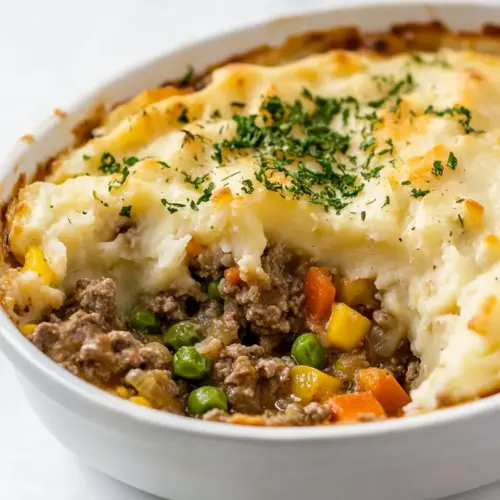
Shepherds Pie
Shepherds Pie is a creamy, savory casserole with a comforting meat and vegetable filling topped by silky mashed potatoes. This easy weeknight dinner brings crispy browned edges and a luscious interior that reheats well, making it perfect for family meals. Make it when you want a hearty, crowd pleasing dish that tastes like home and rewards simple techniques with big flavor.
Equipment
- Large Skillet
- 9x13 casserole dish
- Saucepan
- Pot for boiling potatoes
- Rubber spatula
Ingredients
- 2 tablespoons butter Add richness and a silky mouthfeel to mashed potatoes or to the beef filling when melted; helps prevent sticking while sautéing onions and beef. Use at the beginning for browning and to enrich the overall savory flavor of the casserole.
- 1 medium onion chopped Provide a sweet, aromatic base when chopped and softened; release moisture and natural sugars to deepen the flavor of the meat mixture. Cook until translucent to build savory complexity without overpowering other seasonings.
- 1 pound lean ground beef or lamb Supply hearty protein and savory depth as the main filling component; brown thoroughly to develop caramelized flavors that form the foundation of the pie. Choose lean cuts to reduce excess grease and maintain a balanced texture beneath the mashed potato topping.
- 1/2 teaspoon Italian seasoning Offer a fragrant blend of dried Mediterranean herbs to subtly season the meat mixture; sprinkle in early so the flavors meld during cooking. Use sparingly to avoid dominating the other aromatic components.
- 2 tablespoons tomato paste Concentrate tomato flavor and add umami to the filling; stir into the browned meat to give a tangy, slightly sweet backbone. Helps thicken and enrich the sauce so it clings to the vegetables and meat.
- 2 tablespoons flour Act as a thickening agent when incorporated into the meat mixture; cook briefly with fat to eliminate raw flour taste before adding liquid. Creates a smoother, more cohesive gravy that holds the filling together.
- 1 cup beef broth Provide savory liquid to form the base of the gravy; deglaze the pan to lift browned bits and concentrate flavor. Adjust quantity to reach desired sauce consistency for the pie.
- 1 tablespoon Worcestershire sauce Introduce deep, savory complexity and a subtle tang to the meat filling; stir into the sauce to enhance meaty, umami characteristics. Balances the tomato paste and complements the beef or lamb.
- 1/2 teaspoons salt Season the mixture to bring out underlying flavors and balance sweetness and acidity; add gradually and taste as you go to avoid oversalting. Essential for unlocking taste in both meat and vegetable components.
- 2 cups frozen mixed vegetables see note Contribute color, texture, and nutritional variety to the filling; frozen mix provides convenience and even distribution throughout the pie. Add near the end of cooking so vegetables retain tenderness without becoming mushy.
- 2.5 pounds Russet potatoes peeled and cut into quarters Form the hearty, rustic topping when boiled and mashed; provide starchy body and structure to the pie. Peel and cut before boiling to ensure even cooking and a smooth, lump-free mash.
- 1/2 cup heavy/whipping cream Enrich mashed potatoes with creaminess and a luxuriously smooth texture; add while mashing to reach desired richness. Adjust amount for preferred consistency and mouthfeel.
- 1/4 cup butter (1/2 stick) Add buttery flavor and help create a creamy, smooth mashed potato topping; melt into cooked potatoes for richness and sheen. Also aids in browning the top when baked.
- 3 cloves garlic minced Impart aromatic garlic flavor when minced and mixed into the mashed potatoes or filling; cook briefly to mellow sharpness and enhance savory notes. Distribute evenly to avoid pungent bites and to layer the overall taste.
- 1/2 teaspoons salt Provide additional seasoning control to the mashed potatoes or filling; use to fine-tune salinity after combining all components. Apply cautiously, tasting as you go to maintain balance.
- Pepper to taste Season to personal preference and finish both the filling and mashed topping; freshly ground pepper brightens flavors and adds mild heat. Sprinkle modestly to complement other seasonings without overwhelming them.
- Garnish: chopped fresh parsley optional, to taste Add a fresh, herbal finish and visual contrast when chopped and sprinkled over the finished pie; enhances presentation and adds a light aromatic note. Use as an optional garnish to brighten the rich, savory casserole.
Instructions
- Boil the potatoes. Start the rest of the recipe while they're cooking. Preheat your oven to 375 F and move the rack to the top third of the oven. Don't worry if the meat filling and potatoes aren't quite done at the same time.: When the water hits a rolling bubble and you add the quartered Russet potatoes , you'll hear a steady simmer, and the kitchen will begin to smell faintly earthy. This step is about achieving tenderness, so test by piercing a piece with a knife, it should slide in easily without resistance. Boiling concentrates starches, which makes the mash creamy when combined with warmed cream and butter . Avoid overcooking to the point of falling apart, because waterlogged potatoes can become gluey when mashed. A common mistake is starting with boiling water rather than cold water, which can cook the exterior unevenly. Instead, place the potatoes in cold salted water and bring them up to a simmer to ensure even cooking.
- For the meat filling, add the butter to a large skillet and melt over medium-high heat, then add the onion and sauté for 5 minutes.: As the butter melts you will smell its nutty aroma, and the onion will soften and turn translucent. Sautéing for about 5 minutes helps release the natural sugars that brown and deepen the filling's flavor. You'll want to see a gentle sizzle without burning; if the butter browns too fast, reduce the heat. The why here is caramelization, which builds a flavorful base. A typical pitfall is crowding the pan, which steams the onion instead of browning it, so give the pieces room to move.
- Add the beef to the skillet and cook, breaking it up with your spoon as you go along, until just browned (about 6-8 minutes).: As the ground beef hits the hot skillet you will hear active sizzling and see color develop, with small bits turning brown. Breaking the meat up ensures even browning and prevents clumps, which helps the sauce adhere later. Browning creates fond, the caramelized bits on the pan that are full of flavor, and you should scrape them up in the next steps. Avoid overcooking until completely dry, which can make the filling leathery; keep some moisture so the sauce can bind. A common error is stirring too rarely; frequent stirring helps break the meat down and promote uniform color.
- Reduce the heat to medium and stir in the Italian seasoning, tomato paste, and flour. Cook (stir constantly), for about a minute.: You will smell the herbs bloom and the concentrated tomato paste deepen to a near caramel aroma. The flour needs brief cooking to lose its raw taste while it combines with the fat in the pan to thicken the sauce. Stirring constantly prevents clumps and ensures an even roux-like coating on the meat. This step matters because it controls the final sauce consistency; undercooked flour will taste raw, and overcooked flour can become pasty. A mistake to avoid is adding liquid too soon, which can make lumps; wait until the flour has had that minute to toast lightly.
- Add in the beef broth, Worcestershire sauce, and salt, and scrape up any brown bits from the bottom of the pan. Let the liquid thicken up a bit (about 1 minute).: When the beef broth hits the pan you'll hear a soft sizzling and see the fond dissolve into the liquid, turning it richly brown. The Worcestershire sauce amplifies umami, and salt brings everything into balance. Letting the sauce reduce for about a minute concentrates flavor and slightly thickens the mixture, which helps the filling remain cohesive under the potato topping. If you do not scrape the bottom, you'll waste flavor trapped in the fond. Avoid boiling aggressively, which can evaporate too much liquid and dry the filling out.
- Stir in the frozen mixed veggies and cook for 5 minutes, stirring often.: Adding the frozen vegetables cools the pan momentarily, and the steam will lift as they thaw and heat through. Stirring often ensures even thawing and prevents them from releasing too much water into the filling. This step adds bright color and textural contrast, and cooking for about 5 minutes leaves them tender but not mushy. A typical mistake is adding the vegetables too early when the pan is not hot enough, which results in sogginess. Keep a moderate heat to balance thawing with gentle cooking.
- When the potatoes are almost done, add the cream, butter, garlic, and salt & pepper to a small saucepan and warm it over medium heat until the butter has melted and it's warmed through (don't let it boil). Once the potatoes are done (a knife should slide in easily), drain them and add them back to the pot they were cooked in. Pour the saucepan mixture over the potatoes and mash until smooth.: The warmed cream and butter will carry the aroma of the minced garlic and create a silky emulsion for the mash. Heating these separately ensures they integrate smoothly without cooling the potatoes or curdling. The gentle warmth helps the garlic soften and infuse without turning sharp. When you mash, you want a pillowy, cohesive texture, so avoid overworking which can make potatoes gluey. A common mistake is adding cold dairy to hot potatoes, which can cool them unevenly; always warm the liquid first and mash while still hot for the best result.
- Transfer the meat mixture to a 9×13 casserole dish and then spoon the potatoes over top. Smooth with a rubber spatula (or spoon if that's all you have). You can use a fork to create texture by raking it over the potatoes.: As you spread the warm potato over the hot filling you should see a short steam rise, and the two layers will begin to meld at the edges. Smoothing with a rubber spatula creates an even top that bakes uniformly, while raking with a fork adds texture that browns attractively under the broiler. This technique matters because an even layer prevents the filling from bubbling over and ensures consistent serving portions. Be careful not to compress the potato layer too much, which can make it dense. Avoid layering when either component is cold, since that can affect baking performance.
- Bake, uncovered, for 30 minutes or until hot and bubbly, then broil for a few minutes (watch it carefully) to brown the potatoes.: During the bake the filling will bubble gently and the top will begin to set, releasing a warm, savory steam. When you broil, watch closely because the surface can go from golden to too dark quickly; you want a golden brown top with small peaks of crust. This finishing step adds texture contrast and visual appeal, and it also creates those toasty edges we crave. A frequent error is leaving the broiler on too long, resulting in burnt spots, so broil in short bursts while checking constantly.
- Let it sit for a few minutes before serving and sprinkle with fresh chopped parsley if desired.: Allowing the dish to rest lets the filling settle and the juices redistribute, which makes scooping cleaner and improves the overall texture. The brief cooling period also keeps the top from being scorchingly hot on the first bite. Sprinkling with fresh chopped parsley brightens the plate visually and adds a subtle herbal lift. Avoid serving immediately out of the oven, as the interior will be too fluid and can spill when portioned. A mistake to avoid is slicing too soon, which leads to runny servings instead of neat squares.
Notes
- Warm the cream and butter: Heating the cream and butter before adding to the potatoes prevents the mash from cooling down and helps the dairy incorporate smoothly, yielding a silkier texture.
- Do not overcrowd the skillet: Give the ground beef room to brown, so you develop fond that enhances the filling, rather than steaming the meat which produces less flavor.
- Toast the flour briefly: Letting the flour cook for about a minute when mixed with the fat removes any raw taste and helps create a smooth sauce for the filling.
- Use starchy potatoes: Choosing Russet potatoes ensures a fluffier mash because their high starch content breaks down into a light, airy texture when mashed.
- Thaw vegetables slightly: If your frozen mixed vegetables release too much water, give them a quick stir in the skillet to evaporate excess moisture, preserving the filling's body.
- Watch the broiler closely: The broiler browns the surface fast, so check every 30 seconds to avoid burning while achieving an appealing golden crust.