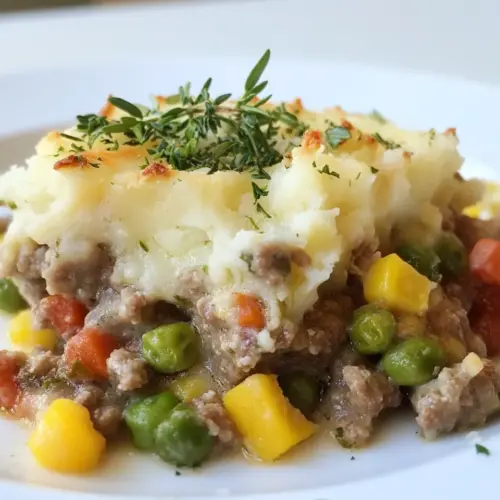
Shepherds Pie
Shepherds Pie is a creamy and comforting casserole with savory browned beef, sweet corn, and a fluffy mashed potato top. This easy weeknight dinner brings cozy textures and rich flavors together in under an hour, making it ideal for family meals. The quick gravy and frozen vegetables keep prep simple, offering a hearty, crowd pleasing dish you will want to make again.
Equipment
- Skillet
- Casserole Dish
- Microwave
Ingredients
- 1 bag Alexia mashed potatoes Provide a convenient mashed potato base that browns pleasantly under heat and offers a creamy, consistent texture to top the pie. Adds quick preparation time and dependable potato flavor without peeling or boiling. Complements savory filling by creating a smooth, comforting layer that contrasts with the meat and vegetables.
- 1/2 lb . ground beef 90/10 Supply lean beef protein that forms the savory core of the filling, offering robust flavor and satisfying texture. Browns well to develop fond, which enhances the gravy and overall depth of the dish. Keeps fat content moderate while still contributing richness to the shepherd's pie.
- 2 tablespoons olive oil Coat the pan to prevent sticking and promote even browning, helping onions and beef caramelize properly. Imparts a subtle fruity flavor and raises the smoke point compared with butter. Allows aromatics and spices to bloom, improving the overall flavor profile.
- 1 small yellow onion diced Provide a sweet, aromatic foundation when sautéed, releasing sugars that deepen the savory filling's flavor. Dice size ensures even distribution and texture throughout the pie. Contributes moisture and body while balancing richness from the meat and gravy.
- 1 clove garlic minced Introduce pungent, savory notes that enhance umami and aromatic complexity when minced and sautéed briefly. Integrates into the filling to uplift and balance richer components like beef and gravy. Releases flavorful oils that permeate the mixture without overpowering other ingredients.
- 1 packet brown gravy mix Thicken and flavor the sauce quickly, delivering a concentrated beefy gravy profile that binds the filling. Dissolves into liquid to create a cohesive, glossy sauce that carries seasoning through the pie. Provides consistent, reliable seasoning and texture without long simmering.
- 1 1/2 cups water Rehydrate the gravy mix and adjust saucy consistency so the filling remains moist but not watery under the topping. Controls the concentration of flavor and helps distribute seasonings evenly. Provides the necessary liquid to stew vegetables and meld flavors together.
- 1 1/2 cups frozen vegetables Add vegetable variety, color, and nutritional value while contributing texture contrast to the meat filling. Frozen state offers convenience and preserves freshness until cooked, then softens into the gravy. Complements corn and mashed potatoes for a balanced, hearty pie.
- salt & pepper to taste Season to enhance overall flavor balance, allowing customization to personal taste while highlighting savory and sweet elements. Use sparingly to avoid oversalting, tasting as you go to achieve the desired depth. Pepper adds warmth and a mild bite that lifts the dish.
- 1 1/2 cups canned sweet corn drained Contribute sweet, whole-kernel texture and bright flavor that contrasts with creamed corn and mashed potatoes. Drainage prevents excess liquid from thinning the gravy, maintaining a firm filling consistency. Adds bursts of sweetness that complement savory beef.
- 1 1/2 cups canned creamed corn Provide creamy sweetness and body that helps bind the filling and add silkiness to the corn mixture. Balances the texture between whole corn and mashed potato topping, ensuring a moist interior. Enhances overall mouthfeel with subtle sweetness and smoothness.
- 2 tablespoons melted butter Brown or enrich the mashed potato topping, adding a glossy finish and buttery flavor when mixed in or brushed on top. Helps achieve appealing color and a richer bite while preventing dryness during baking. Melting into the potatoes increases spreadability and creaminess.
Instructions
- Preheat oven to 350 degrees. Lightly spray casserole dish with nonstick cooking spray and set aside.: The kitchen will begin to warm and you may notice a faint hum from the oven as it comes to temperature, which ensures the casserole bakes evenly and the top turns slightly golden. Preheating matters because a hot oven helps the surface bubble quickly without drying the filling. A common mistake is sliding the dish into an oven that is not fully heated, which can lead to undercooked centers. If your oven runs cool, use an oven thermometer to confirm it reads 350 degrees .
- Place Alexia mashed potatoes into microwave and cook for 10-12 minutes.: The slick surface prevents sticking and makes serving easier, and the light scent of the spray is barely noticeable once heated. Greasing also helps you lift slices cleanly from the dish. Avoid using too much spray or butter, as excess fat can pool and make the edges greasy. Wipe any heavy buildup from the rim before baking to ensure an even bake.
- In a large skillet, crumble ground beef into pan and cook until browned. Drain on paper towels and place hot skillet back on the heat.: The heated potatoes come out steamy, soft, and easy to spread, with a slightly roasted aroma if they brown at the edges. Microwaving gives you a consistent creamy texture that layers well. Be careful when removing the container, as steam can cause burns, and stir halfway if the package recommends it to avoid cold spots. If the potatoes are unevenly warm, they will resist spreading smoothly, so test with a spoon.
- Saute onions and garlic in olive oil for 5-7 minutes or until tender.: Browning the ground beef creates rich caramelized notes and a meaty aroma, and you will hear a steady sizzling as moisture evaporates. Browning properly develops flavor through Maillard reactions, which is essential for a deep savory base. A common mistake is overcrowding the pan which steams the meat instead of browning it; cook in batches if needed to maintain a lively sizzle.
- Stir in cooked beef, powdered brown gravy mix and water. Whisk to remove any lumps and increase pan to medium high heat.: Draining keeps excess grease from pooling into the filling, while returning the skillet to heat lets you quickly toast remaining bits for additional flavor. The skillet will hiss softly as any residual fat warms, concentrating aromas. If you skip draining, the filling can become too oily, masking other flavors. Use a spoon to remove excess fat if paper towels are unavailable.
- Bring to boil to thicken sauce. Lower heat to medium and stir in frozen veggies.: As the onion softens, it will release a sweet fragrance and the garlic will become fragrant and golden, creating a savory foundation. This gentle sauté transforms sharp raw edges into nuanced sweetness. Overcooking can make garlic bitter, so watch for a light golden color and a warm aroma, not deep browning. Stir frequently to prevent sticking.
- Cook another 2 minutes to warm through and pour entire contents into prepared baking dish.: When the powdered gravy hits the hot skillet, it dissolves into a glossy slurry that binds the filling, and the steam lifts a savory, toasted aroma. The mixture thickens as it heats, coating the ground beef and aromatics evenly. A lumpy gravy is a common issue; whisk briskly to eliminate clumps and create a smooth sauce. If the sauce seems too thin, let it simmer briefly to reduce.
- Top with corn and creamed corn.: The vigorous whisking quiets clumps and encourages even heating, while the higher heat activates the thickening power of the gravy. You will see the sauce begin to glisten and reduce slightly, a good visual cue of progress. Avoid letting it boil violently, as high bubbles can splatter and evaporate too much liquid, leaving a dry filling. Reduce heat if the sauce sputters aggressively.
- Spoon hot mashed potatoes over the top and spread as evenly as possible.: A brief boil deepens the flavor and helps the gravy reach a saucy, clingy consistency that will hold the vegetables and ground beef together. Watch for a rolling bubble and a slightly reduced volume, which signals readiness. Overboiling can break down starches making the sauce gummy, so once thickened, lower the heat promptly. Stir to prevent scorching on the pan bottom.
- Brush top with melted butter and bake 20-30 minutes until hot and bubbly. Serve hot.: Adding the frozen vegetables cools the pan briefly and introduces bursts of color and texture, and you will hear a softer sizzle as they thaw. This step maintains firm vegetable texture while allowing them to soak up sauce flavors. A typical mistake is cooking them too long, which makes them mushy; stir just until heated through and tender crisp.
- Cook another 2 minutes to warm through and pour entire contents into prepared baking dish: The final warm-through melds flavors and releases a fragrant steam as you transfer the filling, and the dish should look glossy and cohesive. Pour carefully so the layers remain even and avoid splashes on the oven rim. If the filling seems overly thin, give it an extra minute to reduce before transferring, otherwise the casserole may be too wet.
- Top with corn and creamed corn: The combination of drained corn and creamed corn adds both whole-kernel texture and silky body, creating pockets of sweetness across the surface. Spoon them evenly for consistent bites. Skipping this step will leave the filling drier and less sweet, so try to distribute the corn uniformly with a gentle hand.
- Spoon hot mashed potatoes over the top and spread as evenly as possible: The hot potatoes should glide across the filling, creating a smooth blanket that will develop a thin crust when baked. Use a spatula to feather peaks for a rustic finish that browns nicely. If the potatoes are too cold, they will resist spreading and tear the top layer; warm them adequately and work quickly.
- Brush top with melted butter and bake 20 to 30 minutes until hot and bubbly: The melted butter enhances browning and adds a glossy finish, and during baking you will hear soft bubbling as the filling simmers and tiny crust forms on the potatoes . This heat step brings the whole dish together and concentrates flavors. Avoid opening the oven too often, which lets heat escape and prolongs cooking; check visually near the end of the time window.
- Serve hot: The first spoonful should reveal a contrast of creamy potatoes , savory saucy filling, and tender vegetables , with steam rising and a cozy aroma. Serve straight from the dish while warm for the best texture and comfort. Let leftovers cool before refrigerating to maintain structure and safety, and reheat gently to avoid drying the potatoes .
Notes
- Switch potato style Use a whipped style or leave small peaks on the potatoes for extra crisp edges when baked, which adds texture contrast.
- Adjust the vegetable mix Combine different frozen vegetables for color variation, keeping overall volume the same so cooking times don’t change.
- Make it richer Stir a little extra melted butter into the mashed potatoes for a silkier mouthfeel, especially if you prefer a decadent top.
- Control the sauce If you like a thicker filling, reduce the water slightly when mixing the gravy and simmer until it clings to the meat and vegetables.
- Presentation upgrades Create decorative ridges with a fork across the potato surface to produce attractive browned lines after baking.