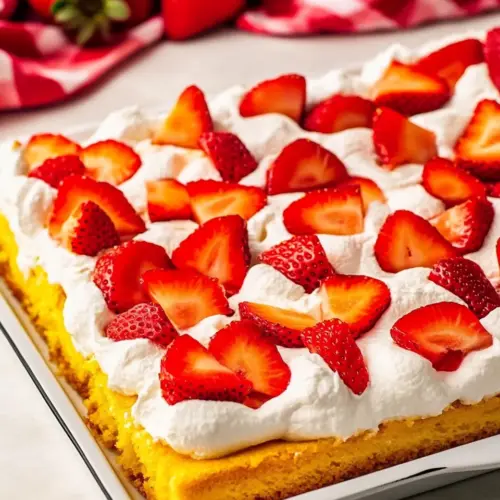
Sheet Pan Strawberry Shortcake
Sheet Pan Strawberry Shortcake is an easy crowd pleasing dessert with a buttery, golden base, juicy macerated strawberries, and a cloud like whipped topping. This simple bar format gives you crispy edges and tender crumbs, perfect for an easy weeknight dessert or casual brunch. It’s quick to assemble, scales well, and makes a persuasive reason to celebrate seasonal berries.
Equipment
- 9×13 Sheet Pan
Ingredients
- 2 cups all-purpose flour Provide structure and bulk to the shortcake batter, forming the base of the dough; sifts easily with other dry ingredients to ensure even distribution. Contributes gluten for chew and tenderness when combined with cold fat and handled minimally for flaky texture.
- 1/4 cup granulated sugar Add light sweetness and aid in browning the shortcakes during baking; dissolves into the dry mix to balance flavors. Helps control the overall sweetness so the strawberry filling and topping remain prominent.
- 1 tablespoon baking powder Leaven the dough by producing carbon dioxide when activated; creates lift and a tender crumb in the sheet pan shortcakes. Must be evenly mixed with the flour to avoid uneven rising or bitter pockets.
- 1/2 teaspoons salt Enhance overall flavor and help balance sweetness and leavening; also contributes to the dough's seasoning profile. Small amounts help accentuate butter and strawberry flavors without being detectable as salt.
- 1/2 cup unsalted butter cold, cut into cubes Introduce cold fat that coats flour particles, producing flaky layers and tender texture in the shortcakes; chilling preserves small pockets of butter that steam during baking. Cubed form ensures even incorporation and prevents overworking the dough.
- 3/4 cup heavy cream cold Provide moisture and richness to the dough while contributing to a tender, slightly tender crumb; cold cream helps keep the butter from melting prematurely during mixing. Also aids in binding the dough so it can be spread on the sheet pan without becoming tough.
- 1 teaspoon vanilla extract Contribute a warm, sweet aroma and subtle vanilla flavor to the dough, rounding out the shortcake taste. Small quantity enhances overall sweetness perception and complements the strawberries without overpowering.
- 4 cups fresh strawberries hulled and sliced Offer fresh, juicy filling with bright acidity and natural sweetness once hulled and sliced; act as the primary fruit component for the dessert. Releases juices when tossed with sugar and lemon, creating a sauce that soaks into the shortcake.
- 1/4 cup granulated sugar Sweeten the strawberries and help macerate them, drawing out juices to create a syrupy filling; blends with fruit to intensify natural flavors. Also balances tartness from the berries for a pleasant mouthfeel.
- 1 tablespoon lemon juice Provide bright acidity and a fresh citrus note to the strawberries, balancing sweetness and enhancing fruit flavors. Small amount helps preserve color and prevent the fruit from tasting flat.
- 1 1/2 cups frozen whipped topping thawed Offer a light, airy finishing cream that mimics whipped cream without whipping; provides smooth, sweet topping for the shortcake. Thawed frozen whipped topping yields consistent texture and easy spreading over berry-topped shortcake.
Instructions
- Start by preheating the oven to 400°F. Grab a 9×13 inch sheet pan and line it with parchment paper. Set aside.: You should notice the oven warming the kitchen and feel a steady heat if you hover nearby, this steady hot environment ensures the shortcake browns evenly and develops a crisp exterior. The parchment prevents sticking and makes removal simple, which helps preserve the cake's texture. If you skip lining the pan, the base can adhere and break apart when removed, so take the moment to line it carefully.
- In a large mixing bowl, add the flour, sugar, baking powder, and salt. Whisk together until combined. Add the cold cubes of butter to the flour mixture and combine with your hands or a pastry cutter. The texture should resemble crumbs.: As you rub the butter into the dry mix you will hear a soft crunch and see pea sized bits of fat coated in flour, this visual cue is key for a tender shortcake. The cold fat creates steam during baking that lightens the crumb, which is why keeping the cubes chilled matters. A common mistake is over mixing or letting the butter melt, which yields a dense texture, so work quickly and keep everything cool.
- In a separate medium mixing bowl, add the cold heavy cream and vanilla extract. Stir to combine. Add this to the flour mixture and mix everything together until just combined. Don’t over mix, the dough will be thick.: You will feel the dough come together into a cohesive mass, slightly tacky but not sticky. The cold heavy cream binds the dry ingredients while preserving the small pockets of butter , which is essential for a tender structure. If you overmix, gluten develops and the base can be tough, so stop as soon as the dough holds together.
- Evenly press the dough into the parchment lined sheet pan until about 1/2 an inch thick. Bake for 15-20 minutes or until golden brown and cooked all the way through. Let it cool in the pan while working on the topping.: When pressing the dough, aim for an even thickness so the cake bakes uniformly; you can use a flat spatula for a smooth surface. As it bakes you will smell the butter and sugar caramelizing and see the top take on a warm golden color, which signals it is done. A common issue is uneven thickness leading to edges that brown before the center is cooked, so smooth it out carefully before baking.
- In a bowl, add the sliced strawberries, lemon juice, and sugar. Combine, then cover and let it sit in the fridge for 10-15 minutes.: As the strawberries sit, they will soften and release bright red juices, creating a glossy syrup that enhances flavor and adds moisture. The lemon juice sharpens the fruit and keeps flavors lively. Chill time is important so the fruit cools and blends flavors; if you skip this step, the strawberries may be less flavorful and the topping could be lukewarm against a cooled base.
- Once the shortcake has completely cooled, spread the whipped cream so it covers the entire cake. Then, spoon the strawberries evenly over the whipped cream. Slice the cake into even squares and serve!: You want the base fully cooled so the whipped topping does not melt and run, maintaining a clean, cloud like layer. As you spread the topping you should feel its light, smooth texture and see it form a stable cushion for the strawberries . Spoon the fruit and syrup over the surface so each square has both berries and juice. A pitfall is assembling while the base is warm, which leads to a soggy result, so be patient and let things cool.
Notes
- Use chilled ingredients: Keeping the butter and heavy cream cold helps maintain a tender shortcake with light pockets rather than a dense, flat base.
- Slice strawberries uniformly: Even slices ensure each serving has a consistent amount of fruit and juice, which helps with presentation and balance of flavors.
- Thaw whipped topping gently: Thaw in the refrigerator and give it a gentle stir before spreading to maintain a smooth, spreadable texture that won’t collapse.
- Line the pan with parchment: Parchment makes removal and slicing cleaner, and prevents the base from sticking and breaking when you lift it out.
- Make components ahead: Store the baked base, whipped topping, and macerated strawberries separately to preserve texture, then assemble just before serving for best results.