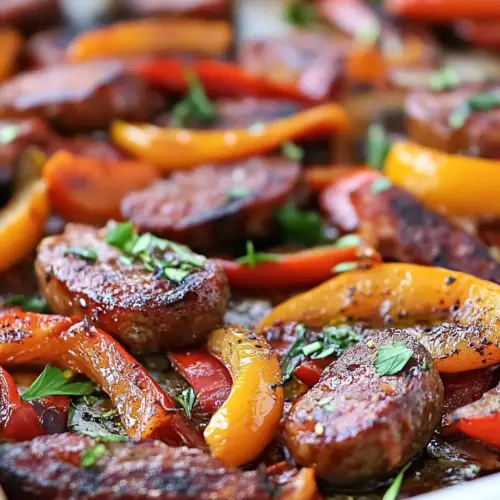
Sheet Pan Smoked Sausage and Peppers
Sheet Pan Smoked Sausage and Peppers delivers smoky, savory smoked turkey sausage paired with sweet roasted bell pepper and tangy BBQ sauce for an easy weeknight dinner. Caramelized edges and bright oregano finish create irresistible contrast and comfort. Quick to prep and minimal cleanup, it’s a simple, flavorful choice for busy evenings and casual entertaining.
Equipment
- Baking Sheet
- Oven
Ingredients
- 2 smoked turkey sausage links 12 to 15 ounces total, sliced in half length wise Sliced and smoky, provides the main protein and hearty texture while imparting a savory, cured flavor that stands up to bold peppers and BBQ sauce; halves expose more surface for caramelization and smoky browning during roasting.
- 1/4 cup of your favorite BBQ sauce Tangy and slightly sweet, contributes a glossy, flavorful coating that enhances caramelization and binds seasonings to the sausage and vegetables while adding a balanced sweet-smoky note.
- 1 red bell pepper sliced or chopped Crisp and mildly sweet, adds vibrant color, fresh vegetal flavor, and pleasant bite that softens and caramelizes in the oven to complement the sausage's richness.
- 1 orange bell pepper sliced or chopped Sweet and fruity, offers additional color contrast and bright, citrusy-sweet flavor that roasts down to a tender, slightly charred sweetness pairing well with savory elements.
- 1/2 red onion sliced Sharp and slightly pungent, provides aromatic depth and a savory bite that softens upon roasting, lending mellow sweetness and complexity to the overall pan mixture.
- 1 1/2 tablespoons olive oil Smooth and fruity, acts as the cooking oil to promote even roasting, help with browning, and carry fat-soluble flavors so components crisp without sticking.
- 1 tablespoon balsamic glaze Sweetly concentrated and tangy, delivers a bright, sticky glaze that amplifies umami and sweetness, adding a subtle acidic lift and glossy finish to the dish.
- 2 garlic cloves minced Aromatic and pungent, infuses sharp, savory notes throughout the pan, adding depth and enhancing the overall flavor while mellowing and sweetening when roasted.
- pinch of salt and pepper Small but essential, balances and enhances all flavors by controlling seasoning; a light pinch prevents over-salting while adding necessary savory contrast.
- 2 tablespoons fresh oregano Herbaceous and fresh, brings aromatic brightness and a Mediterranean herbal note that enlivens the rich sausage and roasted vegetables when sprinkled on before or after cooking.
Instructions
- Preheat the oven to 425 degrees F. Spray a baking sheet with nonstick spray (or mist with olive oil).: The kitchen fills with warmth and a subtle dry heat smell that signals the right environment for roasting, helping the vegetables brown and the sugars in the BBQ sauce and balsamic glaze caramelize. You should notice a faint, steady hum from the oven as it reaches temperature, and the inside of the oven will look evenly lit. This step matters because a hot oven sears surfaces quickly, locking in moisture while creating crispy edges. A common mistake is putting the pan in too early at a lower temperature, which leads to limp, steamed vegetables instead of caramelized ones. If your oven runs hot, consider checking with an oven thermometer to avoid burning.
- Slice the smoked turkey sausage length wise and brush the open sides with BBQ sauce. I then like to cut them into roughly 2-inch long pieces (see above photos for reference).: As soon as you slice the smoked turkey sausage , the exposed meat emits a slightly smoky aroma that intensifies when you brush on the BBQ sauce , which adds a glossy sheen. Cutting them exposes more surface for the heat to work on, producing more browning and an appealing texture contrast. The sauce’s sugars will begin to caramelize under high heat, giving a lovely mahogany color around the edges. One trap is overcoating the sausage so sauce pools on the pan and burns, creating a bitter char instead of a sweet glaze. Use a modest brush stroke to keep flavors balanced.
- Place the peppers and onions on the baking sheet. Toss with the olive oil, balsamic glaze, minced garlic, salt and pepper. Add the sausage pieces on the sheet.: When you arrange the red bell pepper , orange bell pepper , and red onion on the sheet, shake them gently to hear a slight rustle that signals dry surfaces, which helps with browning. Tossing them with the olive oil , balsamic glaze , minced garlic , and a pinch of salt and pepper coats each piece so heat transfers evenly and flavors meld. You’ll notice the oil gives the vegetables a light sheen, and the garlic fragrance begins to emerge even before roasting. This technique ensures even caramelization, which deepens sweetness and adds complexity. Avoid crowding the pan, as crowded pieces steam and lose their texture rather than roast crisply.
- Roast for 25 to 30 minutes, until the veggies begin to caramelize and the sausage gets golden. Remove from the oven and sprinkle with fresh oregano. Serve immediately!: Nestle the prepared smoked turkey sausage pieces among the vegetables so each piece has contact with the hot metal and open air, which promotes even browning. The metal of the pan will conduct heat and create crisp edges where the sausage and vegetables touch, offering contrast in texture. When placed well, the tray will emit an uplifting aroma as juices mingle, and you’ll see the sauced surfaces start to tack in the oven. A common error is piling items on top of each other, which prevents airflow and causes uneven cooking; spread things in a single layer for best results.
- Roast for 25 to 30 minutes, until the veggies begin to caramelize and the sausage gets golden: During roasting, you’ll hear a soft sizzle as sugars break down and moisture evaporates, and the oven will fill with a deep, savory fragrance. Check visually for edges that turn golden brown and for peppers to develop darkened spots, both signs of proper caramelization. The sausage should have a nicely browned exterior without being dried out. This time window encourages the Maillard reaction on the meat and sugars to concentrate in the vegetables, producing complex, slightly sweet flavors. Overcooking past the golden stage risks drying the sausage and charring the vegetables excessively, so monitor progress and rotate the pan if your oven has hot spots.
- Remove from the oven and sprinkle with fresh oregano: Once out of the heat, the tray releases a warm, aromatic burst as residual steam lifts the roasted scents, and the visual contrast between glossy, browned surfaces and bright green oregano is inviting. Sprinkling the herb right away preserves its fresh fragrance and adds a final herbal lift that brightens the roasted flavors. The residual heat will gently wilt the herbs, releasing essential oils while keeping their color. The main mistake here is adding delicate fresh herbs too early, which causes them to lose vibrancy under intense heat; reserve them for finishing to retain aroma and visual appeal.
Notes
- Give everything room: Arrange the smoked turkey sausage and vegetables in a single layer so hot air circulates and surfaces brown, not steam. Crowding traps moisture and prevents the caramelization that creates depth of flavor.
- Brush sparingly: Apply the BBQ sauce lightly to the cut sides of the sausage so the sugars can caramelize without burning. A thin glaze enhances flavor and color while avoiding a scorched aftertaste.
- Mind your oil: Toss the vegetables with the measured olive oil so they roast evenly and develop a tender interior with crisp edges. Too much oil leads to soggy vegetables, too little causes uneven browning.
- Watch the garlic: Mince the garlic finely and mix with the oil to disperse it, preventing exposed pieces from burning and turning bitter during high heat roasting.
- Finish fresh: Sprinkle the oregano after the pan comes out of the oven to preserve its bright herbal notes and aromatic lift, which contrast beautifully with roasted flavors.