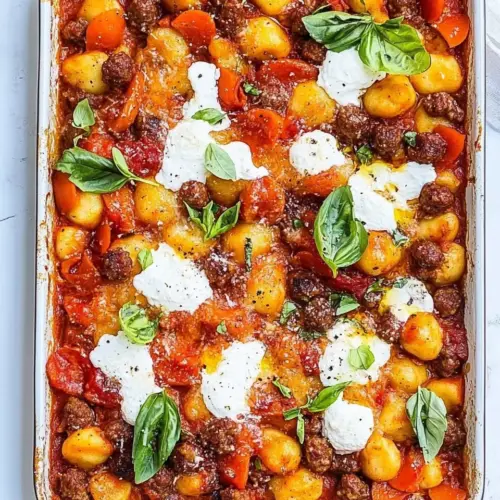
Sheet Pan Sausage Gnocchi
Sheet Pan Sausage Gnocchi is a creamy, crispy, and easy weeknight dinner that layers pillowy gnocchi with smoky Italian style chicken sausage, roasted peppers, and bubbling mozzarella. With minimal prep and one pan to wash, it’s a comforting, flavor packed meal that feels special enough for company. Make it for a fast family dinner that still impresses.
Equipment
- Large sheet pan
- Aluminum Foil
- Nonstick spray
- Oven
Ingredients
- 16 ounces uncooked potato gnocchi Cooked quickly to tender pillowy texture, contributes the primary carbohydrate and base that soaks up sauce and flavors while providing a soft contrast to roasted vegetables and sausage.
- 12 ounces smoked Italian-style chicken sausage, cut into 1-inch pieces Sliced into bite-sized pieces to release smoky, savory fat and aroma during roasting, provides the main protein and a robust flavor that seasons the gnocchi and vegetables.
- 1 red bell pepper, cored, seeded, and sliced Sliced and roasted until slightly charred to add sweet, crisp texture and bright, fruity flavor that balances the richness of the sausage and cheese.
- 1 yellow bell pepper, cored, seeded, and sliced Sliced and roasted to bring mild sweetness and crunchy texture, lending color contrast and a juicy, mellow flavor that complements the other roasted ingredients.
- 1/2 red onion, sliced Sliced thinly to soften and caramelize when roasted, adds sharp, sweet-savory depth and aromatic complexity that enhances the overall dish.
- 1 1/2 cups Marinara sauce Added to coat and bind the components, supplies a tangy tomato base and moisture that flavors the gnocchi and helps create a cohesive, saucy finish.
- 8 ounces fresh mozzarella, cut into 1/2-inch cubes Cubed to melt slightly from the residual heat, provides creamy, milky richness and gooey texture that contrasts with the roasted vegetables and savory sausage.
- For garnish: fresh basil, crushed red pepper flakes, and grated Parmesan cheese Used as finishing touches to brighten and season the dish; basil adds fresh herbal notes, crushed red pepper provides heat, and grated Parmesan lends salty umami complexity.
Instructions
- Preheat oven to 425 degrees. Line a large sheet pan with aluminum foil and spray with nonstick spray. Set aside.: As soon as you set the oven, you will notice a reassuring hum and steady heat building, which is essential for getting crisp, golden edges on the gnocchi and vegetables. The high temperature encourages quick caramelization rather than steaming, and you should smell a faint warm, dry heat from the oven when it reaches temperature. A common mistake is placing the pan in a not fully preheated oven, which leads to uneven browning and softer textures than intended. Ensure the rack is centered to allow even air circulation.
- Remove the gnocchi from the package and make sure none of the gnocchi are stuck together. Spread the gnocchi, sausage, peppers, and onions on the baking sheet. Pour marinara sauce over the gnocchi, sausage, and vegetables. Toss until well coated in the sauce. Note - you can also do this in a bowl before putting on the pan, but I don’t like to dirty an extra dish, I combine right on the pan.: The foil makes cleanup effortless and the spray prevents sticking, so you retain the browned bits that carry flavor. When the foil is snug, the surface becomes slightly reflective and helps distribute heat across the pan. If you skip the spray, gnocchi and cheese can adhere and tear when serving, so do not omit this step. Use an edge rimmed sheet pan to keep sauce from running over.
- Spread the gnocchi, sausage, and vegetables in an even layer on the sheet pan.: Separating the gnocchi before they hit the pan helps each piece roast independently and develop a slight crust. When they are properly separated, you can hear a light shuffle as you move them, and you will see individual pieces rather than clumps. If pieces remain stuck they will steam instead of roast, producing gummy texture. Gently massage any clusters apart with your fingers.
- Place the pan in the oven and bake for 20 minutes, tossing once halfway through. Remove the pan from the oven and evenly sprinkle fresh mozzarella cheese cubes over the top. Place the pan back in the oven and bake until cheese is melted, about 5 minutes.: When arranged in a single layer, the ingredients receive even heat, and the vegetables begin to blister while the sausage edges brown. Visually you should see space between pieces so hot air reaches each surface, and you may notice the sausage releasing a bit of fat that will flavor the pan. Overcrowding leads to steaming, so use two pans if needed to preserve crisping.
- Remove the pan from the oven. Garnish with fresh basil, crushed red pepper flakes, and grated Parmesan cheese. Divide the gnocchi onto plates or bowls and serve immediately.: The moment the sauce meets the hot ingredients it starts to cling and concentrate, smelling tangy and herbaceous. Coating everything encourages flavors to marry during roasting, but too much sauce will prevent browning. If the pan looks soupy, you will get less textural contrast. Aim for a glossy coating rather than a thick pool, and reserve a little sauce if you like extra sauciness when serving.
- Toss until well coated in the sauce: Tossing ensures that the gnocchi and vegetables pick up tomato flavor on all sides, and you can feel the ingredients shift under your hands as sauce adheres. Proper tossing helps even cooking, because sauce can protect bits from drying out. Doing nothing and leaving clumps uncoated may yield uneven flavor distribution. If you prefer not to toss on the pan to avoid mess, use a bowl, but I find onsite tossing cuts down on cleanup.
- Spread the gnocchi, sausage, and vegetables in an even layer on the sheet pan: An even layer gives every piece exposure to hot air, producing crisped edges and caramelization, and when they are spread well you will hear a gentle clinking as pieces settle. Visual uniformity is a good cue that nothing will overcrowd and steam. If some areas are piled higher, those parts will remain soft and underbrowned; level the components for consistent results.
- Place the pan in the oven and bake for 20 minutes, tossing once halfway through: During baking you will smell the tomato deepen and the sausage begin to sing with roasted aromas, while the peppers darken at their edges. Tossing at the halfway mark encourages even browning and prevents sticking, and when you toss you should see more caramelized bits freed from the pan. If you forget to toss, one side may overbrown while the other remains pale, so set a timer to remind yourself.
- Remove the pan from the oven and evenly sprinkle fresh mozzarella cheese cubes over the top: As you lift the pan, hot steam will rise and the surface will look glossy with concentrated sauce. Placing the mozzarella cubes evenly allows them to melt into pockets rather than pooling in one area, creating melty ribbons across the pan. If the cubes are piled together they will form a single melted mass instead of individual creamy bites. Space them so each guest gets a cheesy morsel.
- Place the pan back in the oven and bake until cheese is melted, about 5 minutes: In these final minutes the mozzarella softens and turns lusciously gooey, and you may hear gentle bubbling at the edges where sauce meets cheese. This short finish preserves a fresh, milky character in the cheese while making it irresistibly stringy. Overbaking can cause the cheese to release oil and lose its delicate texture, so watch closely and withdraw when it is just melted and glossy.
- Remove the pan from the oven: When the pan comes out, heat radiates and the scent of roasted vegetables and savory sausage intensifies, signaling the meal is nearly ready. Give it a minute to settle so the melted cheese firms slightly, making serving easier. A common error is serving immediately while everything is too fluid, which leads to messy plating. Let it rest briefly to maintain structure.
- Garnish with fresh basil, crushed red pepper flakes, and grated Parmesan cheese: Adding garnish brightens and layers the dish with herbal, spicy, and savory notes, and the fresh basil adds perfume while the grated Parmesan cheese contributes a salty finish. Sprinkle just before serving to keep the basil vibrant and not wilted. If you add garnish too early it can lose its flavor and color under residual heat.
- Divide the gnocchi onto plates or bowls and serve immediately: Serving right away ensures you enjoy the contrast of textures, with warm, melted cheese and still slightly crisp edges. The visual of a steaming bowl topped with bright basil is inviting, and the first bite should reveal creamy interior and roasted exterior. Waiting too long can lead to cooled, less appetizing texture, so bring it to the table promptly.
Notes
- Swap the sausage Use another chicken sausage variety for different herb profiles, keeping the same cook time to maintain texture and flavor balance.
- Extra veg boost Add more bell peppers or extra onions, but slice them consistently so they cook evenly with the gnocchi.
- Sauce control Start with 1 1/2 cups of marinara sauce and reserve a few tablespoons, adding them after baking if you prefer a saucier finish.
- Cheese placement Scatter 1/2 inch cubes of fresh mozzarella evenly to create melty pockets, rather than shredding which melts flat across the pan.
- Garnish last Always add fresh basil, crushed red pepper flakes, and grated Parmesan cheese right before serving to keep aromas bright and textures distinct.