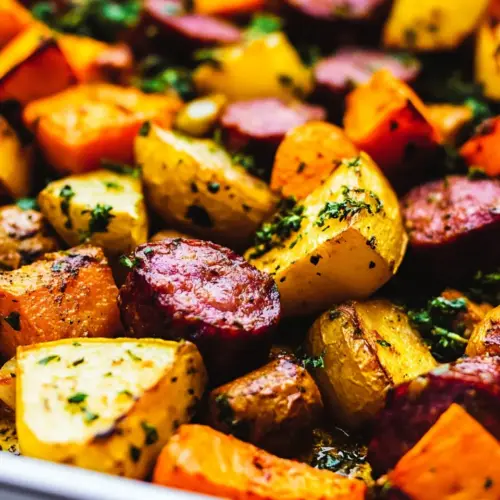
Sheet Pan Sausage and Veggies
Sheet Pan Sausage and Veggies is an easy weeknight dinner showcasing crispy roasted sausage, caramelized onion, tender potato and sweet pumpkin. The tray method creates deep roasted flavors and a variety of textures in one go, perfect for busy evenings or simple entertaining. Make it for its speedy prep and satisfying results.
Equipment
- Sheet Pan
Ingredients
- 4 sausages of your choice (mine are vegan made with beetroot, but any sausages will work) Provide savory, protein-rich bites that anchor the traybake and absorb roasting flavors; choose vegan or meat sausages to suit dietary needs and ensure even cooking time with vegetables.
- 1 large potato peeled and chopped into chunks Add starchy texture and bulk that crisps at the edges when roasted; peel and chop into uniform chunks to promote even cooking and creamy interiors.
- 1 red onion peeled and sliced into wedges Impart sweet and savory notes while caramelizing; peel and slice into wedges so they soften and develop rich flavor during roasting.
- 4 cloves garlic just cut the tips off and leave the peel on Offer mild garlic aroma as they roast while protecting against burning; leave the peel on and trim tips so they steam and mellow in flavor.
- 1 cup pumpkin or butternut squash sliced Contribute sweet, nutty flesh and vibrant color while roasting; slice pumpkin or butternut into similar-sized pieces for consistent caramelization and tender results.
- 1/2 cup mushrooms sliced Provide earthy flavor and meaty texture to complement sausages; slice mushrooms thinly so they release moisture and brown evenly on the sheet pan.
- 2 tablespoons olive oil Coat ingredients to promote browning and prevent sticking; drizzle over vegetables and sausages and toss thoroughly before roasting.
- 3 tablespoons fajita seasoning Introduce smoky, spicy seasoning to tie flavors together; sprinkle and toss with the oil so vegetables and sausages absorb a balanced fajita-inspired profile.
- 1 teaspoon dried oregano Add herbaceous Mediterranean notes that complement roasted vegetables; sprinkle evenly so dried oregano infuses the dish without overpowering other spices.
- 1 teaspoon sea salt Enhance overall flavor and balance with mineral depth; dissolve into the oil and seasoning mix to distribute seasoning uniformly across the sheet pan.
- 2 cups basil leaves Bring fresh, bright herbal lift when added after roasting; use generous basil leaves to add color, fragrance, and contrasting freshness to the warm dish.
- 3 tbsp olive oil Emulsify and bind herb sauces or dressings while adding richness; use extra olive oil to create a silky dressing for tossed basil or as a finishing drizzle.
- 1 clove garlic Provide pungent, aromatic depth when minced into a sauce or dressing; use a single clove to flavor a simple basil pesto or vinaigrette without overwhelming.
- 1/4 cup walnuts or pine nuts Introduce crunchy texture and toasty, nutty flavor when blitzed into a pesto; substitute walnuts or pine nuts based on preference and toast lightly for extra aroma.
- 1/2 tsp salt Balance and enhance flavors in sauces and finishings; use a measured half teaspoon to season basil-based dressings or pesto without making them overly salty.
Instructions
- Preheat the oven to 200°C (395°F).: When you open the oven and catch that initial wave of heat, you should also feel the anticipation of caramelization beginning. A properly preheated oven ensures the potato edges start browning right away rather than slowly stewing, which preserves texture. Listen for the slight whoosh as hot air circulates when the door closes, and be careful not to crowd the sheet pan as that traps steam. A common error is not allowing the oven to reach full temperature, which results in uneven roasting.
- Prep all of the veggies (peel and chop), then add the sausages and veggies to a sheet pan. Drizzle with olive oil, and sprinkle with fajita seasoning (or your favorite spice blend), oregano, and salt. Toss veggies with your hands until they're well coated with the olive oil and seasonings.: The tactile rhythm of cutting similar sized pieces sets you up for consistent roasting; similar dimensions means even doneness. As you work, note the natural scents, like the earthy potato and sweet onion, which hint at how they will concentrate in the oven. Arrange the pieces with some space so air can circulate. A frequent misstep is mixing tiny and large pieces together, leading to some items overcooked while others remain firm.
- Bake for 20 minutes, flipping halfway. To check if the veggies are ready, insert a fork in a piece of potato or squash and see if they're tender.: The oil helps heat transfer and encourages Maillard browning while the spices form a crust that intensifies flavor. Tossing by hand ensures every surface gets a light coating, and you can feel whether pieces are evenly dressed. If things look dry, add a touch more olive oil , but avoid drowning the pan which inhibits crisping. Over seasoning at this stage is easy to do, so err on the side of less and adjust later.
- Serve with rice, buckwheat, quinoa, in sandwiches or on their own for weight loss.: The sensory feedback of this step is immediate, the textures slick and fragrant. By massaging the seasoning into the vegetables you help the flavors adhere and create even browning. If the mixture feels clumpy, separate pieces with your fingers so heat reaches surfaces evenly. A common oversight is tossing too vigorously, which bruises delicate pieces like sliced mushrooms and causes them to release water prematurely.
- In a food processor, blitz all of the ingredients together until smooth. Have a taste and adjust seasonings to your preference. Add pesto to the sausage bake and enjoy.: During the first half of the cook, the oven dries the surfaces and concentrates sugars. When you flip, you expose new surfaces to the hot metal, promoting even color. You should see edges go golden and hear a gentle sizzle when you open the oven. If the tray steams instead of browns, it likely needs more space or a hotter oven. Avoid flipping too often, as each time you open the door you lose heat and extend cook time.
- To check if the veggies are ready insert a fork in a piece of potato or squash and see if they're tender: The tactile test is reliable, the fork should slide through with minimal resistance and the interior should feel creamy. Visual cues like slightly translucent squash and deeply caramelized onion edges also confirm doneness. If the fork meets firmness, return to the oven for a few more minutes and monitor closely. A mistake is relying only on time rather than texture, since oven performance and chunk size vary.
- Serve with rice buckwheat quinoa in sandwiches or on their own for weight loss: Serving options change the meal experience, grains add a neutral base while sandwiches make the tray components portable. When plated over grains, spoon any pan juices over the bowl to boost flavor. For sandwiches, let components cool slightly to avoid soggy bread. One pitfall is assembling while piping hot which can steam bread or wraps into sogginess.
- In a food processor blitz all of the ingredients together until smooth: The sound shifts from steady whir to a smoother hum as the herbs and nuts emulsify with the olive oil . This step transforms raw materials into a cohesive, glossy sauce that brightens the roasted tray. Scrape the sides as needed so everything incorporates evenly. Overprocessing can warm the basil and dull its fresh aroma, so pulse to control texture.
- Have a taste and adjust seasonings to your preference: Tasting connects you to the dish and lets you correct balance, whether that means a pinch more salt or an extra spoonful of oil for silkiness. Small adjustments can dramatically improve the final plate. If it tastes flat, add a small acid or additional salt to lift flavors. Avoid heavy handed additions; subtlety often yields the best result.
- Add pesto to the sausage bake and enjoy: When you spoon the herb mixture over the hot tray, it creates temperature contrast and a fragrant herbaceous hit. The pesto brightens roasted flavors and provides a fresh, oily sheen that makes each bite sing. Drizzle sparingly to preserve roasted textures. A common error is adding too much sauce which masks the roast character of the vegetables and sausage .
Notes
- Choose the right size: Cut the potato and pumpkin into pieces that are roughly the same dimensions so they finish at the same time, avoiding a mix of undercooked and mushy textures.
- Room on the pan: Give each item breathing room on the sheet pan so hot air can circulate and edges can caramelize, which delivers better browning and crunch.
- Oil evenly: Use your hands to coat everything with olive oil for tactile assurance that every surface has coverage, which helps spices adhere and encourages even color.
- Flip once: Turn the vegetables and sausage halfway through cooking to expose fresh surfaces to the heat, but avoid repeated flipping which wastes heat and prolongs the roast.
- Toast nuts lightly: If making the basil mixture, toast walnuts or pine nuts until just fragrant to deepen their flavor, but watch closely to prevent bitterness from burning.
- Add basil last: Fold in or spoon the basil based sauce just before serving to preserve its bright aroma and prevent it from losing freshness under heat.