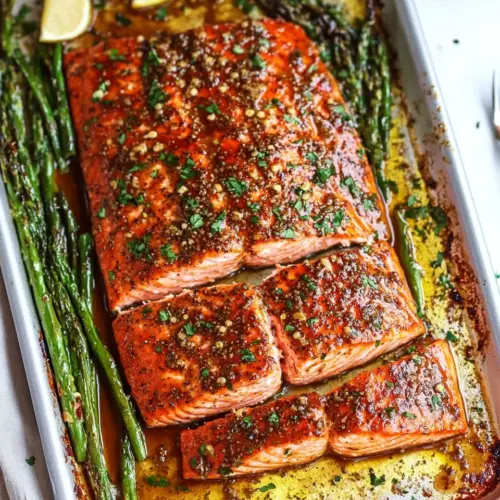
Sheet Pan Maple Dijon Glazed Salmon
Sheet Pan Maple Dijon Glazed Salmon combines sticky sweet maple syrup and tangy Dijon mustard over flaky salmon with roasted baby potatoes and tender asparagus. This easy weeknight dinner is full of color, texture, and bright lemon notes, delivering a restaurant worthy meal with minimal cleanup, perfect for busy evenings or casual gatherings.
Equipment
- Sheet Pan
- Large Bowl
- Small Bowl
- Oven
- Whisk
- Brush
Ingredients
- 1 lb baby potatoes, cut in half Halve and roast to provide a tender, earthy base and absorb pan juices; small size cooks quickly and crisps at the cut edges for texture contrast in the sheet pan meal.
- 1 tbsp olive oil Dress the potatoes lightly to promote even browning and prevent sticking; its mild fruitiness enhances overall flavor without overpowering the other components.
- 3 cloves garlic, minced Mince finely to infuse potatoes with pungent, aromatic flavor during roasting; provides savory depth and pairs well with thyme and olive oil for balanced seasoning.
- 2 tsp fresh thyme Crush or strip the leaves to release citrusy, floral notes that brighten roasted potatoes; subtle woodsy flavor complements garlic and anchoring starches.
- Salt and pepper, to taste Season to bring out natural flavors and balance sweetness from the glaze; adjust to personal taste to ensure the dish is well-rounded and not bland.
- 1 lb thin to medium asparagus, ends trimmed Trim and arrange to roast alongside potatoes for a quick-cooking, vibrant green vegetable; thin to medium stalks become tender-crisp and add color and freshness.
- 2 tsp olive oil Toss with asparagus to encourage caramelization and prevent sticking on the sheet pan; small amount adds shine and helps herbs and seasonings adhere.
- 2 cloves garlic, minced Minced and scattered to add a punch of savory aroma to asparagus; quick roasting mellows sharpness while enhancing overall vegetable complexity.
- 1 tsp lemon zest Zest to introduce bright citrus oils that lift the asparagus and cut through richness; concentrated lemon flavor provides a fresh contrast to the glaze.
- Salt and pepper, to taste Season to enhance the natural vegetal sweetness and balance the zesty lemon and garlic; a light hand keeps asparagus flavor clean and approachable.
- 4 (6 oz) salmon fillets, fresh or frozen, thawed Place portions to finish under a glaze and roast to flaky, tender doneness; fillet size cooks evenly on a single pan and pairs well with both potatoes and asparagus.
- 3 tbsp whole grain Dijon mustard Whisk into the glaze to contribute tangy, robust mustard seeds that add texture and acidic balance; whole grain Dijon provides depth and savory complexity to the sauce.
- 3 tbsp maple syrup, or honey Sweeten and caramelize when baked to create a glossy glaze that contrasts savory mustard and salmon richness; maple adds a layered, slightly smoky sweetness.
- 2 cloves garlic, minced Mincing adds a warm, aromatic note to the glaze and ties with garlic used on vegetables; it mellows when roasted and blends seamlessly into the sauce.
- 1 tbsp lemon juice Squeeze over or whisk into the glaze to add acidity and brightness that balances sweet maple syrup; lemon juice helps the glaze cling and cut through fish oils.
- 1 tsp fresh thyme Chop or strip to release fragrant, herbaceous notes that echo the potatoes' seasoning; fresh thyme brings subtle earthiness that complements salmon and vegetables.
- 1/4 tsp paprika Sprinkle to introduce a smoky warmth and enhance color on the finished glaze; paprika gives a mild depth without overwhelming the dish's other flavors.
- Salt and pepper, to taste Season to taste to ensure the glaze and proteins are properly balanced; final salt and pepper adjustment polishes the dish and harmonizes all components.
Instructions
- Preheat oven to 400 degrees F.: You will notice the oven taking a few minutes to reach this steady heat, and the warm dry air inside is essential for proper roasting. A fully preheated oven ensures the baby potatoes begin to brown on contact and the salmon cooks evenly rather than slowly steaming. If you skip this step the potatoes may become pale and sit soggy, so always wait until the temperature is stable. A common mistake is putting the tray in too early, which lengthens cook time and reduces caramelization.
- In a large bowl, toss the potatoes with olive oil, garlic and fresh thyme and season with salt and pepper. Spread them out in an even layer on a large sheet pan sprayed with nonstick spray. Roast in the oven for 20 to 25 minutes, until starting to brown.: As you toss, you should smell the bright garlic and thyme waking up in the oil, and the potatoes should look glossy but not drenched. This coating helps them brown and develop a crisp edge while their centers stay creamy. Even spacing and an even coating are important because crowded pieces steam instead of roast. Avoid adding too much oil which prevents crisping, and don’t under season the potatoes or they will taste flat compared to the glazed salmon .
- While the potatoes cook in the oven, toss asparagus with olive oil, garlic, lemon zest and salt/pepper; set aside. To make the maple dijon glaze, whisk together whole grain dijon mustard, maple syrup, garlic, lemon juice, fresh thyme and paprika in a small bowl.: When arranged, the potatoes should sit skin side down where possible so more surface touches the pan and browns. You should hear a faint sizzle as they hit the hot pan, an early sign they will crisp. Proper spacing ensures hot air circulates around each piece for even color. A mistake here is piling potatoes in clusters, resulting in uneven cooking and some pieces remaining underdone.
- Once the potatoes have cooked, push those to one side of the pan, add the asparagus to the other side of the pan and place your salmon fillets in the center. Brush the tops of the salmon with the maple dijon glaze so that each piece is evenly coated, and season with salt and pepper. Place the sheet pan back in the oven and cook for 15 more minutes, until asparagus is fork tender and salmon is cooked through. You could even pop the broiler on for the last few minutes to crisp everything up!: During roasting you’ll see the potatoes begin to turn golden and hear faint popping as moisture escapes, releasing that toasty aroma. The surface will show spots of caramelization and the edges will darken slightly, signaling they are ready for the next stage. If they are still pale after 25 minutes, check oven temperature and give them a few extra minutes, watching closely to avoid burning. Overroasting can make centers dry rather than creamy.
- To serve, sprinkle with fresh parsley and season with additional salt and pepper, as needed. Enjoy!: Tossing makes the asparagus glisten with oil and carry the lemon scent through the spears. You should be able to smell citrus and roasted garlic even before it hits the pan, and the oil will protect the spears from drying. This prep step ensures the asparagus requires only a short oven time to reach tender crisp, avoiding limp results. Over-seasoning or chopping spears unevenly can cause thin tips to overcook while thicker bases remain tough.
- To make the maple dijon glaze, whisk together whole grain dijon mustard, maple syrup, garlic, lemon juice, fresh thyme and paprika in a small bowl.: As you whisk, the glaze will thicken slightly and become glossy, with the aroma of mustard and sweet maple lifting. Taste it briefly to judge balance, adjusting lemon or mustard if it leans too sweet or too sharp. The glaze’s viscosity matters because it needs to cling to the salmon , so a watery mix will slide off during roasting. A common misstep is over diluting with lemon juice, which can make the glaze runny.
- Once the potatoes have cooked, push those to one side of the pan, add the asparagus to the other side of the pan and place your salmon fillets in the center.: Visually, this is where the tray comes together, and you should see distinct zones where each element will finish. The potatoes will continue to brown at the edges, the asparagus will roast quickly, and the salmon will cook through evenly in the central heat. Spacing matters to prevent steaming, and placing fillets too close together can interfere with even browning. Avoid crowding to keep textures distinct.
- Brush the tops of the salmon with the maple dijon glaze so that each piece is evenly coated, and season with salt and pepper.: When you brush, the glaze will shine and cling to the fish, and the surface should look lacquered. This coating caramelizes in the oven, creating glossy, slightly sticky patches that hold herbs and spices. Lightly seasoning after glazing helps maintain balance because the glaze softens salt perception. A pitfall is over glazing, which can lead to excessive sweetness; aim for an even thin coat for the best finish.
- Place the sheet pan back in the oven and cook for 15 more minutes, until asparagus is fork tender and salmon is cooked through.: During this final roast you’ll witness the asparagus soften with bright green color and the salmon become opaque and flaky. Use a fork to test the salmon at the thickest part for flakiness and check the asparagus by piercing near the tips. The glaze should have deepened in color but not burned. A usual misstep is overcooking the salmon , which dries the flesh, so begin checking a few minutes early if your fillets are thin.
- You could even pop the broiler on for the last few minutes to crisp everything up!: Under the broiler you will see quick caramelization and hear subtle crackles as sugars brown, creating attractive spots of color and a slightly crisped surface. Keep the oven door ajar only if your broiler instructions allow and watch constantly because broiling works fast and can char food within moments. A common error is stepping away during broiling, which risks burning the glaze and losing the nuanced sweet savory balance.
- To serve, sprinkle with fresh parsley and season with additional salt and pepper, as needed. Enjoy!: The final garnish adds a fresh herbaceous pop and a color contrast that makes the plate inviting. Taste a piece of each component together so the seasoning is harmonious, and add a small pinch of salt if anything feels muted. Serve immediately to enjoy the textural contrasts at their peak; letting the tray sit too long will soften the crisp edges and flatten flavors.
Notes
- Glaze balance: If your maple syrup tastes intense, add an extra teaspoon of lemon juice or whole grain Dijon mustard to brighten and cut sweetness without changing the overall character.
- Salmon thickness: For thicker fillets, extend the final roasting time by a few minutes and position thicker pieces slightly away from the edge of the pan so they cook through without the thinner pieces overcooking.
- Potato crisping: Give the potatoes a single layer and avoid overcrowding; if you need more space, use two pans so each piece can develop a golden crust rather than steam under crowded conditions.
- Garlic timing: If you prefer milder garlic flavor, reduce the amount in the glaze and increase the garlic for the potatoes, so the vegetable base carries more savory depth while the fish keeps a gentle undertone.
- Broiling caution: When broiling to finish, move the rack a safe distance from the element and watch constantly for up to two minutes, because the sugars in the glaze brown very quickly and can burn if left unattended.