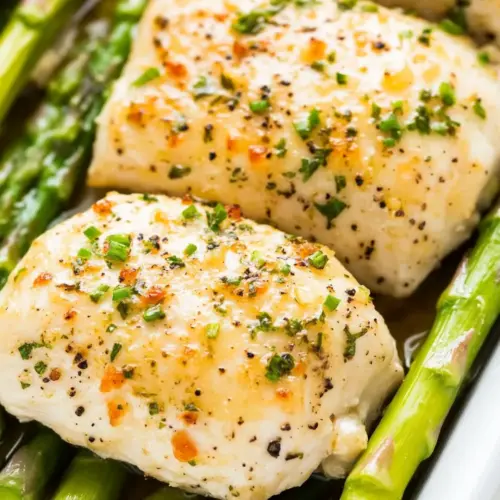
Sheet Pan Honey Horseradish Chicken and Asparagus
Sheet Pan Honey Horseradish Chicken and Asparagus is a glossy, easy weeknight dinner that balances sweet honey with peppery horseradish, producing tender chicken and crisp tender asparagus. This one pan recipe is perfect for busy evenings, delivering caramelized edges and bright vegetal contrast, a satisfying reason to make it tonight.
Equipment
- Baking Sheet
- Zip-top Bag
- Instant read thermometer
Ingredients
- about 3 or 4 boneless skinless chicken breasts, about 1.50 pounds total Provide lean protein and substantial texture to the dish, helping form the main component that absorbs the honey-horseradish glaze and browns nicely on a sheet pan during roasting.
- 1/3 cup olive oil, plus more for drizzling over asparagus Add a fruity, smooth fat that carries and melds flavors, promoting even cooking and helping the glaze adhere while also being drizzled over asparagus to prevent sticking and enhance mouthfeel.
- 1/3 cup honey Introduce concentrated sweetness and help create a glossy, caramelized coating that balances the heat of horseradish while aiding in browning and glazing the chicken.
- 1/4 cup horseradish, I use prepared creamy refrigerated Contribute pungent, sharp heat and creamy texture that contrasts the honey, lending a zesty, nasal-clearing bite to the glaze and cutting through the chicken's richness.
- 1 teaspoon Kosher salt, or to taste; plus more for asparagus Season and enhance overall flavor, drawing out natural juices and helping balance sweetness and heat while providing a baseline savory note; can be adjusted to taste.
- 1 teaspoon freshly ground black pepper, or to taste; plus more for asparagus Provide warm, slightly floral spice and mild heat that complements the horseradish and honey, enhancing savory depth and seasoning the chicken and asparagus to taste.
- 1 to 2 pounds fresh asparagus, trimmed (read blog post for explanation) Offer fresh, tender green vegetable contrast and slight snap, roasting quickly alongside chicken; trimming ensures even cooking and prevents tough ends from affecting texture.
- 2 to 3 tablespoons finely chopped fresh parsley, regular or flat-leaf Italian, optional for garnishing Add bright, herbaceous finish and mild peppery freshness when sprinkled before serving, lifting the dish visually and flavor-wise as an optional garnish.
Instructions
- To a large ziptop bag, add the chicken, 1/3 cup olive oil, honey, horseradish, 1 teaspoon salt, 1 teaspoon pepper, seal bag, and squish contents around to distribute evenly. Place bag in refrigerator to marinate for at least 15 minutes, or overnight.: The aroma of honey and horseradish will become noticeable as the marinade warms against the surface of the chicken , a fragrant sign that flavor is infusing into the meat. Pressing the bag ensures every inch is coated so each bite has balanced seasoning. You should feel the bag get slick and slightly tacky as the honey mixes with the olive oil . If refrigerating overnight the flavors will deepen and the exterior will take on a glossy sheen; however, do not marinate much longer than a day to avoid texture changes. A common mistake is skipping the seal test, which can lead to leaks and lost marinade.
- When ready to bake, preheat oven to 425 F, line a baking sheet with aluminum foil, spray with cooking spray, and place chicken on baking sheet. Bake for about 18 to 20 minutes.: As the oven climbs to 425 F you will smell the sweet perfume of the honey as it starts to warm, signaling forthcoming caramelization. Place the chicken spaced apart so hot air circulates and surfaces brown, rather than steam. The initial bake forms a crust and traps juices, resulting in a tender interior. Avoid crowding the sheet and using a baking sheet that is too small, because crowding prevents that desirable browning and creates an uneven cook.
- Remove pan from oven, flip chicken over, and evenly place the asparagus around the chicken around the perimeter of the pan and between the pieces.: When you open the oven there will be a slight caramelized glaze on the exposed edges of the chicken , a savory scent that tells you the sugars are browning. Flip so the previously baked side gets a turn at the heat, then nestle the trimmed asparagus around the chicken where it can catch pan juices. This arrangement lets the vegetables roast in flavorful drippings and promotes even cooking. A frequent oversight is dropping the asparagus on top of the chicken, which can prevent both from achieving even caramelization.
- Evenly drizzle asparagus with a small amount of olive oil (there will be pan juices from the chicken that you can roll the asparagus through too), season with salt and pepper to taste, and toss lightly.: The tactile feel of tossing the asparagus with a little extra olive oil and the warm pan juices is satisfying, and you will see a shiny coating form. Seasoning now allows the vegetables to absorb flavor on their surface, which crisps and chars in the oven. Listen for the faint sizzle when you return the pan to the heat, a reassuring sound that moisture is evaporating and browning will occur. Don't apply too much oil or the asparagus can become limp and greasy.
- Return pan to oven and bake for about 10 to 14 minutes, or until asparagus is crisp-tender and chicken is cooked through (internal temp of 165 F). Baking time will depend on thickness of chicken breasts and size of asparagus; bake as necessary and until done.: During this final roast you will notice the asparagus take on a brighter green with slightly darker tips and the chicken edges deepen to a golden brown, a visual cue of doneness. The kitchen will fill with a roasted aroma as sugars caramelize and oils toast. Use an instant read thermometer to confirm the chicken reaches 165 F at the thickest part for safety and juiciness. A typical error is relying only on time instead of temperature, which can lead to either undercooked meat or overly dry breasts.
- Optionally garnish with fresh parsley and serve immediately. Whisk a little extra honey and horseradish together and drizzle over chicken before serving if desired.: The final garnish of chopped parsley offers a fresh, herbaceous lift and a visual pop of green against the glossy chicken . If you whisk extra honey and horseradish , the glossy drizzle adds an extra layer of sweet heat and shines beautifully on the plated dish. Serve right away while the asparagus remains crisp and the chicken is warm. A common misstep is letting the dish sit too long which causes the vegetables to lose their snap and the glaze to thicken.
Notes
- Adjust marinating time — If you have only minutes, a 15 minute rest still infuses surface flavor, while an overnight marinade develops a deeper profile. Longer marination can intensify the horseradish note, so taste and time accordingly.
- Vary herb garnish — Swap the parsley for another fresh herb if you prefer, keeping the garnish fresh and bright. Add just before serving to preserve vibrant color and aroma.
- Control horseradish heat — Prepared horseradish ranges in intensity, so start with the listed amount and adjust next time to suit your heat preference.
- Manage asparagus thickness — Choose medium stalks for even roasting; very thick stalks may need extra time, while thin ones cook quickly and can become limp if left too long.
- Make extra glaze — Whisk a little additional honey and horseradish to serve alongside, offering a fresher hit of flavor at the table and a glossy finish.