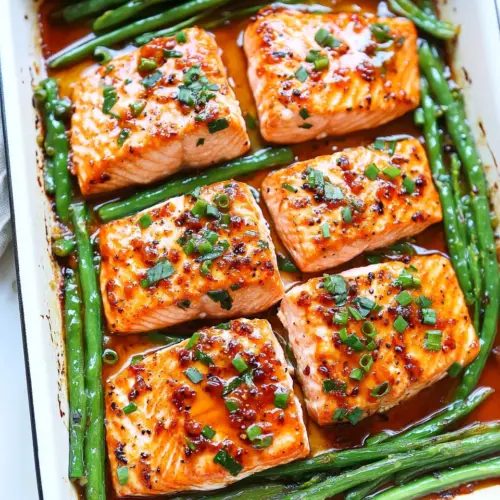
Sheet Pan Ginger Soy Glazed Salmon
Sheet Pan Ginger Soy Glazed Salmon is a glossy, savory, and slightly sweet one pan dinner that is perfect for easy weeknight meals. The bright ginger and garlic play against honey and sweet chili sauce to create an irresistible glaze, while roasted green beans and carrots add texture. Fast, flavorful, and cleanup friendly, this recipe is a reliable choice when you want an impressive, effortless main dish.
Equipment
- Baking Sheet
- Small Bowl
- Whisk
Ingredients
- 4 (6 oz) salmon fillets, fresh or frozen, thawed Place gently on the sheet pan as the main protein, providing rich flavor and tender texture when roasted; ensure fillets are thawed and patted dry to promote even browning and glaze adherence. Handle carefully to prevent overcooking, and consider skin-on for extra moisture and crispness if desired.
- 1 lb fresh green beans Trim and blanch or roast alongside the salmon to add a crisp-tender vegetable component that balances the dish; green beans contribute vibrant color and a fresh, slightly grassy flavor. Toss with oil and seasoning before roasting for even caramelization and to help them absorb glaze flavors.
- 2 cups carrots, cut into 2-inch pieces Cut into uniform 2-inch pieces so they cook evenly and provide a sweet, earthy counterpoint to the savory salmon; carrots add texture and natural sweetness that pairs well with the soy-ginger glaze. Par-cooking or spacing on the pan ensures they become tender without overcooking the fish.
- 1 tbsp olive oil Drizzle over vegetables and salmon to promote even roasting and help the glaze cling; olive oil contributes a subtle fruitiness and prevents sticking. Use sparingly to avoid excess oil pooling on the sheet pan while still encouraging browning and flavor development.
- Salt and pepper, to taste Season to taste to enhance the natural flavors of both the salmon and vegetables; salt brings out savory notes while pepper adds mild heat and aromatic complexity. Apply before roasting to help form a seasoned crust and adjust at the end if necessary for balance.
- 1/4 cup reduced-sodium soy sauce Combine into the glaze to provide deep umami and salty backbone while keeping sodium lower than regular soy sauce; reduced-sodium soy sauce offers robust savory flavor without overpowering the dish. Mix with sweet and aromatic components to create a balanced, glossy coating for the fish and vegetables.
- 2 tbsp sweet chili sauce Blend into the glaze to contribute sweet, tangy heat and a sticky texture that helps the sauce caramelize under heat; sweet chili sauce adds layers of flavor and a gentle spiciness. Use as part of the marinade or brush on during roasting for a flavorful finish.
- 1 tbsp honey Stir in to add natural sweetness and help the glaze achieve a silky, caramelized sheen when roasted; honey balances salty and spicy elements while aiding in browning. Adjust quantity to taste to maintain harmony between sweet and savory components.
- 1 tbsp grated ginger Grate finely to release bright, pungent aromatics that infuse the glaze with warm, peppery notes; ginger brings a lively freshness that complements both seafood and vegetables. Incorporate early to meld flavors and ensure its sharpness is mellowed by cooking.
- 2 cloves garlic, minced Mince and mix into the glaze to contribute a savory, aromatic bite; garlic adds depth and a familiar pungency that enhances overall umami. Add toward the beginning of cooking to allow flavors to mellow and integrate with the soy-ginger mixture.
- 1 tbsp chopped green onions Chop finely and sprinkle at the end for a fresh, oniony finish that adds color and a mild, grassy sharpness; green onions brighten the dish and provide a textural contrast. Use as a garnish just before serving to preserve their crispness and fresh flavor.
Instructions
- Preheat oven to 400 degrees F.: As you turn the oven on, you will notice the kitchen gradually warming and the hum of the preheat. This heat level ensures the vegetables roast and the salmon cooks through without drying. Preheating also guarantees the pan is hot enough to start caramelization the moment it goes in. A common error is putting the pan in a cold oven, which leads to uneven cooking and limp vegetables. Make sure your rack is in the center position so both fish and vegetables receive even heat.
- Place salmon (skin side down), green beans and carrots in a single layer on a prepared baking sheet. Drizzle green beans and carrots with olive oil and sprinkle with a little salt and pepper.: When you arrange the salmon skin side down, you help the flesh stay moist while the skin protects it from direct heat. Spreading the green beans and carrots in a single layer lets hot air circulate, producing even browning and tiny crisped edges. Use a sheet pan with a rim to catch juices. Overlapping triggers steaming, which prevents the satisfying roasted edges you want.
- In a small bowl, whisk together soy sauce, sweet chili sauce, honey, ginger, garlic and green onions. Spoon sauce over salmon fillets and bake in the oven for 10 minutes. Turn the broiler on and cook for an additional 3 to 5 minutes, until salmon is flaky and cooked through.: The oil promotes browning and carries flavor, so when you toss the vegetables, aim for even coating. The sizzling and faint sweet smell of caramelizing sugars happen in the oven, and the salt enhances that reaction. Be cautious with salt because the glaze contains soy sauce ; start light and adjust later if needed. Uneven oiling can lead to patchy color on the vegetables.
- Serve immediately and enjoy!: As you whisk, aromatic steam from the grated ginger and minced garlic lifts, creating a fragrant mix that foreshadows the glaze. The liquids emulsify slightly with the honey, creating a thicker coating that will cling to the salmon . Whisk until cohesive so the flavors marry. A mistake is under-mixing and ending up with pockets of honey or sauce that do not spread evenly.
- Spoon sauce over salmon fillets and bake in the oven for 10 minutes: The moment the glazed salmon hits the oven, the sugars begin to concentrate and the fish starts to firm. You will hear the faint ticking of moisture escaping and smell the soy notes deepening. Ten minutes at 400 degrees F gets the fish mostly cooked while the vegetables continue to roast. Avoid opening the oven frequently, as that causes temperature drops and can lengthen cook time.
- Turn the broiler on and cook for an additional 3 to 5 minutes, until salmon is flaky and cooked through: Broiling intensifies heat from above, quickly caramelizing the glaze into a glossy finish and adding tiny charred notes. Watch carefully as the sugars can brown fast; you want a shiny, slightly blistered surface and flakes that separate easily with a fork. The fish should register as opaque and should flake gently. Leaving it under the broiler too long will dry out the salmon , so stay nearby and check often.
- Serve immediately and enjoy: Hot from the oven, the glaze will still be glossy and the vegetables will hold a pleasant bite. Serve right away so the textures remain distinct, and sprinkle any reserved green onions for fresh contrast. Letting it sit will soften textures and dull the shine, which is why immediate serving produces the best sensory experience.
Notes
- Trim and dry your salmon before glazing: Patting the salmon dry with paper towels and trimming irregular edges helps the glaze adhere evenly and promotes even cooking across the fillet.
- Prep vegetables uniformly so they roast at the same rate: Cutting the carrots into consistent 2 inch pieces and aligning the green beans in one direction ensures they finish together, avoiding some pieces being overdone while others remain firm.
- Measure the glaze components for balanced flavor: Stick to the specified ratios of reduced sodium soy sauce, honey, and sweet chili sauce to maintain the intended sweet savory contrast without becoming overly salty or sweet.
- Apply glaze midway and again before broiling for layered shine: Spoon some glaze over the fish at the start and then again before broiling to achieve a deeper, caramelized finish without burning.
- Use the center oven rack to cook evenly: Placing the pan centrally allows both the fish and the vegetables to receive consistent heat, resulting in uniform roasting and preventing one element from finishing too early.
- Keep an eye on the broiler during the final minutes: The sugar in the glaze can go from caramelized to charred quickly, so watch closely and pull the pan when the surface is glossy and blistered rather than deeply blackened.