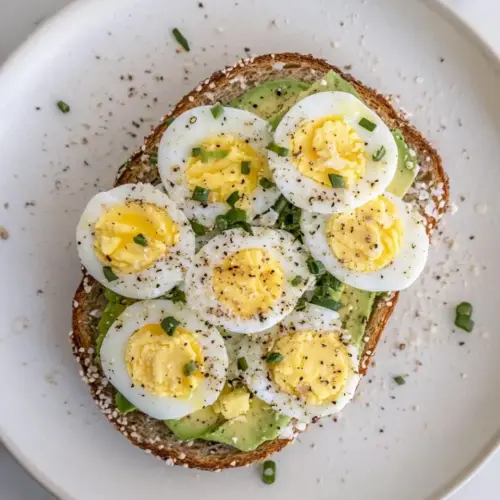
Shaved Egg Avocado Toast
Shaved Egg Avocado Toast is a creamy, crispy, and easy breakfast or brunch. Fluffy grated egg meets mashed avocado on toasted bread with a spark of red pepper flakes and lemon, creating an elegant, quick bite perfect for an easy weeknight dinner or leisurely weekend brunch.
Equipment
- Saucepan
- Cheese grater
- Toaster
- Bowl
Ingredients
- 2 hard boiled eggs preferably cold - they will be easier to grate! Grate finely to create fluffy, savory shreds that add protein and a creamy texture; cold hard boiled eggs are easier to shave and hold their shape. Season lightly after grating to balance richness and help the shavings meld into the avocado spread.
- 2 slices bread toasted Toast until golden and crisp to provide a sturdy, crunchy base that contrasts with creamy toppings; use even browning for the best mouthfeel. Serve warm to slightly cooled so it doesn’t wilt the avocado while maintaining structure under the toppings.
- 1 avocado Mash or slice to contribute creamy, rich body and mild flavor that binds toppings together; ripeness should be medium-soft for easy spreading but not overly mushy. Squeeze a bit of lemon or season with salt to brighten the flavor and enhance the avocado’s natural butteriness.
- 1/8 teaspoon red pepper flakes Sprinkle sparingly to introduce gentle heat and a pop of color; adjust quantity to taste to avoid overpowering the delicate avocado and egg. Use as a finishing touch to lift flavors and provide a subtle, lingering spice.
- salt and pepper to taste! Season to taste to enhance and balance flavors across the toast; salt brightens and pepper adds a warm, aromatic bite. Add incrementally and taste as you go to prevent oversalting given the eggs and avocado.
- 1 radish thinly sliced Slice thinly to add crisp, peppery crunch and a fresh, vegetal contrast that cuts richness; place atop slices for visual appeal and textural variety. Use thin cuts to avoid overwhelming the toast while contributing a clean, slightly spicy note.
- 1 tablespoon chopped chives Chop finely to impart mild onion-like brightness and a delicate herbal lift; scatter over the toast for fresh color and a subtle, oniony aroma. Use as a garnish to create small bursts of flavor in each bite without dominating the dish.
- lemon wedges for serving Squeeze over when serving to introduce bright acidity that balances richness and refreshes the palate; serve wedges on the side for diners to control intensity. Use sparingly to avoid making the toast soggy while maximizing flavor contrast.
Instructions
- As a note, here's how I made my favorite boiled eggs! Place the eggs in a saucepan and fill it with cold water. Heat the saucepan over medium heat (this is important!) and once it starts to simmer, let it simmer for 1 minute. Remove the pan from the heat and cover it for 10 minutes. After 10 minutes, transfer the eggs to an ice bath. Let them chill for at least 30 minutes, then either use them or store in the fridge!: The water sound will change as it heats, moving from a quiet simmering hiss to gentler bubble activity; that shift is your cue to remove the pan from heat after one minute of simmering. This resting covered method creates a reliably set white and a creamy yolk rather than a rubbery texture. The ice bath is crucial, it stops cooking and firms the egg for easy peeling. Common mistake to avoid here is skipping the ice bath which can lead to overcooked yolks and difficulty peeling.
- Take the hard boiled eggs for the toast and use a cheese grater on them to get the egg shavings. Toast your bread!: You will hear a soft scraping sound as the firm white yields into delicate ribbons; those feathered shavings look light and airy on the toast and melt into the avocado once plated. Grating cold eggs produces even, airy pieces that give a lovely mouthfeel, and visually they mimic a soft snow over the toast. Avoid grating warm eggs , because they will crumble and create an uneven texture.
- In a bowl, mash the avocado (to the consistency you prefer) with the red pepper flakes and a pinch of salt and pepper. Spread the avocado on the toast. Top each slice with the egg shavings - pile it on high!: The crisp crunch when you bite in should be audible and the surface should show a golden, slightly blistered color. Toasting enhances the nutty notes of the bread and creates a sturdy platform for the toppings so the toast does not sag. If the toast is too dark or too soft, it will overpower or fall apart under the toppings, so watch closely and adjust your toaster or oven settings.
- Add the radish slices, and the chives. Sprinkle on an additional pinch of salt and pepper. Spritz with lemon and serve!: When you mash, the avocado will emit a rich, buttery aroma and the red pepper flakes will release a subtle warmth into the mixture; the seasoning should taste balanced and bright. I like some small chunks left for texture, but you can make it silkier depending on preference. Overmixing can make the avocado too thin and spreadable, which sometimes causes it to slide off the toast, so stop once you reach the texture you want.
- Spread the avocado on the toast: The moment you spread the creamy avocado , you should notice a smooth matte sheen and gentle resistance under your knife or spoon. This base layer cushions the delicate egg shavings and prevents the toast from becoming dry. If you apply too much pressure when spreading, you can compress the toast and lose some of the crisp edges, so be gentle and even.
- Top each slice with the egg shavings, pile it on high: As you mound the grated egg , you want to see light, airy layers that sit above the avocado instead of sinking in; this keeps every forkful balanced. The visual appeal is part of the pleasure, and the shavings add a cloudlike softness against the denser spread. A common error is using too large pieces of egg which can make the bite feel heavy, so aim for delicate strands.
- Add the radish slices and the chives: The radish will crackle slightly when you bite, and the chives will release a whisper of onion perfume. These garnishes provide a bright, fresh counterpoint to the creamy elements and lift the overall flavor. Place them evenly to ensure every bite has some crunch and herbaceous lift, avoiding clumps of one element on a single bite.
- Sprinkle on an additional pinch of salt and pepper: That final seasoning snap will make the flavors pop; you should taste a clearer, more vivid profile after this last touch. Salt enhances the natural sweetness of the avocado and the savory notes of the egg , while pepper gives a mild heat. Over-salting is an easy misstep, so use a light hand and taste a small piece first.
- Spritz with lemon and serve: The citrus brightens and ties the elements together; a small spritz is enough to notice a lift in flavor without making anything soggy. The fresh lemon aroma should be present but subtle, adding a crisp finish to each bite. If you add too much lemon, the acidity can dominate, so serve wedges for people to adjust to taste.
Notes
- Swap bread style Use a seeded sourdough or hearty country loaf to shift the flavor profile while keeping structure and crunch.
- Avocado texture Mash the avocado coarsely for more bite or blend for a silken spread depending on how you like mouthfeel.
- Egg preparation Ensure eggs are fully chilled for the best shavings, it makes a dramatic difference in appearance and texture.
- Adjust heat Increase or decrease the amount of red pepper flakes to fine tune the warmth to your comfort level.
- Herb finish Swap chives for finely minced herbs you enjoy, adding a new aromatic note while keeping the recipe fresh.