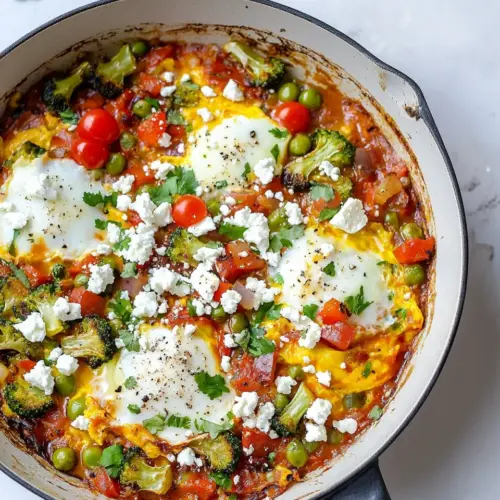
Shakshuka with Brussels and Feta
Shakshuka with Brussels and Feta blends tangy tomatoes, shredded Brussels sprouts, and silky eggs into a cozy, flavorful skillet meal. This creamy yet slightly spicy dish makes an easy weeknight dinner or a relaxed weekend brunch, with crumbly feta and fresh herbs lifting each bite. Serve with toasted bread to soak up the sauce for a satisfying reason to make it.
Equipment
- Skillet
Ingredients
- 1 tablespoon extra virgin olive oil Enhance flavor and prevent sticking by coating the pan with a light layer of healthy oil; brings fruity, peppery notes to the dish and helps sauté aromatics evenly.
- 1/2 cup chopped onion Provide a sweet, aromatic base when softened; helps build the sauce’s body and balances acidity from tomatoes while offering mild texture contrast.
- 6 cloves garlic, minced Add pungent, savory depth through minced pieces that release aroma when cooked; infuse the tomato sauce with garlicky warmth and complexity.
- 2 1/2 cups chopped ripe tomatoes, canned or from 3 juicy vine tomatoes Contribute body, acidity, and umami to form the shakshuka sauce; canned or fresh tomatoes create a rich, saucy foundation that simmers into a slightly chunky stew.
- 1/2 teaspoon kosher salt Season the sauce to heighten and balance flavors; dissolves into the simmering tomatoes to tame acidity and bring cohesion to the dish.
- 1/2 teaspoon cumin Introduce warm, earthy notes that complement the tomato base; ground cumin adds subtle depth and a faint smoky undertone to the overall profile.
- 1/2 teaspoon sweet paprika Provide sweet, mild smokiness that enhances tomato brightness; sweet paprika adds color and gentle warmth without overwhelming other spices.
- 1/4 – 1/2 teaspoon crushed red pepper flakes Deliver adjustable heat and a lingering kick to the sauce; crushed red pepper flakes let you control spiciness from subtle warmth to bold heat.
- 3/4 cup Brussels sprouts, shredded Bring a firm, slightly bitter crunch that becomes tender when shredded and cooked; Brussels add vegetable bulk, texture, and nutty flavor to the shakshuka.
- 6 large eggs Create rich, silky pockets of protein that set in the simmering sauce; eggs add creaminess and make the meal hearty and satisfying.
- 3 ounces feta cheese, crumbled Add tangy, salty creaminess when crumbled over the finished dish; feta provides bright contrast and enhances savory elements.
- fresh parsley, or cilantro, for garnish Provide fresh, herbaceous brightness when chopped and sprinkled on top; parsley or cilantro lifts flavors and adds color to the finished plate.
- Calabrian chili oil, optional for topping Supply an optional layer of smoky, spicy oil for finishing; Calabrian chili oil adds heat, umami, and a glossy sheen to the dish.
- toasted crusty bread or pita, optional for serving Offer a crunchy, absorbent vehicle for scooping and soaking up sauce; toasted crusty bread or pita makes the meal shareable and more filling.
Instructions
- Heat a large deep skillet over medium heat and add the oil. Add the onion and cook 3 to 4 minutes, until soft. Add garlic, salt, cumin, paprika, crushed red pepper flakes and cook 2 more minutes.: The moment the extra virgin olive oil warms you will smell a faint fruity note, and the surface should shimmer but not smoke, which indicates correct medium heat. This step sets the cooking environment and helps the aromatics release their oils, creating a glossy foundation for the sauce. If the oil smokes, reduce the flame immediately to avoid a bitter flavor. A common mistake is rushing with too high heat, which can burn subsequent ingredients and mask delicate spice aromas.
- Add tomatoes and stir and cook, covered over medium-low until the flavors meld and the tomatoes begin to soften, about 5 to 10 minutes. Add the Brussels sprouts and cook, covered 3 minutes more.: As the chopped onion sizzles, you will hear a gentle hiss and see pieces turn translucent, releasing sweet moisture into the oil. Stir occasionally so the edges do not brown too quickly, aim for softness rather than color. This gradual softening builds sweetness that balances the tomatoes later. If onions start to brown aggressively, lower the heat and stir more often to prevent bitterness.
- Make 6 holes and gently drop in the eggs and cook, covered low heat until the egg whites are opaque and the yolks are cooked to your liking, about 6 to 8 minutes. Top with feta cheese and sprinkle with parsley or cilantro. If you wish, drizzle a little Calabrian chili oil on top. Serve with crusty bread, if desired.: When you add the garlic and spices, the pan will release a fragrant plume, with warm cumin and smoked paprika notes blooming immediately. Stir so the spices toast gently in the oil, which unlocks deeper aromatics that infuse the sauce. Keep an eye on the garlic , it should become fragrant but not brown, or it will turn bitter. Overtoasting spices is a frequent misstep that can overpower the dish.
- Add tomatoes and stir and cook, covered over medium-low until the flavors meld and the tomatoes begin to soften, about 5 to 10 minutes: As the tomatoes hit the pan, they will hiss and then settle into a gentle simmer, gradually thickening and sweetening. Covering the skillet traps steam so flavors concentrate and the acidity mellows, creating a cohesive sauce. Watch for bubbling along the edges and stir occasionally to prevent sticking. If the sauce seems too watery, remove the lid and simmer a bit longer to evaporate excess liquid; too much lid time without attention can leave the tomatoes underdeveloped.
- Add the Brussels sprouts and cook, covered 3 minutes more: When you stir in the shredded Brussels sprouts they will wilt slightly and take on some of the sauce color, adding a tender crunch and vegetal nuttiness. The brief covered cooking warms the sprouts through while preserving a touch of texture, which keeps the dish lively. If they remain too firm for your taste, add another minute or two, but avoid overcooking as they can become mushy. A common error is adding large pieces that take too long to soften, so shred them thinly for even cooking.
- Make 6 holes and gently drop in the eggs and cook, covered low heat until the egg whites are opaque and the yolks are cooked to your liking, about 6 to 8 minutes: When you create wells and crack in the eggs , you will hear a quiet settling sound as whites settle into the warm tomato pockets, and the aroma shifts to richer, homey notes. Covering on low heat poaches the eggs gently, letting the whites set while yolks remain creamy if timed right, which provides luxurious silkiness against the tangy sauce. Keep the heat low to avoid tight, rubbery whites; if the whites start bubbling too much, the eggs will overcook. One mistake is crowding the skillet, which prevents even cooking, so space the eggs so they have room to set correctly.
- Top with feta cheese and sprinkle with parsley or cilantro: As soon as the eggs reach desired doneness, scatter the crumbled feta cheese and chopped parsley or cilantro on top; the residual heat will soften the cheese slightly, offering creamy, briny pops. The herbs refresh the palate and add a clean herbal edge against the warmed spices. If you add the cheese too early it will melt fully and lose its crumbly contrast, so wait until the end for the best texture balance.
- If you wish, drizzle a little Calabrian chili oil on top: A light drizzle of Calabrian chili oil introduces smoky heat and a glossy finish, amplifying complexity without masking the original flavors. Apply sparingly so each diner can control heat, and test a small amount first to ensure the level suits your taste. Overdrizzling can dominate the dish, so err on the side of restraint for the first pass.
- Serve with crusty bread, if desired: Serving with warm toasted crusty bread or pita allows guests to scoop up the saucy edges and runny yolks, creating a comforting textural contrast. Toasting the bread ensures it holds up against the sauce and provides a satisfying crunch. Using cold or fresh soft bread can lead to sogginess, so lightly toasting is my preferred approach for optimal texture.
Notes
- Boost the heat: If you love spicier food, drizzle Calabrian chili oil or increase the crushed red pepper flakes slightly; add gradually so you do not overpower the dish.
- Use canned versus fresh tomatoes: Canned tomatoes provide consistency and deeper umami, while fresh vine tomatoes give a brighter, lighter sauce; both work well depending on the season.
- Adjust egg doneness: Cook the eggs for less time for runny yolks or a bit longer for firmer yolks; cover on low heat to control the process gently.
- Herb choices: Swap parsley for cilantro to introduce a citrusy herb note, or use both for layered freshness at the finish.
- Bread serving options: Serve with toasted crusty bread or warm pita for scooping, or offer smaller toast points for individual bites at gatherings.