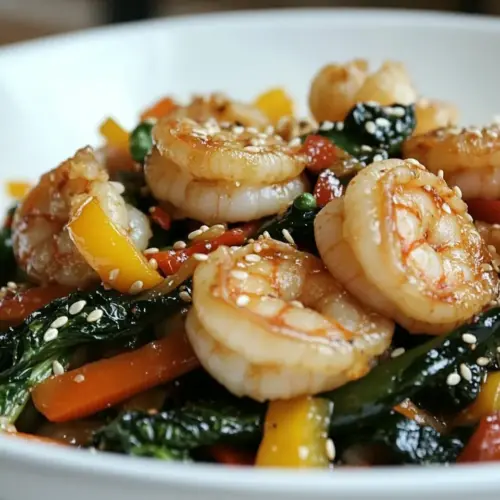
Sesame Shrimp Stir Fry with Summer Vegetables and Hemp Seeds
Sesame Shrimp Stir Fry with Summer Vegetables and Hemp Seeds is a bright, quick, and flavorful meal that combines tender shrimp, crisp summer vegetables, and a glossy savory sweet sauce. This easy weeknight dinner delivers a satisfying mix of textures, from silky chard to nutty hemp seeds, making it perfect for busy evenings when you still want something impressive to serve.
Equipment
- Wok or large nonstick skillet
- Small mixing bowl
Ingredients
- 1/4 cup Liquid Aminos Provide a salty, umami-rich base for the sauce that helps tenderize and flavor the shrimp while balancing sweet and nutty elements. Use as a marinade or stir-fry liquid to season the dish evenly and deepen overall savory notes. Combine with honey and sesame oil for a glossy, flavorful glaze that coats vegetables and seafood during cooking.
- 2 teaspoons sesame oil Add a nutty, toasted aroma that enhances the sesame profile and gives a fragrant finish to the stir-fry. Use sparingly to avoid overpowering delicate shrimp while stirring in at the beginning or end for maximum flavor. Balance with coconut oil to create a layered fat profile that carries flavors and promotes browning.
- 2 tablespoons raw honey Contribute natural sweetness and help create a sticky, caramelized glaze when reduced with liquid aminos and sesame oil. Use to balance salty and acidic components while providing a glossy coating for shrimp and vegetables. Adjust quantity to taste for a mild, rounded sweetness that harmonizes the dish.
- 2 tablespoons Organic Shelled Hemp Seed Introduce a mild, nutty crunch along with plant-based protein and omega fatty acids that boost the dish’s nutritional profile. Sprinkle into the finished stir-fry or toss with vegetables to add texture and a subtle earthy flavor. Use as a garnish or mix-in to complement sesame and coconut flavors.
- 2 tablespoons Organic Extra Virgin Coconut Oil divided Supply a stable cooking fat with a slightly sweet, tropical aroma and high smoke point ideal for stir-frying at medium-high heat. Divide to sauté aromatics and vegetables first, then use remaining oil to quickly sear shrimp and finish the sauce. Pair with sesame oil to create balance between toasted and mellow coconut notes.
- 1 pound large peeled and deveined shrimp preferably wild Provide tender, quick-cooking protein that soaks up the sauce and pairs well with bright, crunchy vegetables. Use deveined, peeled shrimp to ensure even cooking; add to the pan in the final minutes to prevent overcooking and maintain a juicy texture. Choose wild shrimp when possible for firmer texture and cleaner flavor.
- 1 small yellow onion halved and thinly sliced Offer a sweet, slightly pungent base flavor when thinly sliced and sautéed until translucent to build the stir-fry’s aromatics. Use in the initial sauté with garlic to release sugars and create depth, then allow to soften without browning too much to preserve gentle onion sweetness. Combine with bell pepper and chard for balanced savory layers.
- 1 red or orange bell pepper seeded and sliced Bring bright color, crisp texture, and mild sweetness that contrasts tender shrimp and earthy mushrooms when sliced and quickly stir-fried. Use seeds and ribs removed to avoid bitterness, and add early enough to soften while retaining some crunch. Pair with liquid aminos and honey to create a glossy, flavorful coating.
- 1 small yellow squash cut into matchsticks Contribute a tender, slightly sweet summer squash texture when cut into matchsticks that cooks quickly and soaks up sauce. Use to add body and bulk without overpowering flavors, slipping into the pan during the middle of the cook to maintain slight bite. Combine with chard to add vegetal freshness and color contrast.
- 3 ounces shitake mushrooms stems removed and thinly sliced Provide an earthy, meaty flavor and chewy texture that deepens the umami profile of the dish when thinly sliced. Use stems removed to improve bite and prevent toughness, then sauté until just softened to preserve structure. Pair with liquid aminos and honey for a savory-sweet balance that complements shrimp.
- 2 garlic cloves minced Deliver a sharp, aromatic pungency that brightens the stir-fry and enhances savory flavors when minced and cooked briefly. Use early in the sauté to bloom its oils but avoid prolonged cooking to prevent bitterness and loss of freshness. Combine with onion and sesame oil to form a fragrant flavor base.
- 2 cups thinly sliced rainbow chard Add tender, slightly bitter leafy greens that wilt quickly and bring color, nutrients, and a mild earthiness to the dish. Use thin slices to ensure fast, even wilting into the sauce and to absorb the glaze without becoming soggy. Fold in near the end of cooking so leaves soften but retain some structure and vibrant color.
Instructions
- In a small mixing bowl, whisk together the liquid aminos, sesame oil, raw honey, and hemp seeds.: The moment you combine these ingredients the sauce brightens, and you will notice a glossy sheen forming on the surface as the honey integrates, which signals it will cling nicely to the vegetables and shrimp . Smell the mix, the toasted note from the sesame oil will pop and the liquid aminos gives that savory depth, making the sauce smell rounded and inviting. This step matters because a well emulsified sauce ensures even coating, preventing dry pockets in the finished dish. A common mistake is not whisking long enough, leaving the honey separated and causing inconsistent glazing, so whisk until silky.
- Heat 1 tablespoon coconut oil in a wok or large nonstick skillet. Add the shrimp and stir-fry over high heat until pink, about 2 minutes. Transfer to a bowl and set aside.: When the oil is shimmering but not smoking, add the shrimp and you should hear an immediate bright sizzle, that sizzling sound is your cue that the exterior is searing. Visually the shrimp will go from translucent to opaque and take on rosy highlights, which tells you they are nearly done. Doing this first lets you get a slight char without overcooking the seafood while you handle the vegetables. If you overcrowd the pan the shrimp will steam and lose that satisfying texture, so cook in a single layer and transfer them out promptly to stop carryover cooking.
- Add the remaining oil and stir-fry the onion, peppers, squash and shitakes until lightly charred, 5 minutes. Add the garlic and cook until fragrant, 1 minute. Stir in the chard and cook until wilted, 2 minutes. Add the sauce and simmer until it thickens slightly, 2 minutes. Fold in the shrimp and cook one minute more. Serve over brown rice or quinoa.: As you add the second portion of oil the pan should regain its glossy sheen and you will immediately smell the sweetening of the onion and the toasty edge of the shitake mushrooms . Keep the heat high so the vegetables sear instead of becoming limp, you'll see edges starting to brown and you will hear intermittent crackles, those are the caramelization notes forming. This technique builds complex flavor quickly, and skipping the high heat will result in a softer, less flavorful mix. Avoid constant stirring, give the vegetables moments to sit and sear for best color and taste.
- Add the garlic and cook until fragrant, 1 minute: The instant you add the minced garlic you should notice a sudden burst of aroma that is sweeter and sharper than the earlier vegetable scents, it perfumes the pan. Because garlic cooks rapidly at high heat, this short timing prevents it from burning and turning bitter, which would ruin the dish. Keep the garlic moving and watch the scent change from sharp to toasty to know when to move on. A typical error is leaving it unattended, which can make it taste acrid, so stir continuously during this brief stage.
- Stir in the chard and cook until wilted, 2 minutes: When you add the thinly sliced chard , it will quickly collapse and release moisture, creating a steam that softens the other vegetables slightly. The wilted leaves will go from vibrant and crisp to glossy and tender, and you should see the volume reduce dramatically, which is normal. This step rounds out the dish by adding leafy texture and a subtle bitter counterpoint, and cooking it briefly preserves color and nutrients. Overcooking here makes the chard mushy, so remove it from heat when it is tender but still retains a touch of tooth.
- Add the sauce and simmer until it thickens slightly, 2 minutes: As the sauce hits the hot pan you will hear a gentle hiss and see it bubble around the vegetables, concentrating and darkening. The honey helps it reduce into a glossy glaze that clings to surfaces, and the aroma will become deeper and more integrated. Reducing the sauce a touch is essential because a thin sauce will pool and not coat; a too thick sauce will feel sticky, so aim for a light sheen that coats the back of a spoon. A frequent mistake is to pour the sauce on while the pan is too hot and scorched bits darken the flavor, so lower the heat slightly as you add the sauce if you see rapid burning or smoking.
- Fold in the shrimp and cook one minute more: Returning the shrimp to the pan warms them through and lets them pick up the glossy sauce without losing tenderness. You will notice the shrimp glistening as the sauce clings, and the final minute of heat melts flavors together so every element tastes unified. This short finish ensures the shrimp stay juicy; lingering over heat will make them rubbery. Keep the motion gentle, folding rather than vigorous stirring, to maintain the integrity of the seafood and the texture of the vegetables.
- Serve over brown rice or quinoa: Plating over a bed of brown rice or quinoa provides a nutty foundation that soaks up the sauce and turns this into a full meal. Visually the glossy stir fry contrasts with the grain, creating a hearty, inviting plate. The grains also temper the intensity of the sauce, making each bite balanced. A typical oversight is serving without a base, which can make the dish feel more like a side than a satisfying entree, so always have the grain ready.
Notes
- Prep mise en place: Have your shrimp, vegetables, and sauce prepped before the pan heats. Because the cooking is rapid, being organized prevents overcooking and keeps flavors bright.
- Control your heat: Use the highest stove setting your pan safely supports for searing, then slightly reduce when adding the sauce to avoid burning the honey and aromatics.
- Divide oils: Splitting the coconut oil lets you get a clean sear on the shrimp first, then fresh oil for the vegetables, which improves browning and prevents flavor carryover.
- Timing is everything: Add the garlic late in the vegetable stage so it becomes fragrant without turning bitter. One minute is usually enough at high heat.
- Finish gently: Fold the shrimp into the sauce at the end and cook just until warmed through to preserve tender texture and prevent rubberiness.