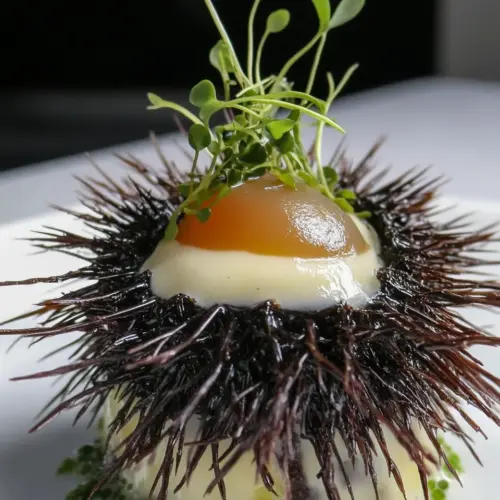
Sea Urchins in Acidulated and Aromatic Hollandaise Sauce over Yogurt
Sea Urchins in Acidulated and Aromatic Hollandaise Sauce over Yogurt combines creamy, briny roe with a silky hollandaise and tangy yogurt for an elegant starter. The bright crunch of fennel and apple and a scatter of fresh herbs keep the dish lively, making it a perfect easy weeknight special or refined gathering starter. Try it for a memorable seafood moment that highlights pure ocean flavor.
Equipment
- Scissors
- Spoon
- Fine sieve
- Bain marie
- Oven grill
Ingredients
- 12 sea urchins Contain delicate uni roe that provides a briny, creamy core flavor and elegant oceanic richness to the dish, intended to be spooned into shells or gently folded into the sauce; handle with care to preserve texture and freshness and serve chilled or briefly warmed to avoid graininess.
- 2 egg yolks Emulsify and enrich the hollandaise base by providing structure and silkiness, whisked over gentle heat to create a stable, glossy sauce while imparting a subtle custardy depth; temper carefully and monitor temperature to prevent scrambling.
- 2 tablespoons Modena vinegar Acidulate and add a rounded tang to the sauce, balancing the richness of egg yolks and butter while contributing a slightly sweet, mellow vinegar character; combine with water to moderate acidity and brighten overall flavors.
- 2 tablespoons water Dilute and temper the vinegar to control acidity and help regulate sauce temperature during emulsification, providing a neutral carrier that aids in achieving a smooth consistency without diluting flavor excessively.
- 100 grams butter Clarify and supply the primary fat for the hollandaise, melting into a silky emulsion that gives the sauce its luscious mouthfeel and glossy finish while contributing subtle nutty and caramelized notes when gently browned during clarification.
- 50 grams Greek yogurt Provide a cool, tangy base layer beneath the uni and sauce, offering creamy acidity and a refreshing contrast to the rich hollandaise; spooned as a cushion, it lightens the overall palate and adds slight probiotic creaminess.
- 1 bunch fresh chervil Freshly herbaceous and aromatic, supply bright anise-like and parsley notes that lift the dish; finely chopped chervil should be folded in or used as a delicate garnish to accentuate freshness and counterbalance richness.
- chive points Offer slender mild oniony garlicky notes and a crisp textural accent, suitable as a ribboned garnish to provide bursts of delicate vegetal flavor and elegant vertical presentation without overpowering the sea urchin.
- 1/2 bulb small fennel Contribute a subtle aniseed sweetness and gentle crunch when thinly sliced, adding aromatic complexity and a cooling, slightly licorice undertone that contrasts with the sauce’s richness and the uni’s brine.
- 1 stalk celery and leaves Add aromatic bitterness and leafy vegetal crunch through both stalk and leaves, delivering celery’s green backbone and fresh herbal hints that brighten each bite and provide textural contrast against the creamy components.
- 1/4 granny smith apple Introduce crisp acidity and firm fruit texture through tart apple slices or brunoise, cutting through the hollandaise’s richness and complementing the sea urchin’s saline sweetness with a clean, fruity snap.
- sorrel leaves Bring bright, sorrel’s lemony sharpness and tender leaf texture to the plate, contributing a vibrant acidic lift and delicate green notes that enhance seafood flavors and balance the buttery sauce.
- 20 milliliters sea urchin water Supply concentrated umami-tinged brine captured from the sea urchin’s own liquor, intensifying marine depth and seasoning while reinforcing the roe’s oceanic character; use sparingly to avoid overpowering delicate flavors.
- 2 tablespoons arbequina olive oil Finish with a fruity, peppery olive oil that rounds and enriches the dish, drizzled lightly to add glossy sheen, aromatic complexity, and a subtle Mediterranean fruitiness that complements both yogurt and hollandaise.
Instructions
- Open the sea urchins with a scissors with a round cut at the top or mouth end (use gloves to protect your hands).: The initial sound is a soft snap as the scissors cut through the outer shell, and you might notice a faint ocean scent rise as the lid comes away. Performing a round cut preserves the shell shape for plating, and gloves protect you from the sharp spines and any slippery juices. Keep the urchins on ice while working, and work over a tray to catch liquid. A common error is forcing the scissors too quickly, which can shatter the shell; take a measured approach, turning the urchin as you cut to maintain control.
- Then remove the roe with a spoon very carefully so they don't break.: As you scoop, the roe will appear as soft, custardy lobes, often bright to deep orange, depending on the harvest. Use a gentle scooping motion, supporting the underside of each lobe, because they tear easily. Place each piece on a chilled plate to maintain texture. If pieces tear, arrange smaller bits together to preserve appearance. Avoid aggressive scraping which bruises the roe and releases excess liquid.
- Save the water of the urchins to clean the roe later. If we clean them with their own water, they won't lose flavor.: That water carries concentrated ocean flavor, so collect it as you open each urchin. When you rinse or gently clean the roe with this liquid, you retain nuance that would otherwise be lost with plain water. Strain the liquid through a fine sieve to remove debris. Do not over rinse the roe, as excess handling will water it down and dull the flavor.
- Save the shells for the final presentation.: Cleaned shells are small vessels that keep the roe together and create a dramatic serving. Rinse them, remove any loose spines, and let them dry briefly; a little moisture is fine, it helps the yogurt bed adhere. Arrange shells on a tray while you prepare the rest of the components so plating is fluid. A mistake is serving them with sharp shell fragments inside, so inspect closely before filling.
- Carefully clean all the aromatic herbs.: Rinse the chervil , chive points , and sorrel leaves in cold water and spin or blot gently to remove moisture. The herbs' aroma is fragile, so avoid bruising them during handling. Chop only what you need to keep freshness. Overchopping will release too much juice and can make the herbs limp on the plate.
- Peel the stalks of celery and cut into a fine julienne.: Removing the fibrous outer threads gives a tender crunch that complements the roe. A thin julienne ensures they mingle well with the apple and fennel, distributing texture evenly. Keep the cuts uniform for consistent mouthfeel. If the strands are left thick, they can become fibrous and unpleasant to bite through.
- Do the same with the apple and the fennel.: Cut the Granny Smith apple and the fennel into fine matchsticks so they provide crispness without overwhelming. Their perfume is bright and slightly sweet, and when cut thin they integrate seamlessly. Toss them briefly with a whisper of the sea urchin water if you like, which preserves the ocean connection. Avoid large chunks that will dominate the delicate roe.
- Mix the yogurt with the sea urchins water, a spoon of arbequina olive oil and salt flakes.: Upon whisking, the Greek yogurt loosens and gains a faint saline ocean note that binds the plate. The olive oil adds silk and gloss, while salt flakes awaken the flavors. Taste for balance; the yogurt should be bright but not sour, and the sea urchin water should be perceptible but not briny. Over seasoning here can mute the roe, so add small increments and taste carefully.
- Prepare in the traditional way.: This instruction calls for making a classic emulsified hollandaise with the egg yolks , Modena vinegar , and melted butter . Use a gentle bain marie and whisk steadily until the sauce becomes glossy and slightly thickened. The aroma will shift from vinegary to buttery as it emulsifies, and that change is the cue that the sauce is set. If the sauce becomes grainy, a touch of warm water and vigorous whisking can often bring it back; if it splits, start with a fresh yolk in a clean bowl and slowly add the broken sauce.
- You can place the sea urchins in a long platter preferably three urchins per plate.: A long platter provides rhythm on the table, and grouping three per plate creates a composed portion. The visual of the shells resting on a bed of yogurt is inviting, and the contrast of orange roe against white yogurt is striking. Arrange them with intention for balance. Avoid crowding them too close, which can make plating fussy and difficult to eat.
- Fill every washed sea urchin shell with about 4 roes, carefully placing and covering them with two spoons of hollandaise sauce lengthwise.: The texture when spooning is key; you want the roe to sit nestled beneath the glossy hollandaise , not submerged. The warm sauce will slightly temper the roe, creating a silky mouthfeel. Two spoons lengthwise add an elegant stripe of butteriness. Overfilling or pouring hot sauce can overwhelm the roe, so pour gently and monitor temperature.
- Give them two minutes under the oven grill in order for them to temper.: The brief heat will warm the sauce and set it gently without cooking the roe through, creating a subtle contrast between warm sauce and cool interior. Expect a faint rising of aroma as butter heats, but avoid longer exposure which will firm the roe. Keep the rack centered and watch closely to prevent browning.
- Now add a soup spoon of yogurt and place the mixed aromatic herbs on top.: The spoonful of yogurt provides a cool cushion and a tangy counterpoint right after the tempering. Scatter the herbs for an aromatic finish and visual brightness. Their perfume should come forward immediately, so add them at the last moment. Adding herbs too early will cause them to wilt and lose their vibrancy.
- Finish the dish with drops of olive oil and a pinch of salt over the aromatics.: A final shimmer of arbequina olive oil and a few flakes of salt lift the flavors and lend shine. The oil's fruitiness complements the butter, and the flakes add a pleasant crunch. Taste a sample bite before serving to check balance. Over salting at this stage cannot be undone, so be cautious.
Notes
- Chill your ingredients: Keep the sea urchins and the Greek yogurt refrigerated until assembly to protect texture and freshness.
- Control the heat: When making hollandaise, use a gentle bain marie and moderate heat to avoid curdling the egg yolks.
- Reserve urchin water: Save and strain the liquid from the shells to mix into the yogurt, preserving ocean flavor across the dish.
- Keep cuts fine: Julienne the celery, fennel, and apple thinly so they add texture without dominating the bite.
- Add herbs last: Place the chervil, chive points, and sorrel leaves just before serving to keep their aroma bright.
- Use mild finishing oil: Choose a gentle arbequina olive oil to finish, avoiding robust oils that would mask the roe.