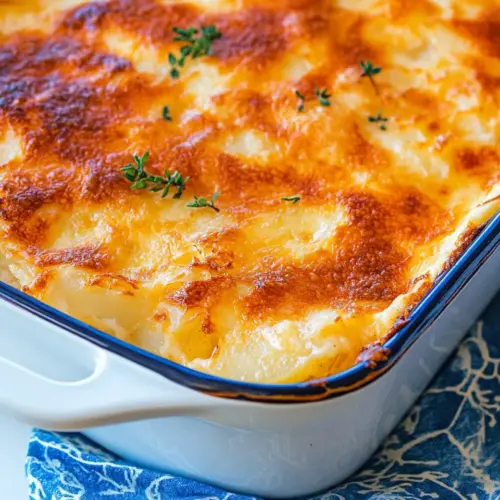
Scalloped Potatoes
Scalloped Potatoes brings creamy, cheesy comfort to your table with tender sliced potatoes layered in a rich sauce. This easy weeknight dinner or holiday side delivers a golden baked top and a luscious interior, perfect for family gatherings. Make it ahead for stress free entertaining and enjoy the warm, nostalgic flavors that keep everyone coming back for seconds.
Equipment
- 8x8 baking dish
- Mandoline Slicer
Ingredients
- 4 cups thinly sliced potatoes, (Yukon Gold or Russet; about 2 pounds give or take) Thinly slice potatoes to provide the starchy base and tender layered texture for the casserole; Yukon Gold offers creaminess while Russet yields a fluffier bite. Layer evenly to ensure consistent cooking and absorb the sauce flavors throughout. Use approximately 2 pounds to achieve the intended yield and thickness of scalloped potatoes.
- 3 tablespoons butter Melt butter to create a rich, velvety fat that forms the roux and adds savory depth to the sauce. Cook gently with flour to remove raw taste and to help the sauce thicken and cling to the potato slices. Use the specified amount to balance richness without overwhelming the dish.
- 3 tablespoons flour Whisk flour into melted butter to form a roux that thickens the milk into a smooth, creamy sauce. Cook briefly to eliminate a raw flour flavor, then gradually add milk to achieve a lump-free béchamel-like consistency. Measure carefully so the sauce coats the potatoes without becoming gluey.
- 1 1/2 cups milk Warm milk to provide the liquid body and creamy mouthfeel of the sauce that binds the layers together. Add slowly into the roux while whisking to ensure a silky texture and uniform thickness. Choose whole or low-fat milk according to desired richness but maintain the specified volume for proper consistency.
- 1 teaspoon salt Season with salt to enhance and balance the flavors of the potatoes and cheese, bringing out savory notes throughout the dish. Add incrementally and taste the sauce before baking to avoid over-salting, especially since cheese contributes additional saltiness. Use the teaspoon as a guideline for a well-seasoned final result.
- 1 dash cayenne pepper Sprinkle cayenne pepper sparingly to introduce a subtle warmth and gentle heat that brightens the creamy sauce without overpowering it. Adjust quantity very slightly to complement the cheese and potatoes, taking care that the spice remains a background accent. Use the single dash to maintain a delicate balance of flavor.
- 1 1/2 cups grated sharp cheddar cheese, divided Grate sharp cheddar cheese to contribute bold, tangy flavor and melty richness that forms a cohesive, golden topping and pockets of savory goodness between layers. Reserve half for stirring into the sauce and half for sprinkling on top to achieve both gooeyness and a browned crust. Use the specified amount for a pronounced cheddar character.
- paprika Dust with paprika to impart a mild smoky-sweet color and subtle flavor to the finished dish while enhancing visual appeal. Sprinkle over the top before or after baking for a warm, inviting finish and slight aromatic lift. Use lightly to complement but not dominate the cheddar topping.
Instructions
- Preheat oven to 350 degrees.: You will notice a warm anticipation in the kitchen as the oven climbs to 350 degrees , a stable moderate temperature that encourages even cooking throughout the casserole. The oven should be fully up to temperature before you put the dish in, because a cold oven can lengthen cook time and alter texture. One common mistake is tightening the timeline while the oven is still coming up, which leads to undercooked centers, so wait for the indicator light or give it a few extra minutes.
- In a small sauce pan, melt butter and stir in flour.: As the butter melts in the small sauce pan , it will begin to foam gently and release a toasted aroma, which signals it is ready. Stirring in the flour immediately creates a smooth roux; the texture should be paste like and cohesive. You'll want to cook this mixture for about a minute so the raw flour taste cooks out, and stirring constantly prevents scorching. If the roux darkens too much, your sauce may take on a nutty but slightly burnt note, so reduce the heat if you see color change.
- Whisk in the milk and season with salt and cayenne.: When the milk is added, do it gradually while whisking to coax a velvety, lump free sauce. The mixture will loosen and steam gently, and you should notice a smooth, glossy consistency forming. Add the salt and a dash of cayenne pepper to build flavor, remembering that the cheddar cheese will later contribute saltiness. A typical error is pouring the milk too fast, which creates lumps; to fix that, strain the sauce through a fine mesh or whisk vigorously over low heat.
- Cook sauce on low until smooth and boiling, stirring occasionally with a whisk.: As you simmer the sauce gently, it will thicken and coat the back of a spoon, giving off a comforting steam and a light dairy aroma. Keep the heat low so the sauce thickens slowly and remains silky rather than grainy. Stirring with a whisk helps break up any small clumps and ensures uniform texture. Avoid rapid rolling boils, which can curdle the sauce; if it starts to seize, remove from heat and whisk in a splash of milk to smooth it out.
- Reduce heat and stir in 1 cup of the cheddar cheese.: Lowering the heat protects the sauce from separating when you add the cheddar cheese . As the cheese melts, it will turn the sauce glossy and give off a savory, tangy scent. Stir slowly until the cheese is fully incorporated and the sauce becomes thick and indulgent. A common misstep is adding cold cheese or too much at once, which can cause clumping; allow the cheese to come to room temperature if possible and add it gradually.
- Place a half of the sliced potatoes in a lightly greased 1.5 quart baking dish (8×8 or 9×9 will work).: The moment you layer the first half of the thinly sliced potatoes into the greased baking dish, you will notice the neat, overlapping pattern that helps them cook evenly. Arrange the slices so there are no large gaps, which ensures every piece will be coated and cooked through. Use an 8 by 8 or 9 by 9 pan to maintain the intended depth; using a much larger pan thins the layers and can dry the casserole out. A mistake to avoid is stacking slices too thickly in one spot, which leads to uneven doneness.
- Pour half of cheese sauce over potatoes.: When you pour half of the glossy cheese sauce over the first potato layer, it will seep into the crevices and begin to soften the edges, creating those tender pockets that define the dish. The sound is a gentle pour and the visual cue is sauce pooled and brushed across the top. Distribute it evenly so the sauce reaches between slices; using a spoon to coax it into gaps helps. If you pour too quickly and flood one side, gently tilt the pan to even it out.
- Repeat with second layer of potatoes and cheese sauce.: Adding the second layer repeats the comforting ritual, and you will see the casserole build in height as the layers stack. The top layer should be arranged neatly so the sauce can coat each slice; this is when the structural balance of the casserole is set. One common problem is misalignment that leaves some slices exposed, which can crisp prematurely; take an extra moment to adjust the slices for even coverage.
- Sprinkle the remaining 1/2 cup of cheddar cheese on top.: The final scatter of cheddar cheese will create a melty, golden crust as it bakes. The cheese on top browns and bubbles, offering a textural contrast to the soft interior. Watch for even coverage so the top develops uniform color. A pitfall here is using pre shredded cheese with anti caking agents that can melt differently; freshly grated cheese usually yields a superior melt.
- Top with some paprika for color.: A light dusting of paprika adds an inviting color and a whisper of sweet peppery flavor. It does not change the texture, but it elevates appearance so the casserole looks finished and festive. Avoid heavy application, which can impart an unnecessary bitter note; a gentle sprinkle is sufficient.
- Bake uncovered for about 1 hour at 350°F and when cheese is golden brown.: As the casserole bakes uncovered, the kitchen will fill with a rich, dairy aroma and the edges of the potatoes will begin to show tiny browned bits where starch caramelizes. The top should turn a warm golden brown and the sauce should bubble around the sides, indicating the interior is cooked. A thermometer inserted in the center should read hot and the potatoes should be tender when pierced with a knife. The common error is covering the dish, which traps steam and prevents the top from browning, so bake uncovered for that desirable finish.
Notes
- Cheese Choice Use a sharp cheddar cheese for a pronounced tang, or a milder cheese for subtler richness; remember that sharper cheese adds more salt, so adjust the salt accordingly.
- Potato Type Yukon Gold gives a creamier interior while Russet yields a slightly fluffier bite; either works, but consistency in slicing is more important than the variety.
- Make Ahead Assemble the casserole up to the baking step and refrigerate for a few hours; bring it back to room temperature for about 20 minutes before baking to ensure even cooking.
- Texture Control For creamier results, slice potatoes thinner and add an extra splash of milk; for firmer layers, keep slices slightly thicker and avoid adding excess liquid.
- Top Browning If you want a crunchier top, broil for a minute or two at the end, watching carefully because it can go from golden to burnt quickly.