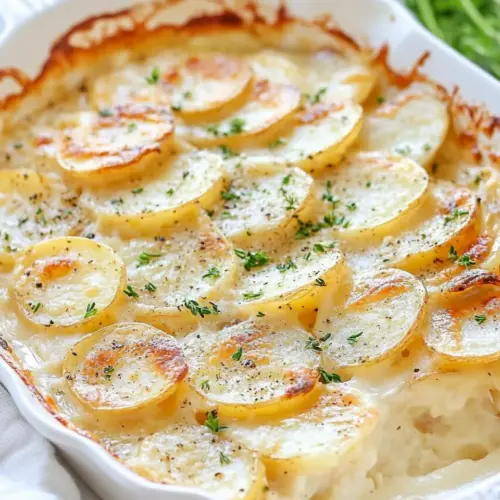
Scalloped Garlic Potatoes
Scalloped Garlic Potatoes offers creamy, garlicky layers of tender potatoes baked until slightly golden and bubbling, perfect as an easy weeknight dinner side or a cozy winter centerpiece. The rich combination of milk and heavy whipping cream creates a silky sauce that clings to each slice, while parsley adds a bright finish, making it a compelling reason to make it for family meals.
Equipment
- Oven
- 8 x 8 x 2 inch baking dish
- Knife or mandoline
- Peeler
Ingredients
- 5 medium Russet potatoes Peel and slice thinly to provide the starchy, hearty base of the dish; russet potatoes absorb flavors and become tender when baked, creating the classic scalloped texture. Layer evenly to ensure even cooking and creamy interaction with the dairy and garlic for balanced richness.
- salt, to taste Season lightly to enhance overall flavor and balance richness; salt helps draw moisture from the potatoes and intensifies savory notes. Add incrementally and taste as the sauce develops to avoid over-salting late in cooking.
- 4 large garlic cloves, finely chopped Mince finely to release strong aromatic oils that infuse the milk and cream; garlic gives bright, savory depth to the sauce and complements the potatoes. Sauté briefly or let infuse in warm dairy to mellow sharpness while preserving fresh garlicky character.
- 1 1/2 cups milk Warm gently to form the liquid backbone of the sauce and promote even cooking; milk contributes creaminess while thinning the custard so it seeps between potato layers. Heat with garlic to extract flavor and prevent curdling, then combine with cream for a silkier finish.
- 1/3 cup heavy whipping cream Combine with milk to enrich the sauce and create a silky, indulgent texture; heavy cream increases mouthfeel and helps the sauce set into a luscious custard. Use measured amounts to maintain a creamy yet stable consistency that thickens during baking.
- chopped fresh Italian parsley, for garnish (optional) Sprinkle chopped as a bright finishing touch to cut richness and add fresh herbal aroma; Italian parsley provides color contrast and a mild, peppery note. Add just before serving to preserve freshness and visual appeal.
Instructions
- Preheat the oven to 325 degrees F. Butter an 8 x 8 x 2 inch baking dish.: When you step into the kitchen you should notice a gentle warmth building as the oven comes up to 325 degrees F, a steady hum replacing the quiet. The buttered pan will emit a faint buttery aroma as it warms, and a thin sheen on the surface helps prevent sticking and encourages golden edges. This step ensures an even bake, because a properly heated oven cooks the layers uniformly from the start. A frequent misstep is skipping the buttering which can cause the bottom layers to cling and tear when serving.
- Peel and slice the potatoes (about 1/4-inch thick). Place one layer of potatoes in the baking dish; lightly season with salt and sprinkle with some garlic. Repeat layering with remaining potatoes and garlic. Pour milk evenly over the potatoes. Bake, covered, for 45 minutes.: As you peel and slice, the room fills with the earthy scent of potatoes , and the rhythmic scrape of the peeler becomes oddly meditative. Aim for uniform quarter inch slices so each layer softens at the same rate, the visual cue being thin, even discs stacked neatly. Lightly seasoning each layer sends seasoning into the interior, preventing under seasoned pockets. Sprinkling the finely chopped garlic between layers lets its aroma infuse the milk that you will pour over, creating an all around garlicky bath. When you pour the milk , do it gently so it settles between slices rather than pooling only at the edges; you should hear a quiet settling sound as the liquid finds its way through the layers. Covering the dish retains steam, making the potatoes tender without drying; during the 45 minute covered bake you should notice the smell of warm dairy and softened garlic start to fill the kitchen. One common error here is making slices unevenly thick, which leads to some slices finishing earlier than others, so keep them consistent.
- Remove the cover, drizzle the cream over the potatoes, then return to the oven and bake uncovered for 45 minutes longer.: With the cover off you will be greeted by a warm, concentrated aroma and perhaps a gentle simmer at the edges where the dairy meets the pan. Drizzling the heavy whipping cream now enriches the top layers, encouraging a silky, slightly caramelized surface as it bakes uncovered. Look for the edges to turn a light golden brown and for some bubbling to occur in pockets, those visual cues mean the top is setting and flavors are concentrating. The uncovered bake allows moisture to reduce, intensifying texture and flavor, which is why timing matters here so the top crisps without the interior drying. A common pitfall is skipping the cream or adding it too early, both of which can make the top either too pale or the interior overly wet.
- Serve hot; or if not serving right away, cool potatoes, cover snugly with foil and freeze until needed. Garnish with parsley, if desired.: When you lift the dish from the oven you will notice a warm, layered perfume of garlic and dairy, and the top should show a golden tint with gentle bubbling at the edges. Serving hot gives you the creamiest texture, while cooling first before covering helps preserve structure if you plan to freeze. Wrapping snugly prevents freezer burn and keeps flavors intact. Before serving, scatter the chopped Italian parsley for a fresh pop of color and a bright herbal note against the rich backdrop. A typical mistake is covering immediately while still hot without cooling, which can trap steam and make the casserole soggy when reheated.
Notes
- Thin, consistent slices: Use a mandoline or a sharp knife to achieve even quarter inch slices so each piece cooks through at the same time, preventing some from being underdone while others fall apart.
- Warm the milk slightly: Let the milk come closer to room temperature before pouring; it helps the baking be more consistent and removes a chill that can slow the cook time.
- Distribute garlic evenly: Sprinkle small amounts of chopped garlic between layers to ensure every bite gets a garlicky note, rather than concentrating all the flavor in one spot.
- Cover for tenderness: Keep the dish covered during the initial bake to trap steam and soften the potatoes, then uncover to allow the top to brown and concentrate flavors.
- Garnish at the end: Add the chopped Italian parsley just before serving for brightness and visual contrast, avoiding wilted herbs on a hot surface.
- Adapt pan size with care: If doubling the recipe, choose a larger pan but know that a thinner layer may brown faster, so monitor the bake closely to prevent drying.