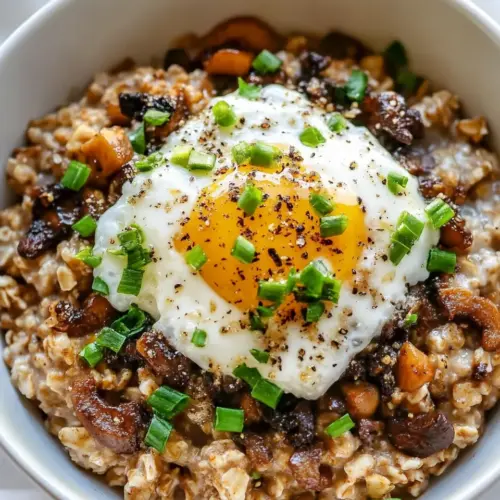
Savory Steel Cut Oats
Savory Steel Cut Oats is a creamy, hearty breakfast bowl featuring quick cooking steel cut oats, savory chicken sausage, sautéed mushrooms, and a runny egg. This easy, comforting recipe delivers nutty grain texture, rich umami, and bright chive garnish, perfect for an easy weeknight dinner or filling morning. Make it when you want a flavorful, satisfying bowl that feels special with minimal effort.
Equipment
- Microwave-safe Bowl
- Medium skillet
- Wooden Spoon
Ingredients
- 1/4 cup quick cooking steel cut oats, such as Bob’s Red Mill Adds a hearty, chewy base and cooks quickly to provide whole-grain texture and sustained energy; absorb liquid and seasoning to become creamy when simmered, forming the backbone of the savory bowl.
- Olive oil spray Provides a low-calorie nonstick layer for sautéing and browning components; sprays evenly to prevent sticking while adding minimal flavor.
- 2 ounces raw chicken breakfast sausage, I used Trader Joe’s Contributes savory, spiced meatiness and fat that flavors the oats as it browns; crumble and cook thoroughly to render fat and build a robust umami profile.
- 1 1/2 teaspoons unsalted butter Enriches the dish with silky mouthfeel and subtle dairy richness; melts into the oats and binds ingredients while adding a touch of flavor depth.
- 4 medium baby bella mushrooms, chopped Adds earthy, meaty texture and umami notes when sautéed; chop and brown to release moisture and concentrate flavor for a balanced savory bite.
- Kosher salt Enhances overall flavor by elevating and balancing other elements; season to taste to bring out natural sweetness and reduce bitterness.
- Freshly ground black pepper Provides sharp, aromatic heat and a peppery finish when ground fresh; season sparingly to brighten and lift the savory components.
- 2 tablespoons Parmesan cheese, divided Imparts salty, nutty umami and a sharp finishing note; grate or sprinkle in stages to add savory depth and a cheesy contrast.
- 1 large egg Adds creamy richness and protein while introducing a silky yolk that can be mixed into the oats; cook to desired doneness to vary texture and flavor.
- Chopped fresh chives, for garnish (optional) Provides a bright, mild onion flavor and fresh color as an optional garnish; finely chop and sprinkle on top just before serving for visual and flavor contrast.
Instructions
- In a medium sized, deep microwave-safe bowl, add oats and water and cook according to package directions, about 7 to 10 minutes. You may need to adjust cook time and/or add extra water to reach your desired consistency. (I used about 2/3 cup water for creamy oats).: The air will fill with a gentle, toasty grain aroma as the water bubbles and the oats hydrate, signaling the transition from dry grain to silky porridge; you should hear a soft simmering and see the surface occasionally breaking in slow bubbles. This method keeps your stovetop free and lets you tend the skillet simultaneously, and it helps control texture because quick cooking steel cut oats need less time than traditional. Common mistakes here include using too much water which yields a soup like consistency, or neglecting to stir and ending up with unevenly cooked patches; if the oats look dry before the end, add a tablespoon of water at a time. The reason this matters is texture, the right water ratio yields creamy oats that still retain a pleasant bite, which is essential for contrast with the toppings.
- Meanwhile, spray a medium skillet with oil.: You will notice the pan surface takes on a faint sheen and when it warms it begins to shimmer slightly, which is the cue that it is ready for the sausage . The light coating prevents sticking and encourages even browning without creating excess grease that would weigh down the mushrooms and oats. A common error is overheating the oil so it smokes, which can impart a bitter flavor, so warm it over medium heat and test by adding a small piece of sausage first. This step sets up proper caramelization which unlocks savory depth in the proteins.
- Remove the sausage from the casing, add to the skillet and cook over medium heat, breaking up with a wooden spoon, until just cooked through (don’t overcook or it will become rubbery).: As the sausage hits the pan you should hear a steady sizzle, and pieces will release juices that caramelize at the pan surface producing rich brown bits; those browned morsels are flavor gold. Break the meat into small crumbles so it cooks uniformly, stirring to expose new surfaces to the heat. Avoid overcooking which makes the protein dry and rubbery, watch for the meat to lose its pink color and reach an internal doneness, then remove promptly. The why behind this technique is that gentle browning builds savory compounds while preserving juiciness, critical for a moist, flavorful topping.
- Remove sausage from skillet and place in a serving bowl, cover and set aside while you cook the mushrooms.: You will notice the bowl begins to steam slightly as the warm sausage rests, and covering it traps heat while preventing the meat from drying out. This resting step keeps texture pristine and allows you to time the mushrooms so they finish with bright color. A common slip is leaving the meat uncovered which cools and tightens the texture, so tent it and set it aside until the mushrooms are ready to rejoin; this preserves the juiciness that makes each bite satisfying.
- Add 1 teaspoon butter to the skillet. When melted, add the mushrooms, a pinch of salt and pepper, to taste. Sauté mushrooms for 4 minutes.: The butter will foam and deliver a nutty scent as it browns slightly, then the chopped baby bella mushrooms will hiss and release liquid; continue cooking until the moisture reduces and edges begin to brown, that is the moment when their earthiness concentrates. Salt draws out their juices which then caramelize for deeper flavor, and pepper adds a warm whisper in the background. Avoid overcrowding the pan which causes steaming rather than browning, and resist stirring constantly; letting them sit briefly encourages caramelization. The mushroom step is crucial because those browned edges contribute umami that lifts the whole bowl.
- Add the sausage back to the skillet, stir to combine and cook 30 seconds.: You will catch another quick sizzle as the reserved sausage hits the pan and mingles with the mushroom juices, releasing a unified savory fragrance. This brief reunion warms the meat through and allows the flavors to marry without further drying the protein. Watch carefully because prolonged cooking here will toughen the sausage ; just long enough to meld flavors is ideal. This last pan moment integrates the topping components so they complement the creamy oats rather than feel like separate parts.
- Transfer cooked oats to a bowl, add remaining half teaspoon butter, a pinch of salt and 1 tablespoon Parmesan and stir.: As you stir the hot oats with the butter and Parmesan cheese you will see a glossy sheen develop and smell a gentle nuttiness from the cheese melting into the grain; the texture should be smooth with slight tooth from the oats. Adding the cheese early into the oats lets it dissolve and season every spoonful, creating a cohesive base for the toppings. A typical error is skipping the stir which leaves the cheese unmelted and clumpy, so stir until homogenous. This melding step ensures the grain carries savory notes into each bite.
- Top with mushroom and sausage mixture. Cook the egg runny, or to your liking and top the bowl.: When you spoon the warm mushroom and sausage mix over the oats the contrast in temperature and texture is immediately appealing, and cooking the egg to a runny yolk creates a velvety sauce as it bursts into the bowl. You should hear a gentle sizzle as the egg hits the pan and see whites just set around a glossy yolk if you choose runny; for firmer yolks cook a bit longer. Be mindful not to overcook the egg as it will lose silkiness, and use medium to low heat for gentle cooking. This finishing move is what transforms separate parts into a unified, luscious bowl.
- Add the remaining tablespoon Parmesan cheese and chives, if using.: The final sprinkle of Parmesan cheese adds a bright salty note and a hint of granular texture, while the chopped fresh chives brighten the aroma and appearance with a fresh, onion like lift. You will see the cheese melt slightly against the warm toppings and the chives remain vibrant and green. Take care not to over salt here since the cheese adds sodium, and add herbs last to preserve their color and fragrance. This garnish step elevates the bowl visually and taste wise, giving it that small finishing touch chefs adore.
Notes
- Control the oat texture by starting with the package recommended water and reduce or increase by a tablespoon until you hit your preferred creaminess, this prevents a gluey or watery result.
- Toast the oats briefly in the microwave safe bowl with the dry oats before adding water if you want a nuttier aroma, but watch carefully as they can brown quickly.
- Brown the mushrooms well by using medium heat and not stirring constantly, letting the edges develop color which enhances umami, but avoid burning which makes them bitter.
- Season incrementally since sausage and Parmesan cheese contribute salt; taste before adding final salt to prevent over seasoning.
- Keep the sausage juicy by removing it from heat as soon as it is no longer pink, carryover heat will finish cooking while preserving moisture.
- Finish with acids sparingly such as a tiny squeeze of lemon if you want brightness, add just a drop at a time so it does not overpower the savory profile.